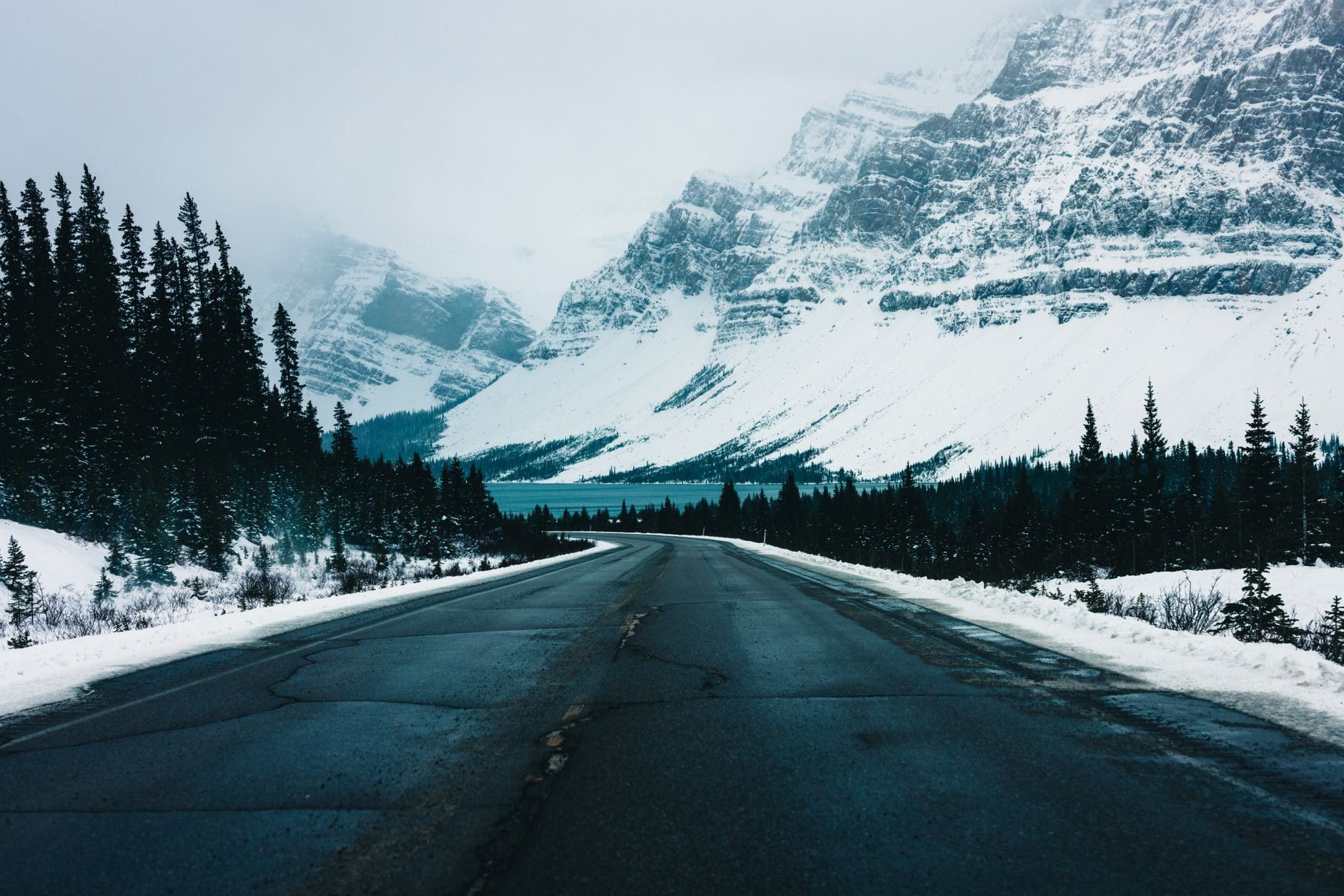
Yes — Jasper is worth it in winter, and this guide shows you how to do it. Roughly 80% of the park's annual visitors arrive between June and September, which means the viewpoints that need a shuttle in July sit nearly empty in February. Lakes freeze solid, waterfalls stop mid-fall, and hotel rates drop well below summer highs. Below: what to do on snow and ice, which months to pick, how to get there without drama, what's actually open after the July 2024 wildfire, and a ready-made 3-night weekend plan.
Is Jasper Worth Visiting in Winter?
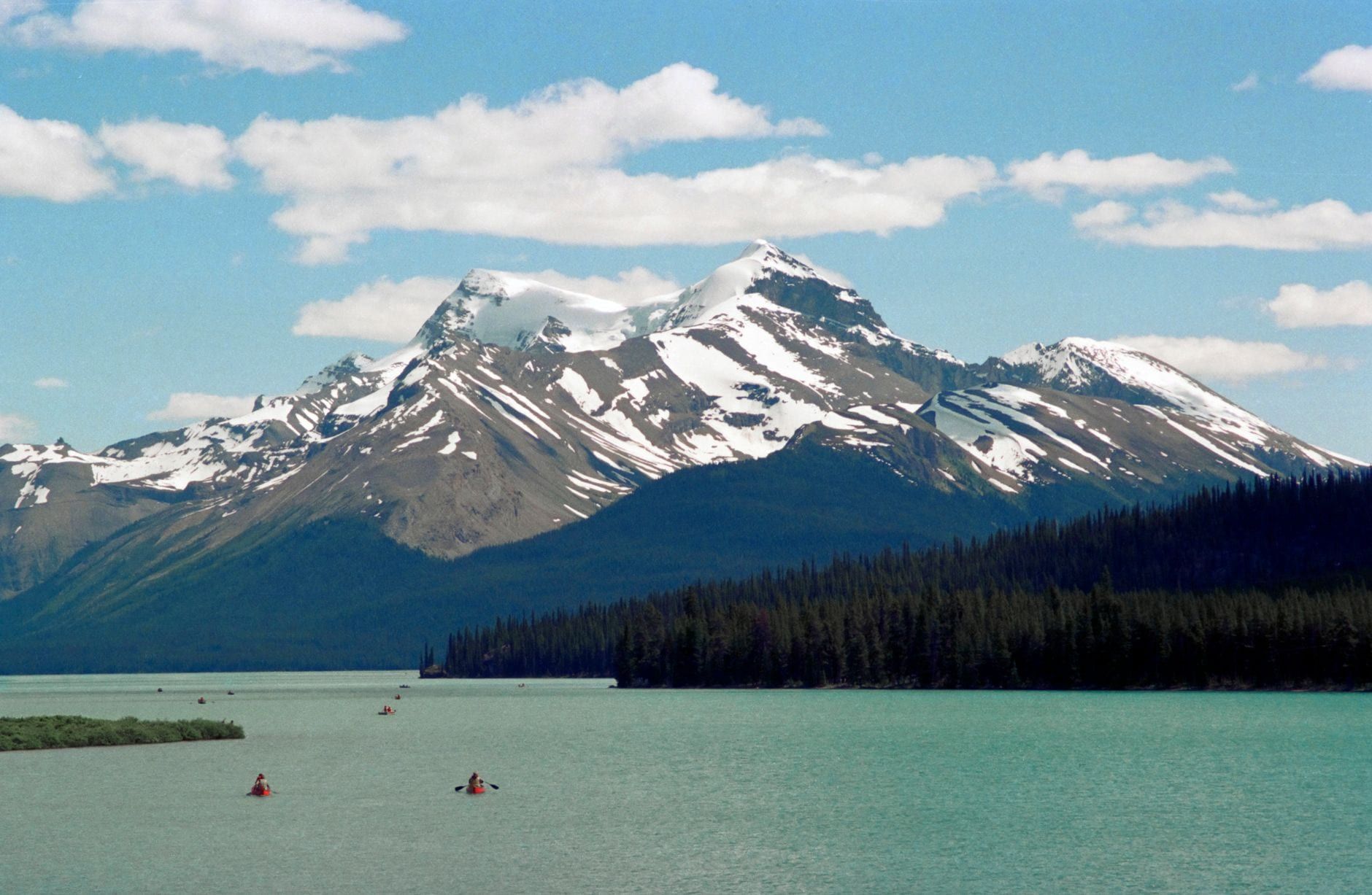
Worth it, and for reasons that go beyond the postcard scenery. With so few visitors spread over 11,000 square kilometres, you can stand at Pyramid Island or the Athabasca Falls railings on a weekday and share the view with a handful of people. Rooms cost less than in summer. And if you're weighing the Jasper vs Banff question, Jasper wins on winter quiet: Banff pulls the bigger cold-season crowds.
Here's what the cold actually feels like. Daytime highs run from about -10°C (14°F) to -2°C (28°F), with snaps into the -20s. It's a dry cold — a down layer and hand warmers fix most of it in a way damp coastal cold never allows. The real constraint is daylight: about 7.5 hours on December 21, growing to 9 hours 49 minutes by mid-February. Locals don't fight this. Ski in the morning, skate at golden hour, eat early, then step outside after dark for stars.
Snow is dependable. Winter runs roughly November to April, with snow possible as early as late September and lingering into June at elevation. Throw in the frozen waterfalls, the maintained skating rinks, and a ski hill 20 minutes from town, and the season holds up on its own — you're not settling for a lesser version of summer.
When to Go: Jasper's Winter, Month by Month
Pick your window around three variables: ice, daylight, and how much cold you'll tolerate. For the full picture across all four seasons, our season-by-season guide breaks down the rest of the year.
November–December. Marmot Basin typically opens mid-November (the season runs to early May, and the hill closes in extreme cold around -30°C). The lakes are freezing but the ice is thinnest now — early December through late February is the sweet spot for fully frozen activities. By mid-December the town puts up holiday lights and the Christmas-in-the-mountains atmosphere is real. It's also the priciest fortnight of the winter: book Christmas and New Year stays early.
January. The coldest, darkest weeks — and the cheapest to visit. Jasper in January, a festival running more than 30 years, fills the last two weeks of the month with deals on lift tickets, spa treatments, and multi-day stays. If your priorities are a low room rate and empty trails rather than long days, this is your month.
February–March. The best all-round window. Temperatures moderate, daylight stretches past nine hours, and the snowpack is at its most reliable for skiing and snowshoeing. First-time winter visitors should land here.
April. Spring skiing at Marmot Basin, melting waterfalls getting loud again, and afternoons warm enough to walk town in a light jacket. Services thin out, but so does everyone else.
Getting There and Getting Around Safely
Two realistic driving approaches, with opposite temperaments. Details on every option — including train service to Jasper station — are in our guide to getting to Jasper.
| Edmonton route (Hwy 16 west) | Icefields Parkway (Hwy 93 north) | |
|---|---|---|
| Driving time | About 4 hours (~365 km) | About 4.5–5 hours (~415 km from Calgary) |
| Services | Regularly plowed; fuel and food in Edson and Hinton | Few plows; almost no cell service; parkway restaurants shut in winter |
| Closures | Rarely closes for long | Storms can close it temporarily |
| Verdict | Default winter arrival route | Only in settled, clear weather |
Whichever you drive, the law matters: vehicles need snow tires or chains from November 1 through about April 1. Check 511 Alberta for road reports before setting out, and carry an emergency kit — blanket, shovel, snacks, and a full fuel tank — because help can be a long time coming in a storm. Hinton, on the Edmonton route, is the bailout town if weather forces an overnight stop.
Don't want to drive mountain roads at all? Sundog Tours runs winter buses connecting Jasper with Edmonton (airport and West Edmonton Mall), plus Lake Louise, Banff, and Calgary — one-way fares start around $28. For a non-driver, that plus taxis and guided tours covers most of this article.
Pack for dry cold, not damp cold. The short version:
- Merino base layers, top and bottom
- Fleece or insulated mid-layer
- Down jacket plus a windproof shell
- Hand and toe warmers — cheap and decisive
- Insulated boots with grip, or ice cleats
- Sunglasses; snow glare is relentless
Skip flying with gear. Source for Sports and Totem Ski Shop in Jasper rent skis, snowshoes, and skates, so a carry-on is enough.
What's Open and Closed in Jasper in Winter
Closed for the season, full stop: the Jasper SkyTram, Miette Hot Springs, and every restaurant along the Icefields Parkway inside the park. Open and running: Marmot Basin, the maintained skating rinks, frozen-falls viewpoints, and essentially all of Jasper town's restaurants, breweries, and shops.
The wildfire complicates the picture. The July 2024 fire burned about 32,700 hectares and damaged 358 of the townsite's 1,113 structures, and recovery continues. Maligne Canyon's trails — including the ice walk — and Valley of the Five Lakes were still closed after the fire. Burned trees fall without warning, so stay on marked, open trails. Some roads and trails also carry seasonal closures for caribou conservation, separate from any fire closure.
Make verification a habit: Parks Canada's important bulletins and trail conditions report, plus 511 Alberta for roads, before every outing. Stale blog notes are exactly how people end up at a closed trailhead. Entry needs a pass year-round — $12.25 for a daily adult — which you can buy online in advance or at a park gate.
The Signature Winter Experiences
Four activities carry a Jasper winter: the canyon ice walk, Marmot Basin, skating, and anything on snowshoes or skinny skis. Here's how to do each one, with the safety numbers attached.
The Maligne Canyon Ice Walk
Jasper's signature winter outing: you walk the frozen floor of a 50-metre limestone gorge past ice curtains and frozen waterfalls, typically from mid-December to early April. Ice cleats are essential — the floor is polished glass in places. Access is from the main parking lot or the Fifth Bridge depending on conditions. One caveat you can't skip: the canyon trails have been closed since the 2024 wildfire. Check the Parks Canada trail report and ask guided operators directly before building a day around it.
Skiing and Snowboarding at Marmot Basin
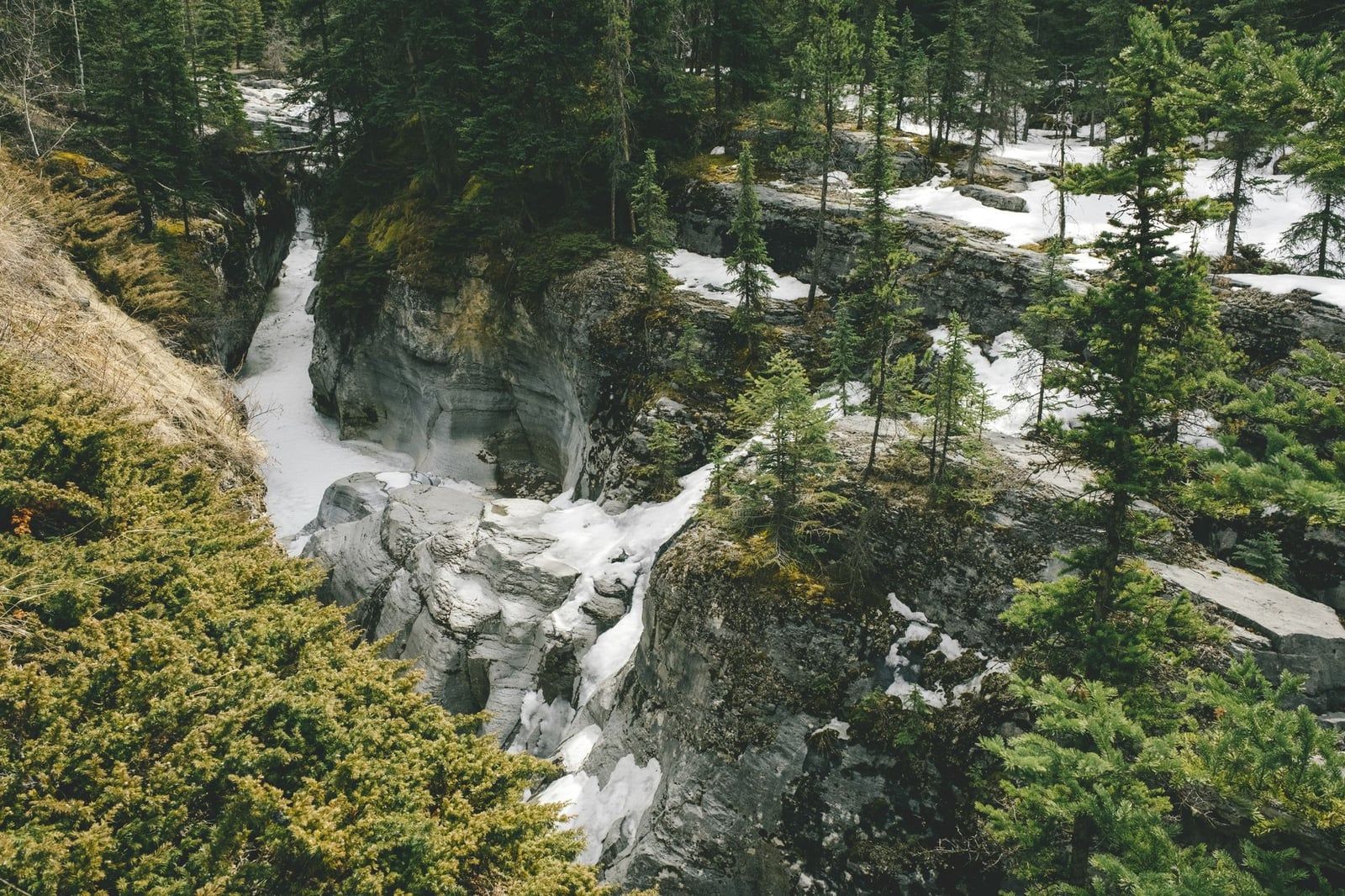
Marmot Basin packs 91 named runs across four mountain faces, 3,000 vertical feet of drop, and seven lifts into a hill 20–30 minutes from town. The selling point in winter is the lift lines, or rather their absence — mid-week you'll wait minutes. The terrain spreads from beginner groomers to steeps, so mixed-ability groups can share one lift pass. Arrive early for parking, look for mid-week and late-season deals, and note the hill closes around -30°C.
Skating: Maintained Rinks and Wild Ice
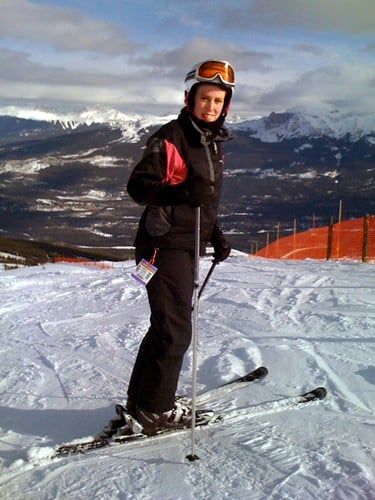
The safe default is a maintained rink: Pyramid Lake, or the Lake Mildred and Lac Beauvert rinks at Fairmont Jasper Park Lodge, with skate rentals available in town. Wild lake ice is Jasper at its most cinematic, but Parks Canada does not monitor or mark natural ice — you're on your own. The official guidance is 15 cm of thickness for walking or skating alone, 20 cm for a group. If you don't know how to read ice, stay on the rinks.
Snowshoeing and Winter Hiking
Strap on snowshoes and the Pyramid Bench trail network behind town opens up, along with Old Fort Point for valley views and Watchtower Canyon for a quieter half-day. Valley of the Five Lakes is the classic summer-to-winter crossover — check its post-fire status first. Two rules that matter: never walk, snowshoe, or bike on groomed ski tracks, and treat anything off-trail as avalanche terrain. Thousands of avalanches slide in this park every year.
Cross-Country Skiing
Groomed trails include the Moab Lake route and the Leach Lake trail near Athabasca Falls — both flat, both beautiful, both fine for a first-timer on rentals from town. Pair a morning ski with the falls viewpoint a short drive away and you've built a full winter day without touching the ski hill.
Frozen Sights and Scenic Winter Drives
Not everything in Jasper needs a lift ticket or a guide. The frozen sights below are drive-up or short-walk, and they're what a winter day trip actually looks like.
Athabasca Falls and Sunwapta Falls
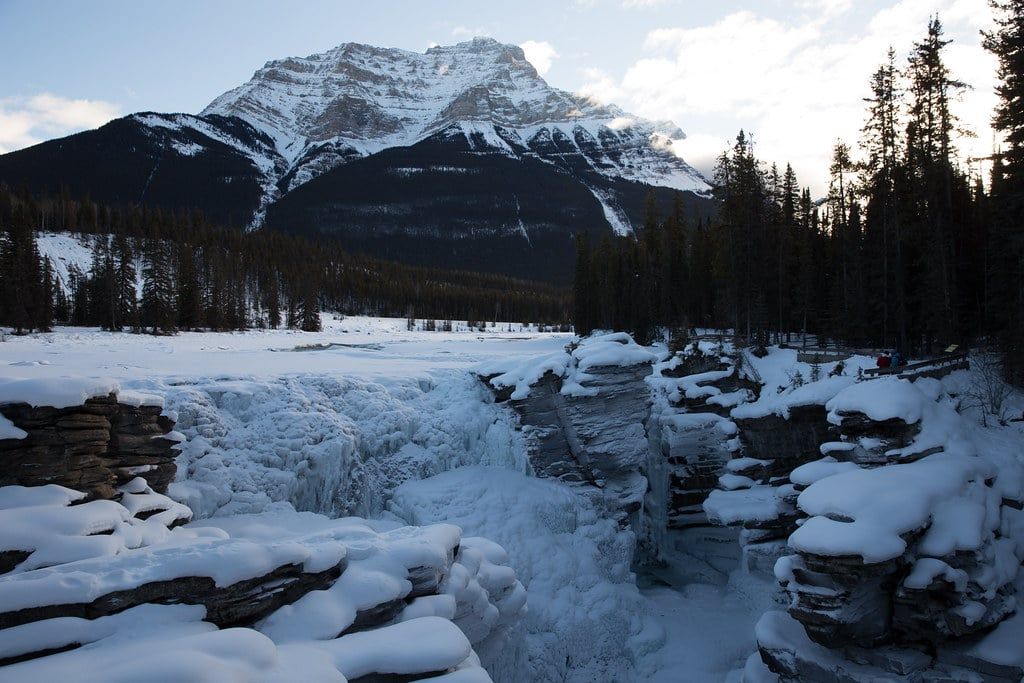
Athabasca Falls, about 30 km south of town (30–40 minutes), is a roughly 250-metre walk from the parking lot to railings over a gorge choked with blue ice sculptures. Sunwapta Falls is another 25 km down the parkway — 20 minutes — with a 2.8 km return option to the lower falls. Both are at their photographic best in morning light. Stay behind the railings; the ice formations extend over drop-offs that don't forgive.
The Maligne Lake Road Drive
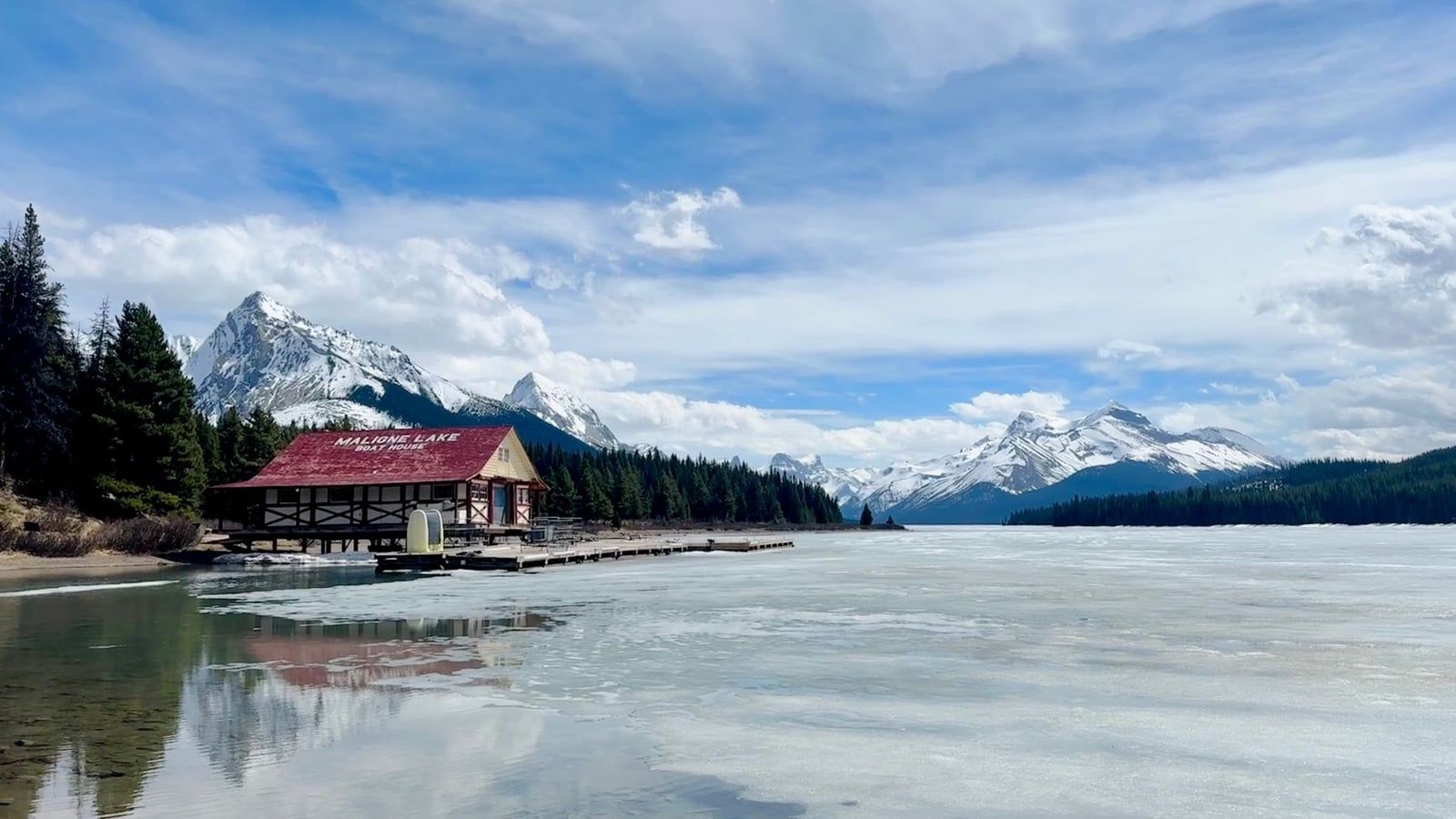
Forty-four kilometres of road with no exit, and the park's best winter wildlife corridor. About halfway, Medicine Lake empties through sinkholes in its lakebed each winter and visibly disappears — the water drains underground to resurface at Maligne Canyon. Drive it slowly, scanning the shoreline for elk and moose, and budget about two hours for the round trip. At the end, frozen Maligne Lake sits under 3,000-metre peaks with, usually, nobody else there.
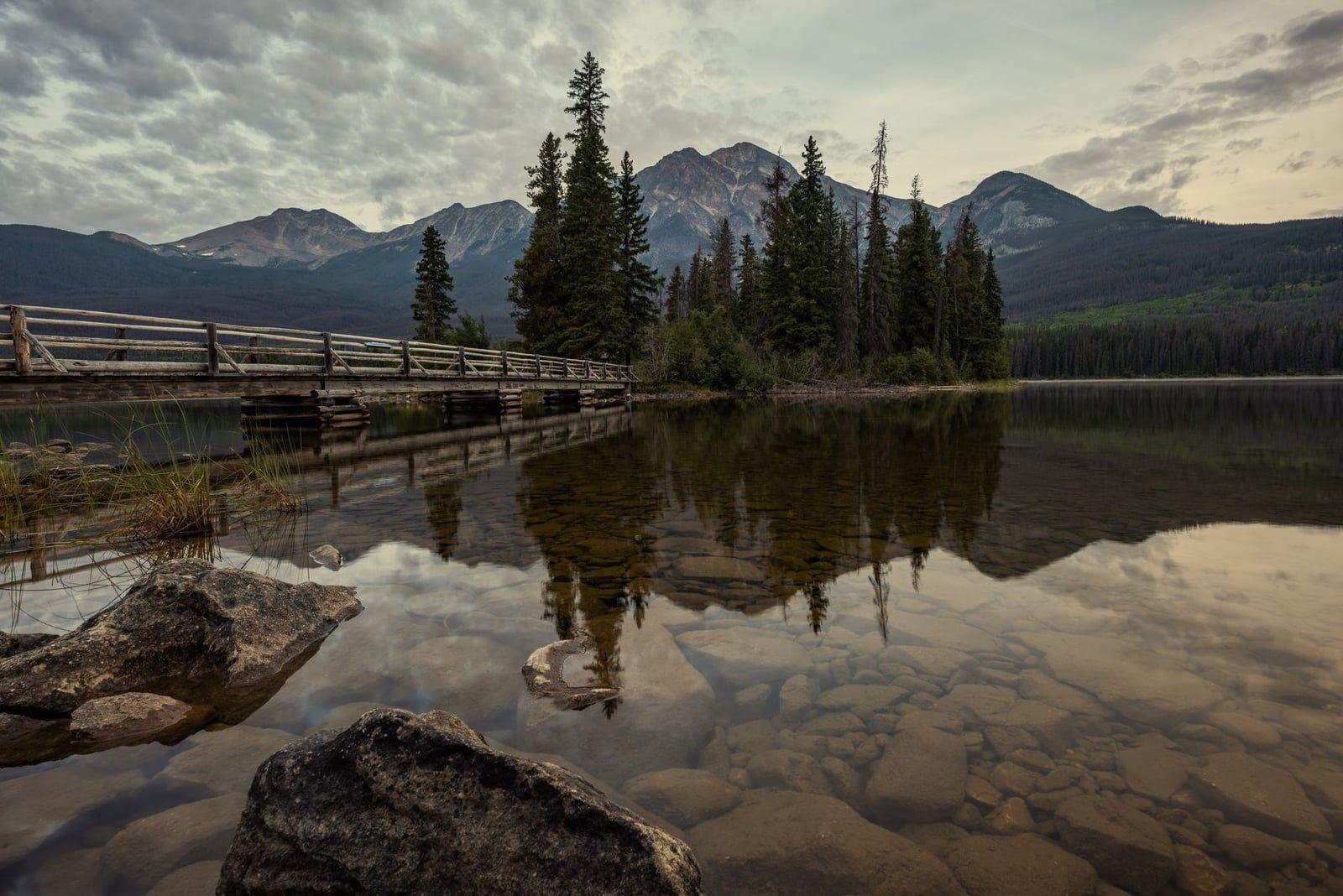
Pyramid Lake and Pyramid Island
The classic winter photo stop, ten minutes from town. A footbridge crosses to Pyramid Island on an easy 0.8 km return walk, with Pyramid Mountain framing the lake behind. Come at sunrise or the last hour of daylight, when the light hits the mountain head-on. On winter weekdays you'll often have the island to yourself.
The Columbia Icefield
At 103 km south of Jasper, the Athabasca Glacier is a half-day commitment — and worth it in clear weather. Nothing is open up there in winter: no tours, no Skywalk, no services. You can walk from the parking area toward the toe of the glacier and stand in front of a wall of ice. Never step onto the glacier itself; people have died in its crevasses, including in winter.
Driving the Icefields Parkway in Winter
In good conditions, this is one of the greatest drives on earth — glaciers and 3,000-metre walls on both sides, and almost no other cars. In bad conditions, it closes, and there's no cell service to call anyone when it does. Drive it only on a settled-weather day, with fuel, food, and warm clothes aboard, and treat the forecast as a hard gate rather than a suggestion. Our full Icefields Parkway guide covers the stops in detail.
Wildlife, Dark Skies, and Guided Winter Adventures
The best of the rest runs on a booking rather than improvisation — and two of Jasper's winter headlines, wildlife and the night sky, need explaining before you chase them.
Winter Wildlife Viewing
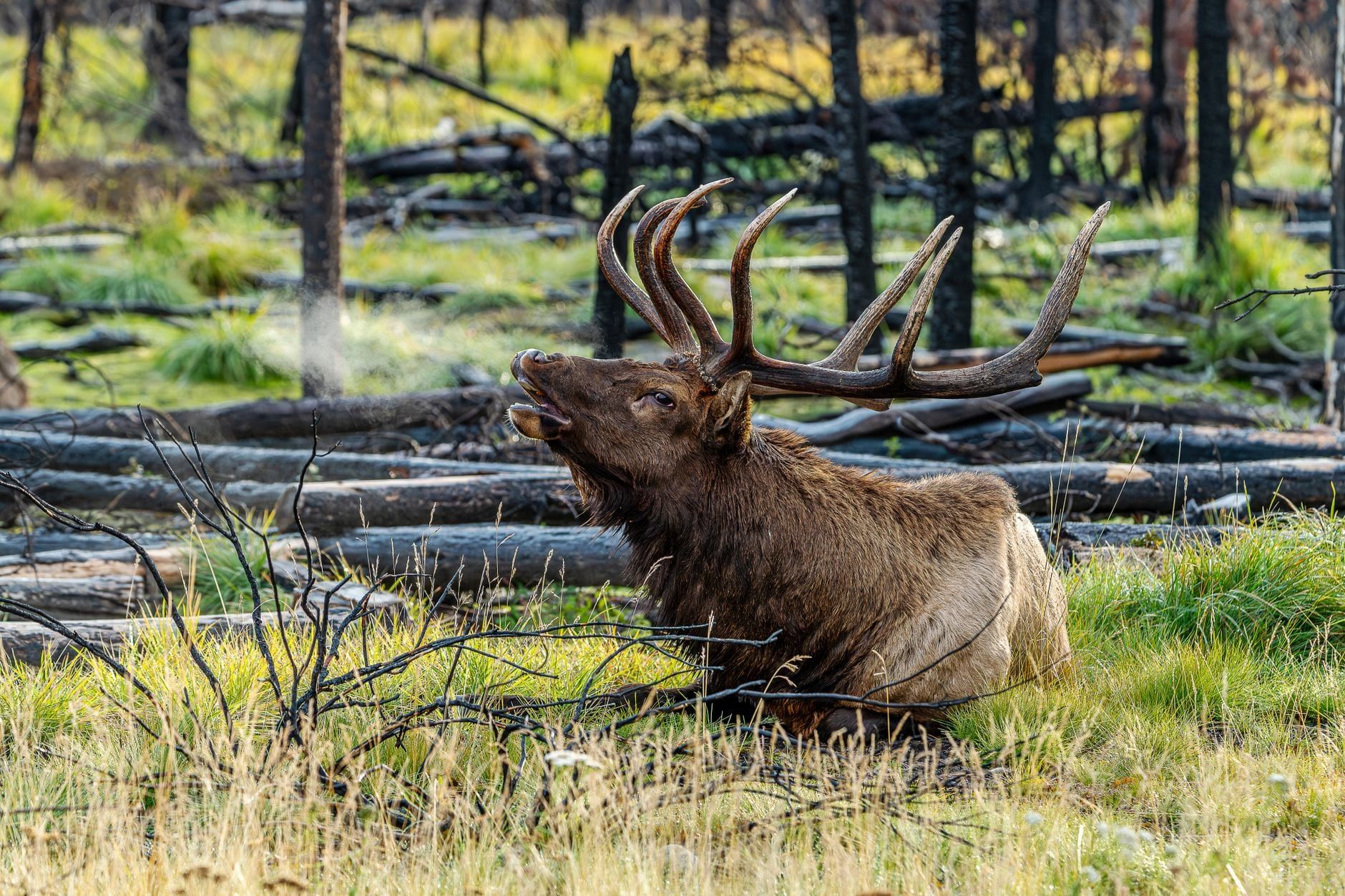
Winter concentrates wildlife in the valley bottoms, and Maligne Lake Road is the corridor: elk and bighorn sheep are near-certainties, deer and coyotes likely, and moose, wolves, and lynx a matter of luck — one visitor counted four moose in a single hour along the road. Give animals space (30 metres from elk and moose, 100 from anything with claws), make noise while walking, and carry bear spray; bears occasionally wake mid-winter, and cougars and wolves stay active. A guided winter wildlife tour — about 3.5 hours with hotel pickup — is the efficient way to cover the corridor if you'd rather not do the driving.
Dark Skies and the Northern Lights
Jasper is the world's second-largest Dark Sky Preserve, over 11,000 square kilometres of protected night sky, and winter's long nights are when that pays off. Head to Pyramid Lake, Lac Beauvert, Athabasca Falls, or Maligne Lake — anywhere away from town lighting — and check the aurora forecast and viewing tips before you go. On cloudy nights, the Jasper Planetarium at the Fairmont runs indoor telescope and dome shows.
Ice Climbing, Dogsledding, and Other Add-Ons
Rockaboo Mountain Adventures runs beginner ice-climbing days — no experience needed, ages 12 and up — at frozen falls including Tangle Falls and Maligne Canyon. Cold Fire Creek Sledding runs dogsledding tours nearby, Pyramid Lake Resort offers sleigh rides and fat-bike rentals, and the town shops fill whatever gaps remain. Book the ice climbing and dogsledding ahead; both have small group sizes.
The Cozy Side: Where to Eat, Soak, and Stay
Warm up well and the cold parts of the day get easier. Mornings belong to Bear's Paw Bakery, a town institution for pastries and coffee. For dinner, Evil Dave's does the town's best-known plates, and Jasper Brewing Company — the first brewery inside a Canadian national park, pouring since 2005 — handles the après-ski crowd. In between, pizza and a BeaverTail with hot chocolate will do just fine after a day on the lake.
Where you stay changes what you can do without driving. The Fairmont Jasper Park Lodge puts the roughly 1 km Lake Mildred skating loop, an outdoor heated pool (open 8 AM–10 PM daily for guests), and a hot tub overlooking Lac Beauvert on the same grounds. Pyramid Lake Resort, reopened after the 2024 wildfire, maintains the Pyramid Lake skating rink and rents skates, snowshoes, and fat bikes at the door. In town, the mid-range hotels put you walking distance from dinner and the brewery — Whistler's Inn adds rooftop hot tubs. More options in our where to stay in Jasper guide.
One correction worth repeating: Miette Hot Springs is closed all winter, so don't plan a soak there. Hotel pools and outdoor hot tubs are the winter version, and honestly, a rooftop tub at -15°C with steam rolling off the water is the more memorable setting anyway.
How Many Days? A Sample 3-Night Winter Weekend
Three nights is the minimum that fits Jasper's winter, four if you like a relaxed pace or want two days on the hill. Everything below runs from a single base — Marmot Basin is 20–30 minutes out, Athabasca Falls 30–40, and Maligne Lake Road about 45 minutes to the lake. Prefer a longer plan? Our 3-day Jasper itinerary adapts to winter with the same logic.
Day 1. Arrive from Edmonton by early afternoon. Walk Connaught Drive, pick up a BeaverTail, then skate the Lake Mildred loop or the Pyramid Lake rink through dusk. After dinner, drive five minutes out of town for stargazing — or stay up for the aurora if the forecast cooperates.
Day 2. The signature day. Either ski or snowboard Marmot Basin (first tracks, done by mid-afternoon), or — if the trails are open — do the Maligne Canyon ice walk in the morning and snowshoe Old Fort Point in the afternoon. Finish at a hot tub.
Day 3. The parkway day, weather permitting: Athabasca Falls, Sunwapta Falls, and the Columbia Icefield toe, with the whole drive in daylight. If the forecast turns, swap this with Day 4 and stay closer to town.
Day 4. Maligne Lake Road with the windows down and eyes up — wildlife stops at Medicine Lake, frozen Maligne Lake at the end — then back through town and east toward Edmonton.
Extend to four nights or more if downhill skiing is the point of the trip, if you're chasing the aurora, or if a dogsledding half-day is calling. Squeezing all of that into three nights turns a holiday into a schedule.
Frequently asked questions
Is Jasper worth visiting in winter?
Yes. Winter crowds are a fraction of summer's — about 80% of annual visitors come June–September — rooms cost less, snow is reliable November through April, and the park's main winter sights and activities sit within a one-hour drive of town.
How cold does it get in Jasper in winter?
Typical winter days run from about -10°C to -2°C, with cold snaps into the -20s. It's a dry cold that layers handle well. Daylight is short: roughly 7.5 hours at the December solstice, growing to about 9 hours 49 minutes by February 15.
Can you drive to Jasper in winter?
Yes. The Edmonton drive takes about 4 hours on a regularly plowed highway. The Icefields Parkway from the south is storm-prone, can close temporarily, and has almost no cell service. Winter tires or chains are required from November 1, and Sundog Tours runs winter buses from Edmonton, Calgary, Banff, and Lake Louise.
Is it safe to skate or walk on Jasper's frozen lakes?
Parks Canada does not monitor natural ice — you're on your own. Official guidance calls for 15 cm of thickness to walk or skate alone and 20 cm for a group. The maintained rinks at Pyramid Lake and Lake Mildred/Beauvert are the safe default.
Is the Maligne Canyon ice walk open?
The canyon trails have been closed since the July 2024 wildfire, so verify before you plan around it. Check Parks Canada's trail conditions report and confirm with ice-walk tour operators — their bookings track openings closely.
What's the best month to visit Jasper in winter?
December for holiday atmosphere (book early), January for Jasper in January festival deals on lodging, skiing, and spa treatments despite the coldest weather, and February to early March for milder days, longer daylight, and dependable snow.
How many days do you need in Jasper in winter?
At least three nights, four for a relaxed pace. That covers one signature day (skiing or the ice walk), the frozen falls and Maligne Lake Road, and town downtime — all from one base. Add days if skiing is your priority.