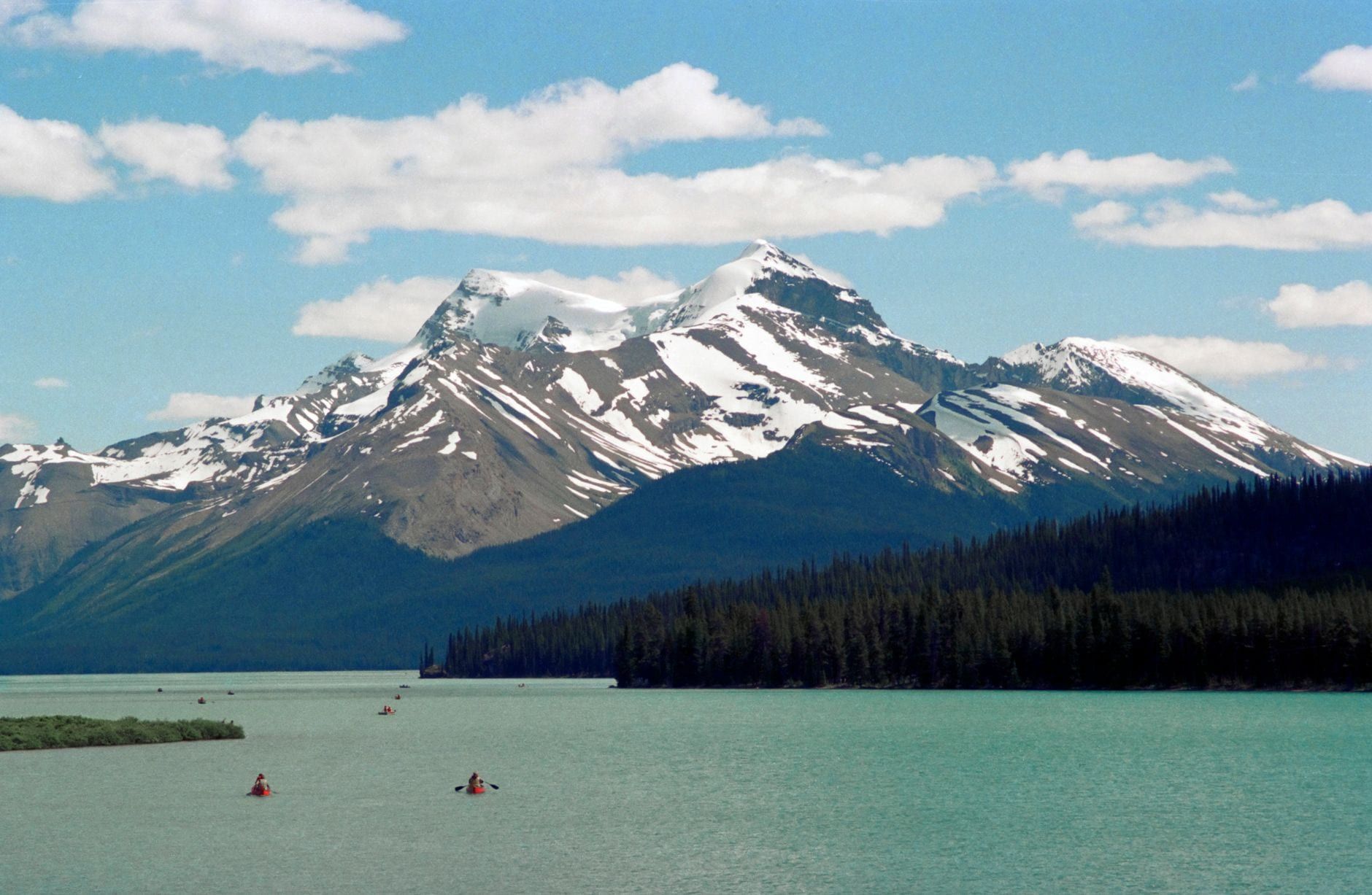
Maligne Lake is the largest natural lake in the Canadian Rockies, and for most visitors it's the best day trip out of Jasper townsite. The numbers do most of the selling: 22 km of glacier-fed water, three glaciers visible from the surface, and Spirit Island — a scrap of spruce-covered rock 14 km up-lake that no road or trail reaches. Everything below tells you how to see it, what it costs, and how to fit it into one day.
What Is Maligne Lake and Why Is It Famous?
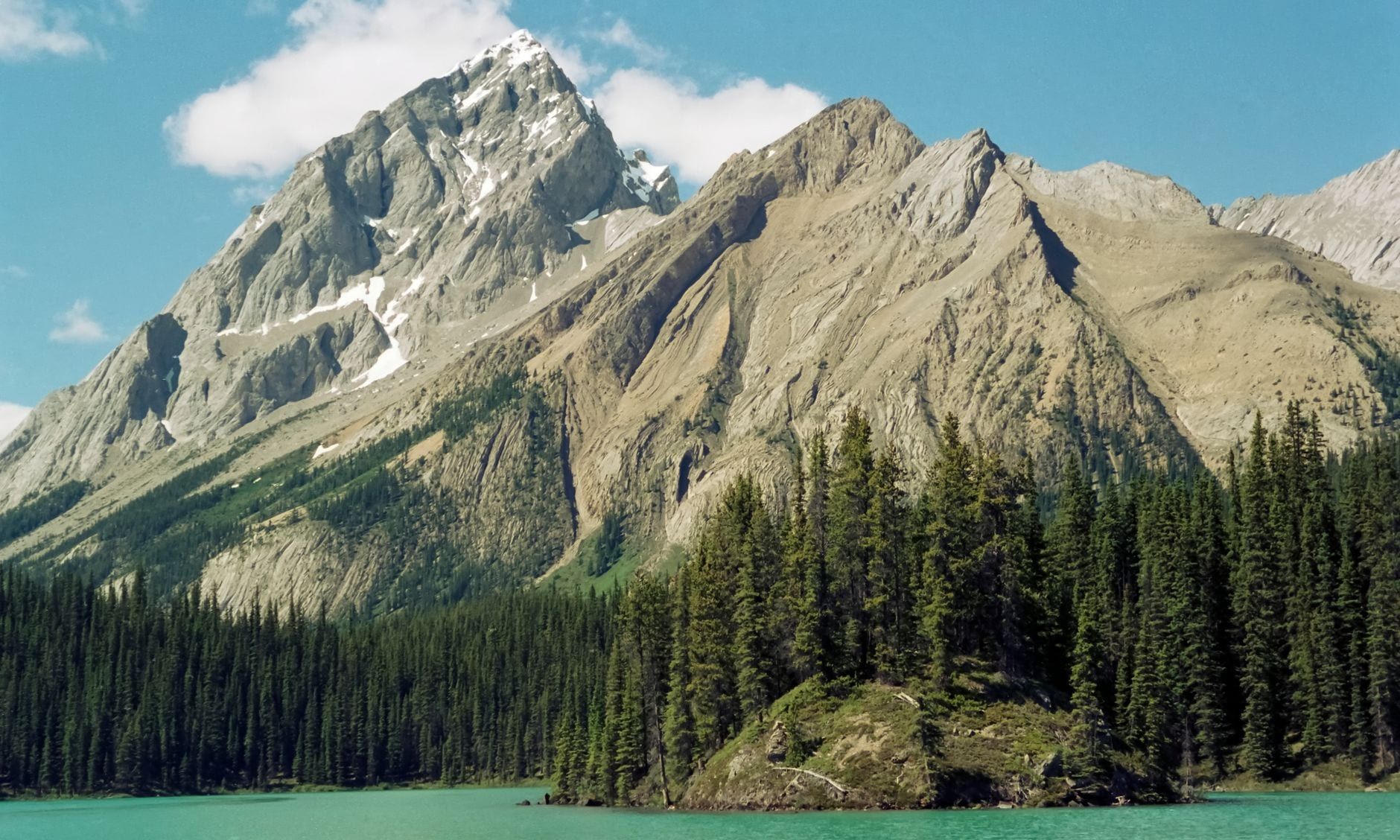
The lake sits at the end of the Maligne Road, 44 km of pavement winding southeast from Highway 16 — about 45 minutes from Jasper without stops, which you will make. It is the largest natural lake in the Canadian Rockies at 22 km long, hemmed by snow-and-ice-capped peaks and stretching past Spirit Island to the meltwater channels of Coronet Glacier. Three glaciers feed the view from the water: Charlton-Unwin, Maligne and Coronet, all stacked near the lake's south end where the peaks pinch into the box canyon known as the Hall of the Gods.
The colour is the first thing anyone mentions. Glacier melt suspends fine rock flour in the water, and that suspended silt refracts sunlight so the lake shifts from deep blue near the outflow at the north end to emerald as you paddle or cruise toward the glaciers. On a calm morning the change is visible within the first kilometre.
People have known about it for a long time. The Stoney Nakoda called it Chaba Imne — Beaver Lake — and the area carries older names meaning Lake of Deep Waters and Lake of Healing. The settler story starts in 1908, when Mary Schäffer reached the lake guided by a map drawn for her the year before by Samson Beaver, a Stoney guide. Her writings turned the lake into a destination, and her verdict has stuck for a century: "If Lake Louise is a pearl, Maligne is the entire pearl necklace." If you're still sketching out your trip, our rundown of things to do in Jasper places the lake in context with the rest of the park.
Spirit Island: The View That Made the Lake Famous
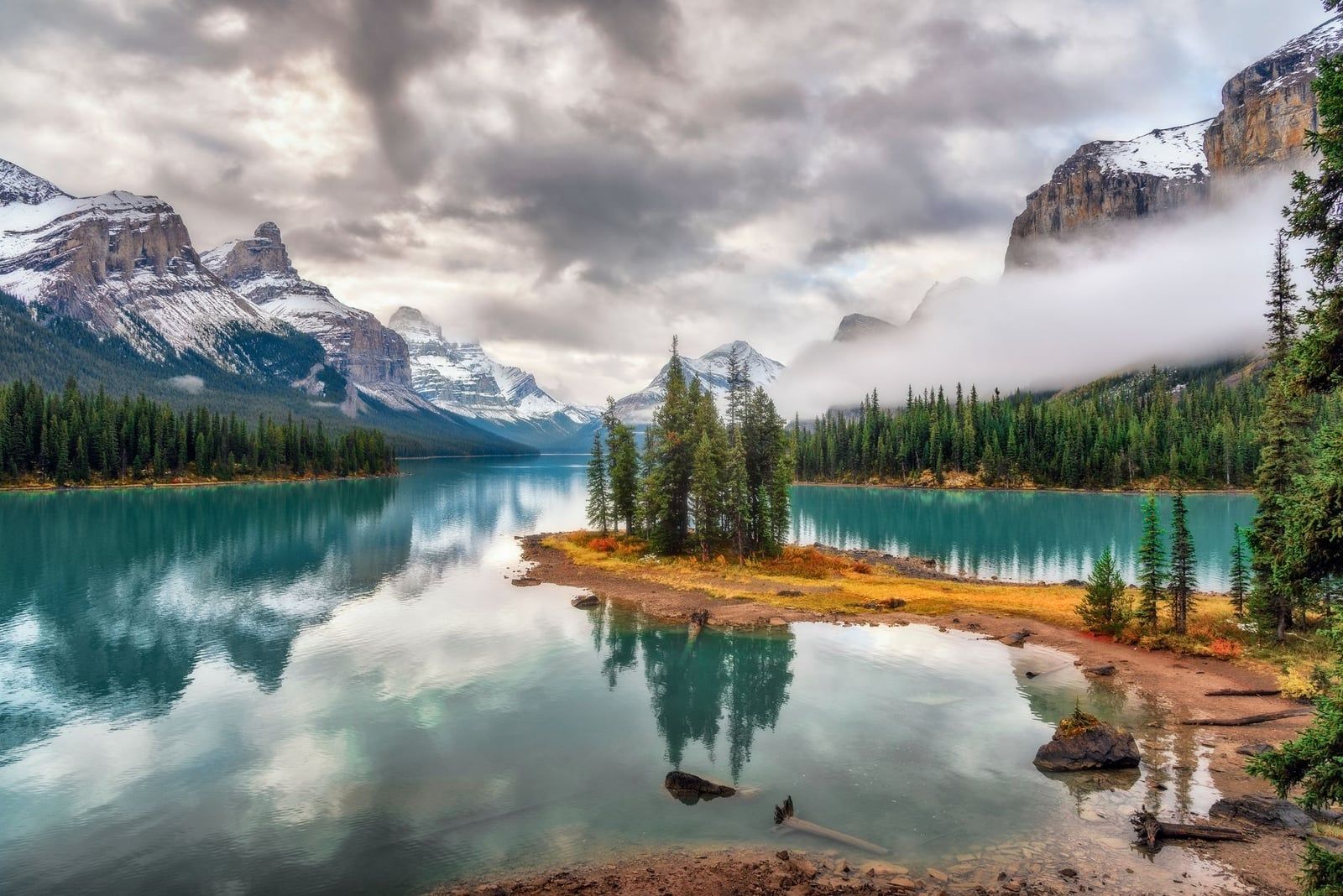
Spirit Island is a tiny tied island — a clump of spruce connected to the shore by a sandbar, only a true island when meltwater rises in summer. That sandbar is why the classic photograph works: the tree line runs out mid-frame, and the island floats alone against the peaks behind it. Kodak and Apple have both used the view in campaigns, and it ranks among the most photographed spots in the Canadian Rockies.
Nobody sets foot on it. The island is sacred to the Stoney Nakoda, who regard the surrounding mountains as ancestors, and the ground itself is too fragile for foot traffic. You photograph it from a short shoreline nature trail and a slightly raised viewing platform across the water — and honestly, that's the angle everyone wants anyway.
Getting there is the whole problem. The island is 14 km up-lake with no road or trail, so your options are the tour boat or your own non-motorized craft. On the cruise you get roughly 15–20 minutes at the stop, which is enough for the trail, the platform and a batch of photos if you move with purpose. Light matters more than timing luck: the view favours late afternoon and early evening, so the first departure (around 9 am, when the water is calmest) and the last Premium cruise of the day give the best odds. A true sunrise shot requires paddling in and camping at Fisherman's Bay — see the paddling section below. From the water near the island, look south: the Hall of the Gods box canyon closes the view like a gate.
The Maligne Lake Cruise: Options, Prices and Tips
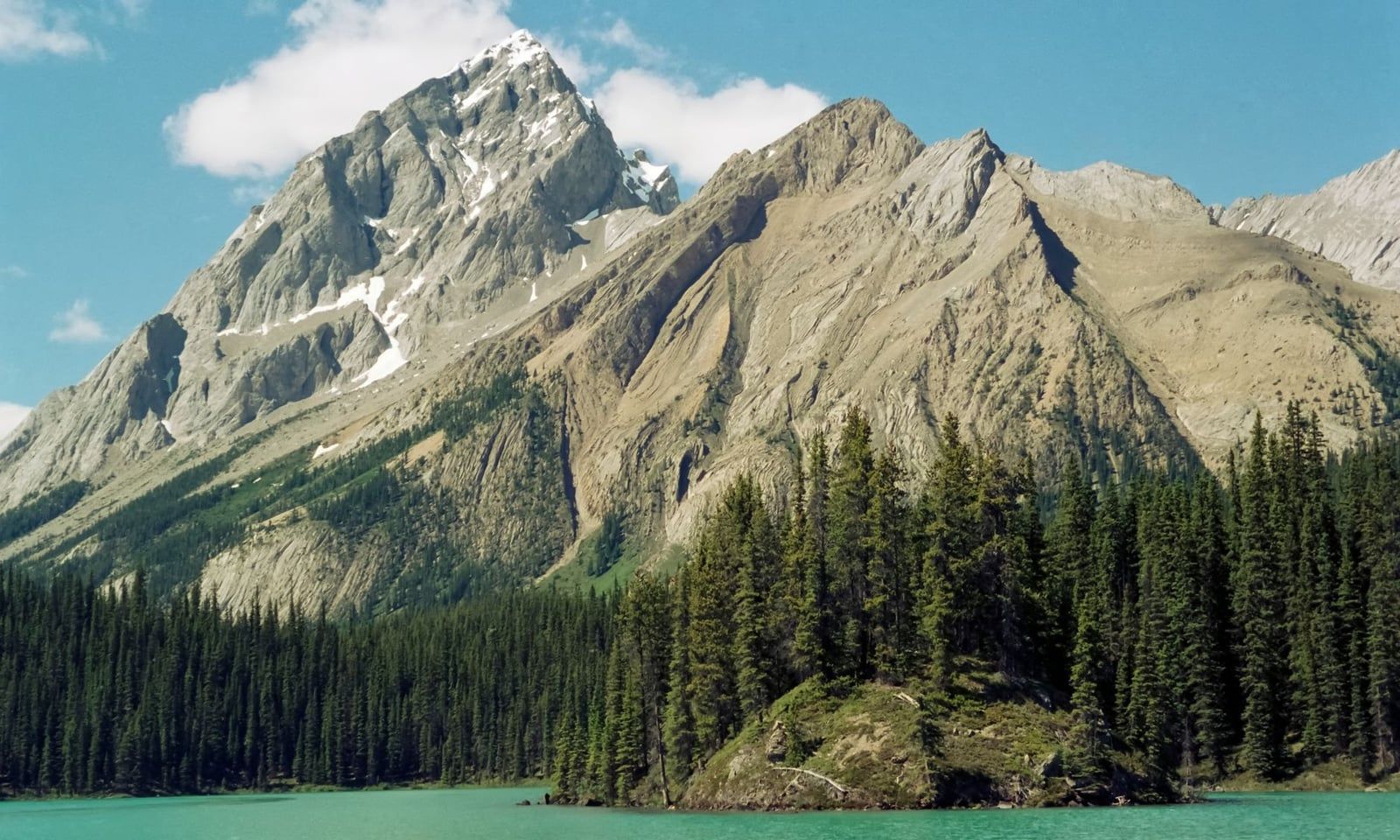
Two cruises run the lake, and the difference is simple: the Classic is 90 minutes and the Premium is two hours, with the Premium adding about 15 extra minutes at Spirit Island and departing once daily. Here's the side-by-side.
| Classic Cruise | Premium Cruise | |
|---|---|---|
| Duration | 90 minutes | 2 hours |
| Adult price | $106 | $141 |
| Child price | $69 | Premium pricing, adults only tier published |
| Kids go free | Yes — on the 9:00 and 9:15 departures | No |
| Time at Spirit Island | About 15 minutes | About 30 minutes |
| Departures | Multiple daily, first around 9:00–9:15 am | Once daily |
The 2026 season runs May 29 to October 11. Under-5s ride free on any departure — you still need to book them a ticket. Advance-purchase prices float and climb as departure dates fill, so the numbers above are the floor, not the ceiling.
Onboard Reality and Arrival Tactics
Boats carry up to about 50 passengers on bench seating, and the decks are covered with outside access, so there's no bad seat — but the windows go fast. Queue at the dock as early as you can. The operator recommends arriving a full hour before departure for parking and check-in; treat that as a hard rule in July and August, when cruises sell out daily and bookings should go in weeks ahead.
A few logistics worth knowing before you book: most departures are wheelchair accessible but accessible boats are limited, so call +1.888.900.6272 ahead of booking to confirm. No pets and no strollers on board. If you'd rather not drive the lake road yourself, Jasper boat tours and guided valley day trips bundle the transport.
Is the Cruise Worth It, and What About the Pursuit Pass?
For first-timers, yes — the island is the reason the lake is famous and there is no other way to see it in half a day. The pass math only works the other way: the Pursuit Pass bundles attractions run by the cruise operator, and it pays off only once you stack three or more — the cruise plus, say, the Columbia Icefield and the SkyTram. Two experiences? Buy them separately. Paddlers with two spare days should skip the boat entirely and earn the view.
Paddling Maligne Lake and Backcountry Camping
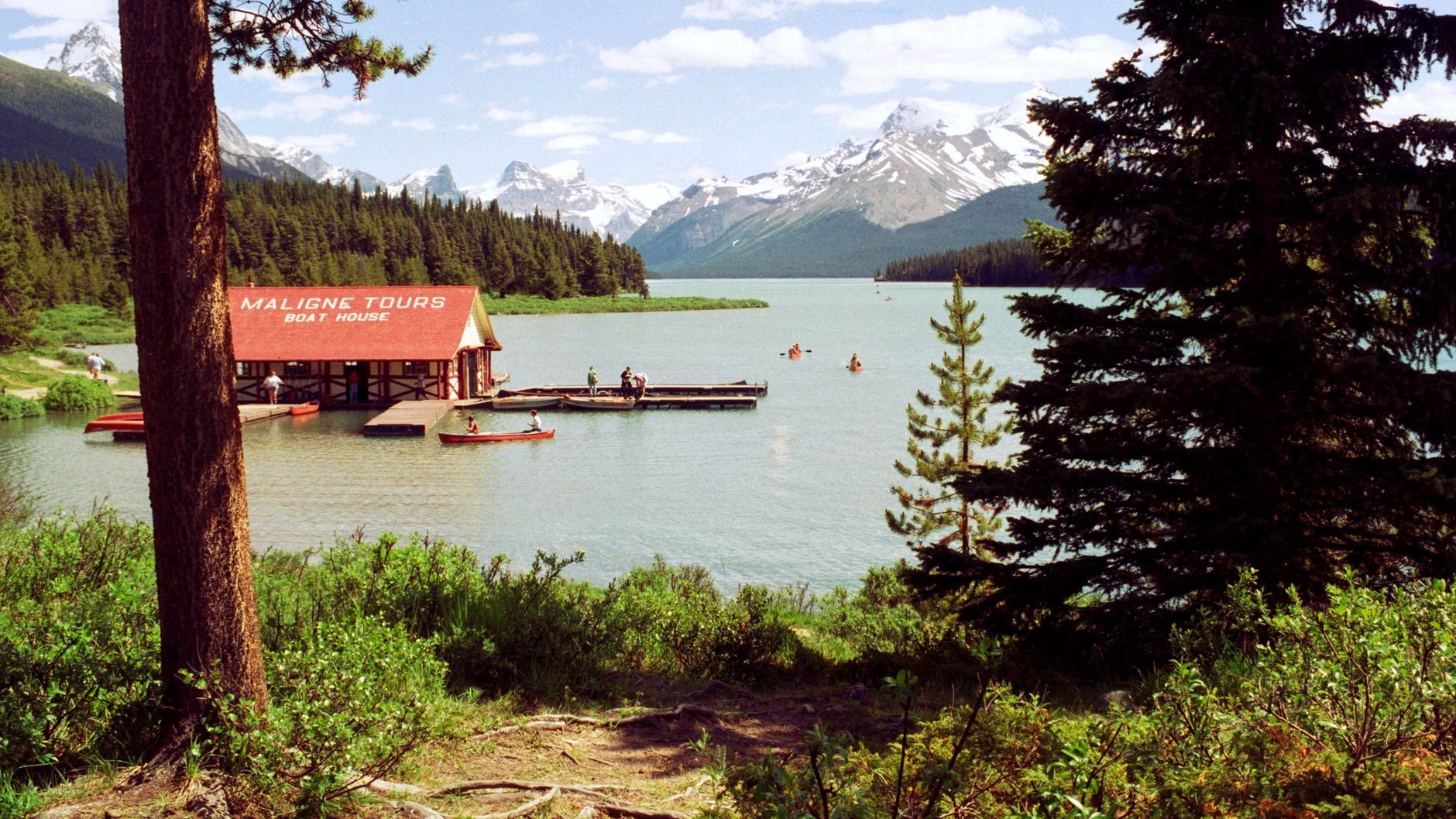
Private motorized boats are banned on Maligne Lake — non-motorized craft only, with small electric trolling motors the lone exception. What that means in practice is quiet water and a lake that belongs to canoes, kayaks and the tour boats. The boathouse at the docks rents canoes at $89/hour or $185/day, single kayaks at $72/hour or $155/day, double kayaks at $88/hour or $175/day, and pedal boats at $105/hour. It's open 10 am to 5 pm daily from May 29 to September 27, 2026; arrive 30 minutes early for waivers and a briefing.
Paddling to Spirit Island is the ambitious play: 14 km one way, four to five hours each way, and the wind decides your schedule — afternoon chop on a lake this size is a genuine hazard, so experienced paddlers only. Most people split it over two days and camp at Fisherman's Bay. The lake has three paddle-in campsites, all reservation-only and fiercely competitive in summer: Hidden Cove (4 sites, 4 km from the docks), Fisherman's Bay (8 sites, 13 km, closest to the island) and Coronet Creek (8 sites, 21.3 km, near Coronet Glacier). A backcountry permit runs $15 per person per night, booked through reservation.pc.gc.ca.
Anglers take note: fishing is allowed with a national park permit — $15 daily or $51.25 annual, valid across Banff, Jasper, Yoho and Kootenay. No live bait, ever. Kids under 16 fish free on an accompanied adult's permit, with their catch counting toward that adult's limit.
Hiking at Maligne Lake: Every Official Trail
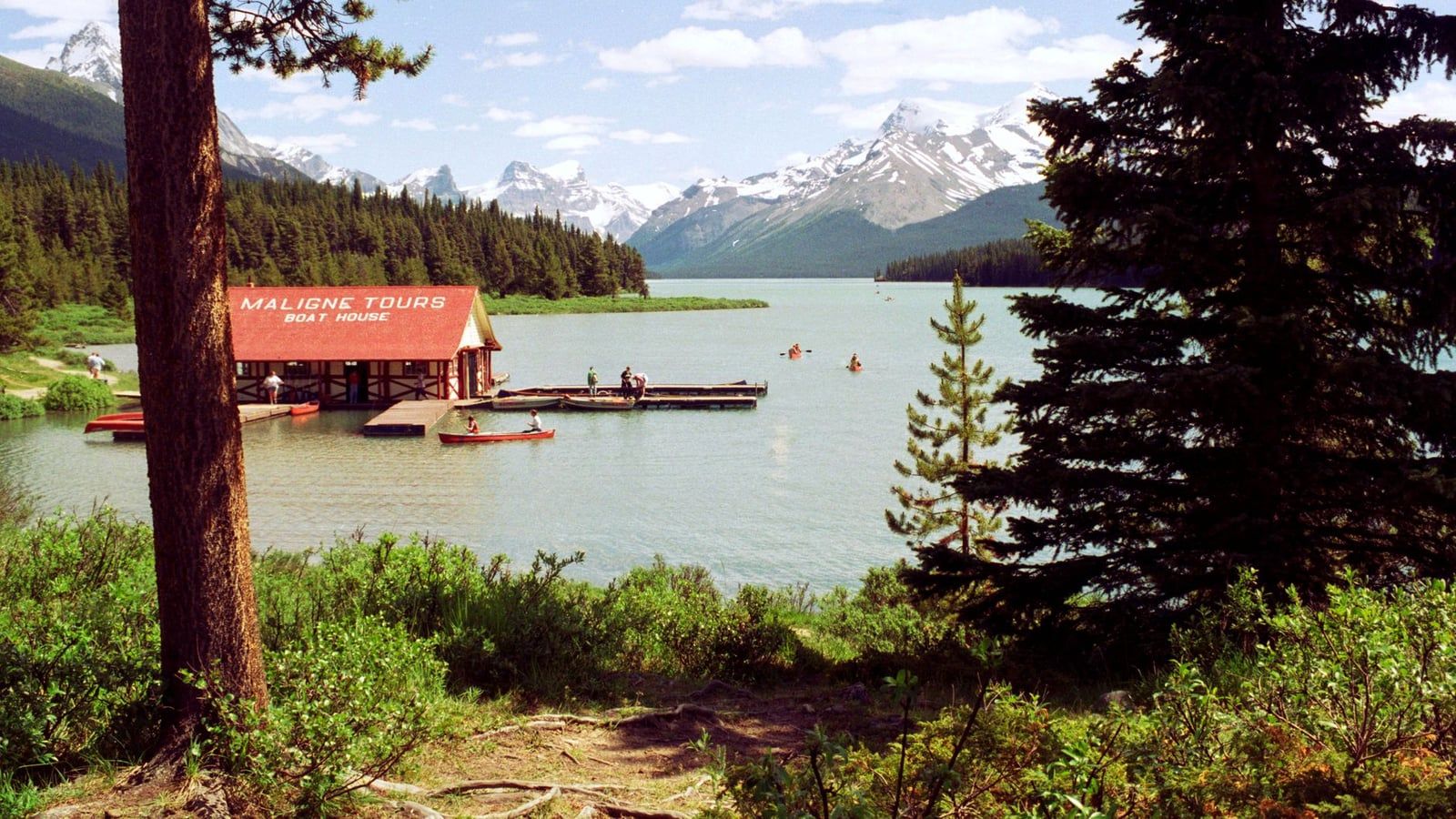
Five official Parks Canada trails start at the lake, and the numbers below come straight from the park service — several blogs publish rounded or plainly wrong figures for Bald Hills, so here's the source data.
| Trail | Difficulty | Distance | Elevation gain | Time |
|---|---|---|---|---|
| Mary Schäffer Loop (Trail 21) | Easy | 3.2 km loop | 0 m | 1–2 h |
| Moose Lake Loop (Trail 20) | Easy | 2.7 km loop | 59 m | 1–2 h |
| Lorraine & Mona Lakes (Trail 100) | Easy | 5.2 km return | 80 m | 2–3 h |
| Opal Hills Loop (Trail 22) | Difficult | 8.2 km loop | 460 m | 4–6 h |
| Bald Hills (Trail 23) | Difficult | 10.4 km return | 500 m | 4–6 h |
The Easy Loops: Mary Schäffer and Moose Lake
The Mary Schäffer Loop is flat, lakeshore-hugging and home to the park's famous red chairs — a one-hour amble with interpretive panels on the lake's history and a stop at Curly Phillips's historic boathouse. Families with small legs, start here. The Moose Lake Loop crosses old landslide terrain to a shallow pond, and its name is honest: this is the best short walk on the lake for moose odds, especially early or late in the day.
Lorraine and Mona Lakes
Trail 100 branches off the Skyline route for 5.2 km return past two quiet mountain lakes. It sees a fraction of the traffic of the loops, and two to three hours buys you a lunch spot with a good chance of having no neighbours.
Opal Hills and Bald Hills: The Big Views
The two difficult hikes are the ones worth planning a day around. Opal Hills climbs 460 m through wildflower meadows on an 8.2 km loop with views back down the Maligne Valley. Bald Hills follows an old fire road 10.4 km return to a 2,170 m panorama of the entire lake — the classic photograph from above — with an optional summit push to 2,300 m. Meadows on both are at their most flowery from late July to early August. Either one is a full half-day; do not tack them onto a cruise morning unless you start at dawn. For more options across the park, our guide to the best hikes in Jasper covers the rest of the trail network.
The Skyline Trail
Backpackers should know the roughly 45 km Skyline Trail — Jasper's classic multi-day route above 2,490 m — starts or ends at Maligne Lake, which creates the two-vehicle problem. The fix is a pre-booked shuttle. In winter, all of these trails double as snowshoe and cross-country ski routes.
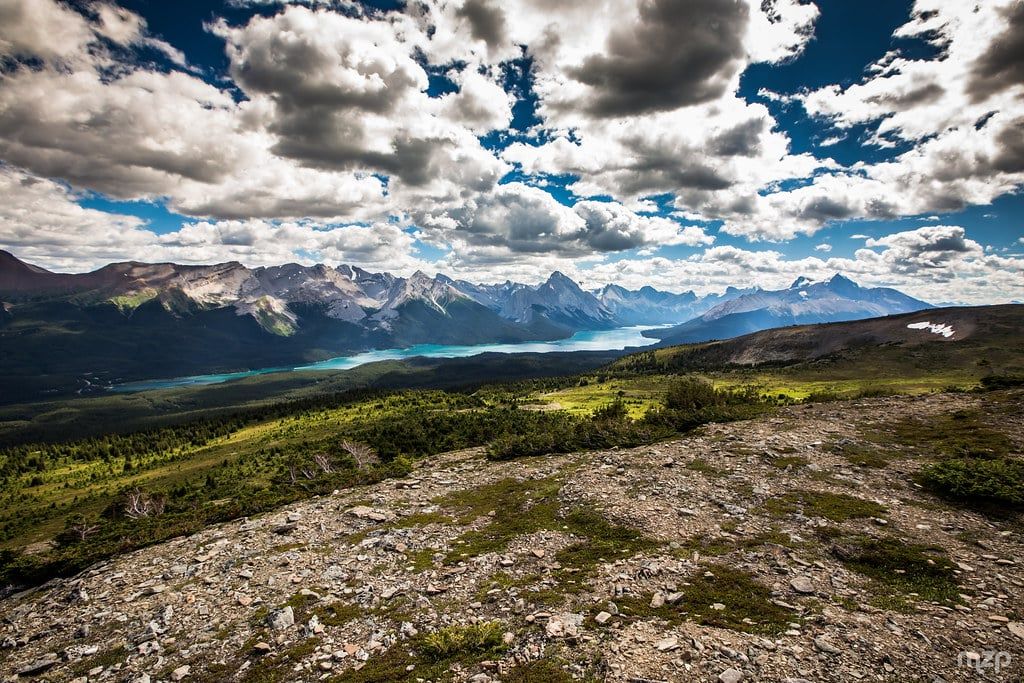
Getting There: Driving the Maligne Lake Road
The drive is half the reason to go. Turn off Highway 16 just 1.9 km east of Jasper onto Maligne Road and follow it 47 km to the road's end at the lake — about 50 minutes, though the lookouts make an hour-plus more realistic. There are no gas stations anywhere on the road, so fill the tank in town. And drive it slowly at dawn and dusk: the valley is a designated wildlife corridor, and elk, deer and bighorn sheep treat the pavement as a crossing point. Arriving from farther afield? Our guide on how to get to Jasper covers trains, shuttles and driving routes into the park.
Maligne Canyon and Medicine Lake: The Stops En Route
Two stops justify the drive on their own. Maligne Canyon, about 11 km from town, is a limestone gorge up to 50 m deep crossed by a series of footbridges — give the interpretive trail 45 minutes. Farther up the valley, Medicine Lake has no visible outflow: its water drains through underground caves and resurfaces, dramatically, in Maligne Canyon. The lake level visibly drops through the season as the drainage wins the race against the melt.
Parking and Car-Free Options
Parking at the lake is free, and in July and August it's gone by mid-morning. Since cruises start departing around 10 am, arriving before 9:30 gets you both a spot and quieter trails. Without a car, your options are the seasonal Maligne Valley hiker shuttle (operating June 12 to September 19) or a guided day tour from Jasper that handles the driving while someone else watches for wildlife.
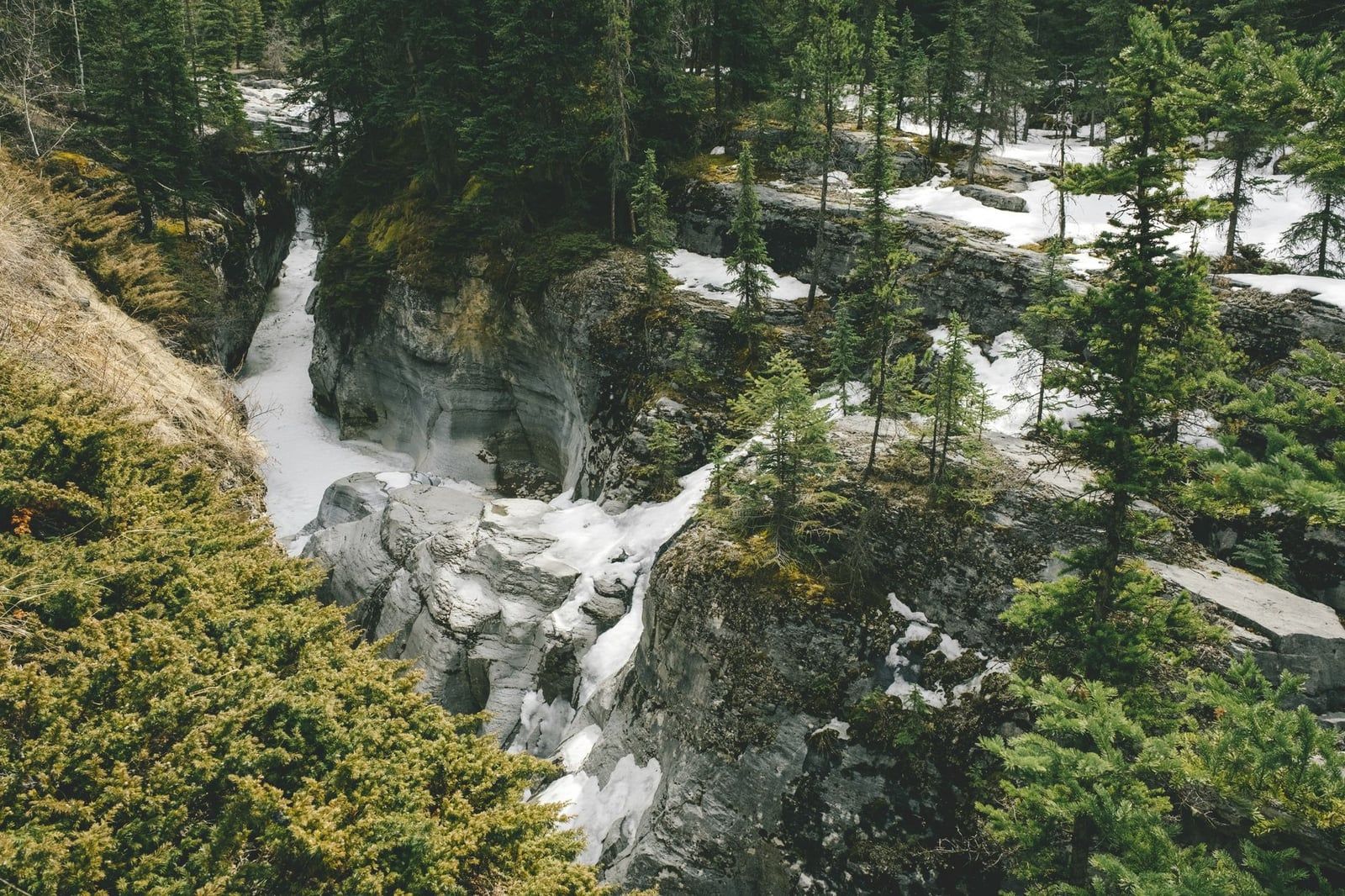
Best Time to Visit Maligne Lake
Mid-June to early October is the practical window — the lake is thawed, cruises run, the boathouse rents boats and the high trails are clear of snow. The cruise season itself runs May 29 to October 11 in 2026, with the exact spring start depending on the thaw each year.
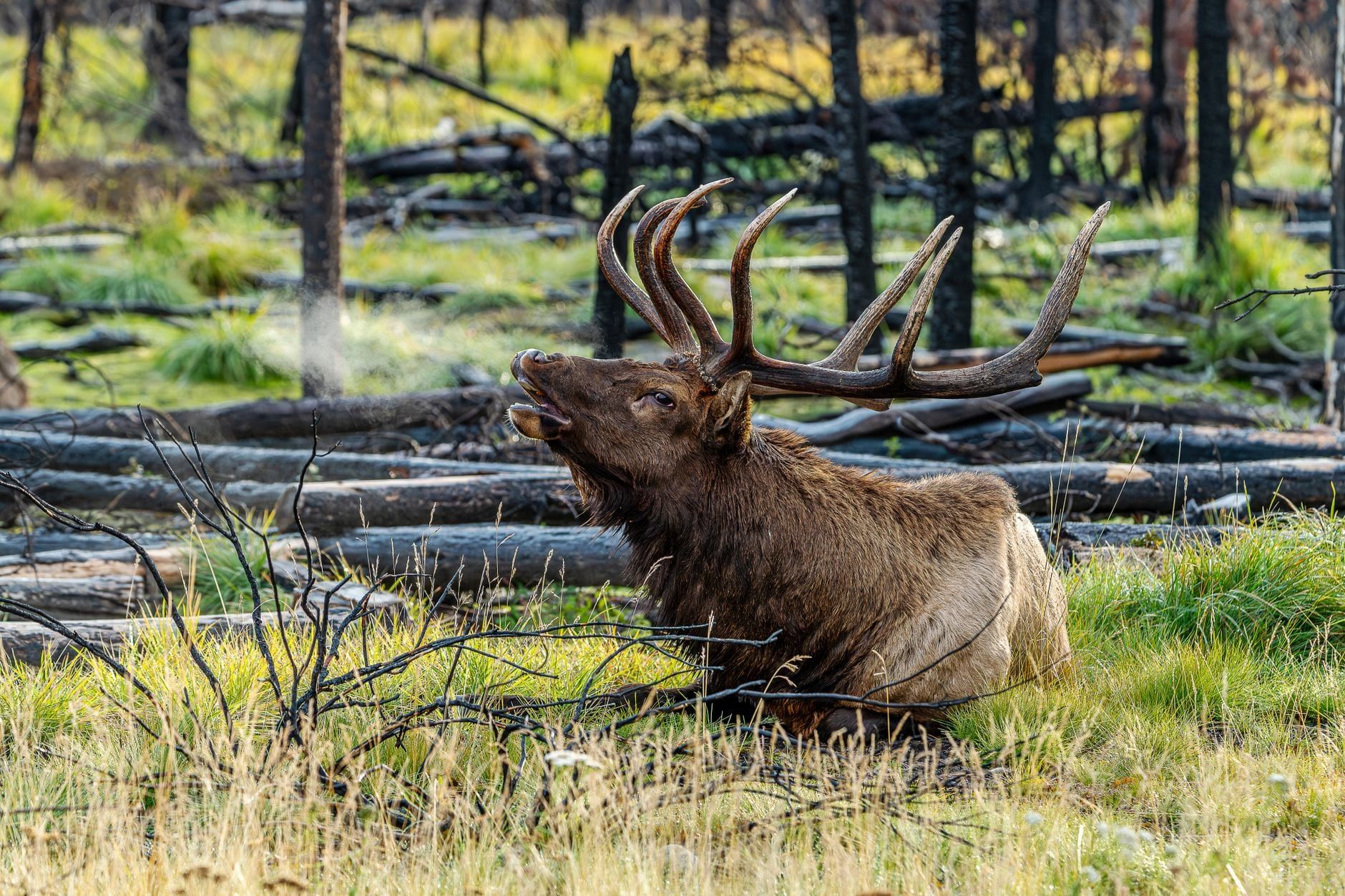
July and August bring the warmest weather and the longest days, and the crowds to match: cruises sell out daily and you need to book weeks ahead and arrive before 9:30 for parking. September into early October is the connoisseur's window — larch and aspen colour, the elk rut in full voice along the road, and thinning crowds as services wind down.
From November the lake freezes over and stays that way into spring. Maligne Lake Road generally stays open year-round — check Parks Canada conditions before you go — and winter visitors get snowshoeing, cross-country skiing and moose tracks in fresh snow, with almost nobody around. Spring is the wildcard: thaw dates swing year to year, but baby wildlife and empty trails reward whoever times it.
Wildlife Watching at Maligne Lake
Set expectations first. Deer are near-certain, elk are common along the road at dawn and dusk, and moose are possible but never promised. Your best moose odds are the boathouse shoreline and the Moose Lake Loop, early or late in the day once the crowds thin. The open lodgepole pine and spruce forest around the lake's north end also holds Harlequin Ducks — a bird list prize in the Rockies.
Both black bears and grizzlies use these trails, most actively at dawn and dusk. Carry bear spray, know how to use it, and keep the legal distances: 30 metres from elk, deer and moose, 100 metres from bears. Caribou historically ranged the Bald Hills and Opal Hills area, and wolves pass through the valley — treat either as a gift, never a plan. Bald eagles and osprey fish the lake through summer. And the road itself is the best viewing corridor of all: drive it slowly at first and last light and you'll likely see more from the car than from any trail. Never feed or approach anything. For a fuller species-by-species rundown, see our guide to wildlife in Jasper.
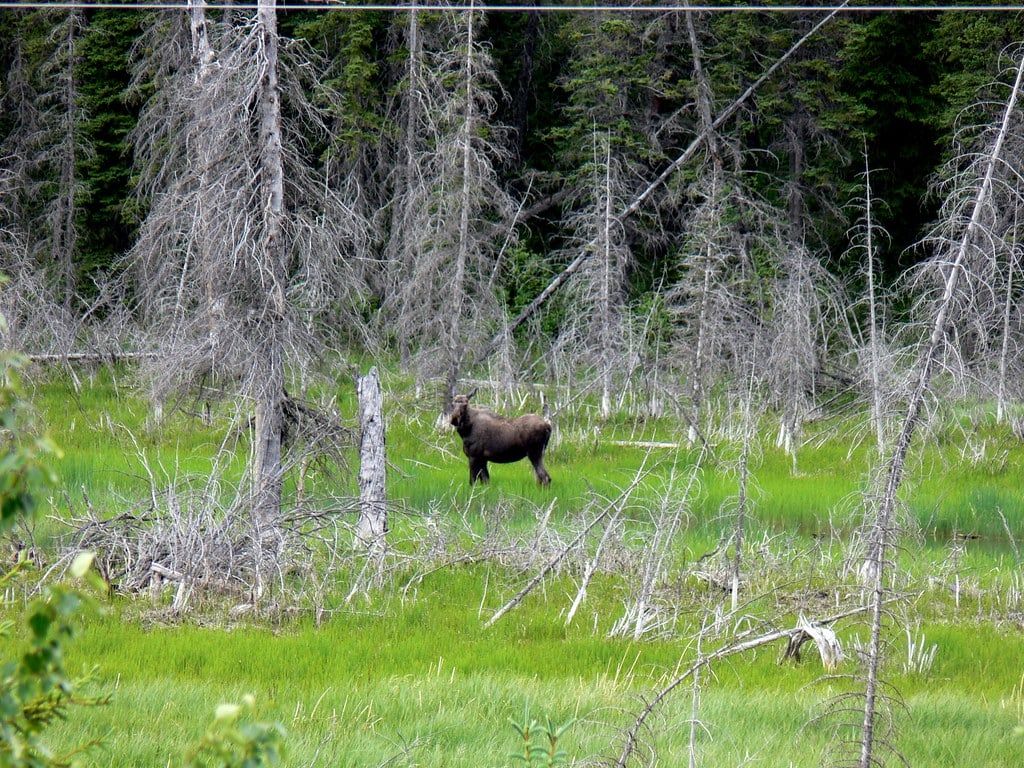
Know Before You Go: Costs, Food and Practicalities
Entry first: the lake is inside Jasper National Park, so a pass is required — $12.25 per adult per day (valid until 4 pm the next day), $10.75 for seniors 65+, and free for anyone 17 and under. A family or group day pass covers up to 7 people in one vehicle for $24.50, and an annual Discovery Pass runs $83.50 adult / $167.50 family. One wrinkle for 2026: Parks Canada's Canada Strong Pass gives free park admission through September 7, 2026, with regular fees resuming September 8. Full details live on our park hours and fees page.
Dining at the lake runs to three spots, all summer-only (roughly June through October): The View, a sit-down restaurant with deck views and mains from $21–33; the Lake House Cafe for casual dishes at $12–17; and the Waffle Hut, where a waffle runs $10–14 and the fried-chicken waffle costs $15. There are washrooms, a gift shop and picnic spots — pack a lunch and you'll eat better than the cafe line does. Services thin out sharply outside summer, so check what's open before a shoulder-season visit.
Swimming is legal and almost nobody does it: the water averages about 4°C even in August. Go in if you must; know that it will hurt. Leashed pets are fine on land but barred from the cruise, strollers stay ashore too, and accessible boats are limited — call ahead.
One Perfect Day at Maligne Lake
The lake rewards an early start, because everything hard about this day — parking, cruise seats, moose — is easier before 10 am. Here's the sequence that fits the canyon, the cruise, a hike and the drive into one long, excellent day.
- 8:00 — Leave Jasper with a full tank; no gas on Maligne Road.
- 8:30 — Walk the Maligne Canyon footbridges, then stop at the Medicine Lake lookout.
- 9:30 — Arrive at the lake; claim parking before the lots fill.
- 10:00 — Classic Cruise to Spirit Island, back by 11:30.
- 12:00 — Waffle Hut or Lake House Cafe lunch, or picnic on the shore.
- 13:00 — Hike Bald Hills for the panorama, or the Mary Schäffer and Moose Lake loops with kids.
- 17:30 — Drive back slowly at golden hour, watching the roadside for wildlife.
Short on time? The half-day version is the early cruise plus the Mary Schäffer Loop — you're back in Jasper by mid-afternoon. If the lake is one stop on a longer trip, our full Jasper itinerary sequences it with the Icefields Parkway and the townsite, and the where to stay in Jasper guide sorts out your bed for the night.
Maligne Lake FAQ
Can you walk on Spirit Island or hike to it?
No. The island sits 14 km up-lake with no road or trail — the tour boat or a private non-motorized craft are the only ways in. It is sacred to the Stoney Nakoda, and landing on it is prohibited; photos are taken from the shoreline nature trail and viewing platform across the water.
How long is the Maligne Lake cruise and how much does it cost?
The Classic cruise is 90 minutes; the Premium is 2 hours. 2026 advance pricing runs $106 adult / $69 child for the Classic and $141 adult for the Premium, with kids free on the 9:00 and 9:15 departures and under-5s free with a ticket. The 2026 season runs May 29 to October 11 — book weeks ahead for July and August.
When is the best time to visit Maligne Lake?
Mid-June to early October, when the lake is thawed and cruises, rentals and high trails are all running. July and August are warmest but busiest; September offers fall colour, the elk rut and thinner crowds. In winter the lake freezes and the draw is snowshoeing and cross-country skiing.
Can you swim in Maligne Lake?
It's legal, but the glacier-fed water averages about 4°C even in summer — barely above an ice bath. Almost nobody swims; treat it as a dare rather than a plan.
Do you need a Parks Canada pass to visit Maligne Lake?
Yes, the lake is inside Jasper National Park. Daily admission is $12.25 per adult (valid until 4 pm the next day), free for anyone 17 and under, with a $24.50 group day pass covering up to 7 people in one vehicle and annual Discovery Passes from $83.50.
Is parking free at Maligne Lake, and when does it fill up?
Yes, the lots at road's end are free — but they fill by mid-morning in July and August. Since cruises start departing around 10 am, arriving before about 9:30 secures a spot and beats the trail crowds.
Can you canoe or kayak to Spirit Island?
Yes — about 14 km one way, roughly 4–5 hours of paddling each direction, and best split over two days camping at Fisherman's Bay (8 sites, 13 km, the closest site to the island). A rented canoe costs about $89/hour or $185/day in 2026. Private motorized boats are banned; electric trolling motors are the only exception.
Will I see moose or bears at Maligne Lake?
Moose are possible but never guaranteed — the boathouse shoreline and Moose Lake Loop at dawn or dusk are your best bets. Black and grizzly bears are active on the trails, so carry bear spray. Elk, deer and bighorn sheep are frequent along Maligne Lake Road itself.
Sources
- parks.canada.ca/pn-np/ab/jasper/activ/itineraires-itineraries/lac-maligne
- parks.canada.ca/pn-np/ab/jasper/activ/experience/sentiers-trails/maligne
- parks.canada.ca/pn-np/ab/jasper/visit/tarifs-fees
- banffjaspercollection.com/attractions/maligne-lake-cruise
- jasper.travel/blog/where-spirit-island
- en.wikipedia.org/wiki/Maligne_Lake