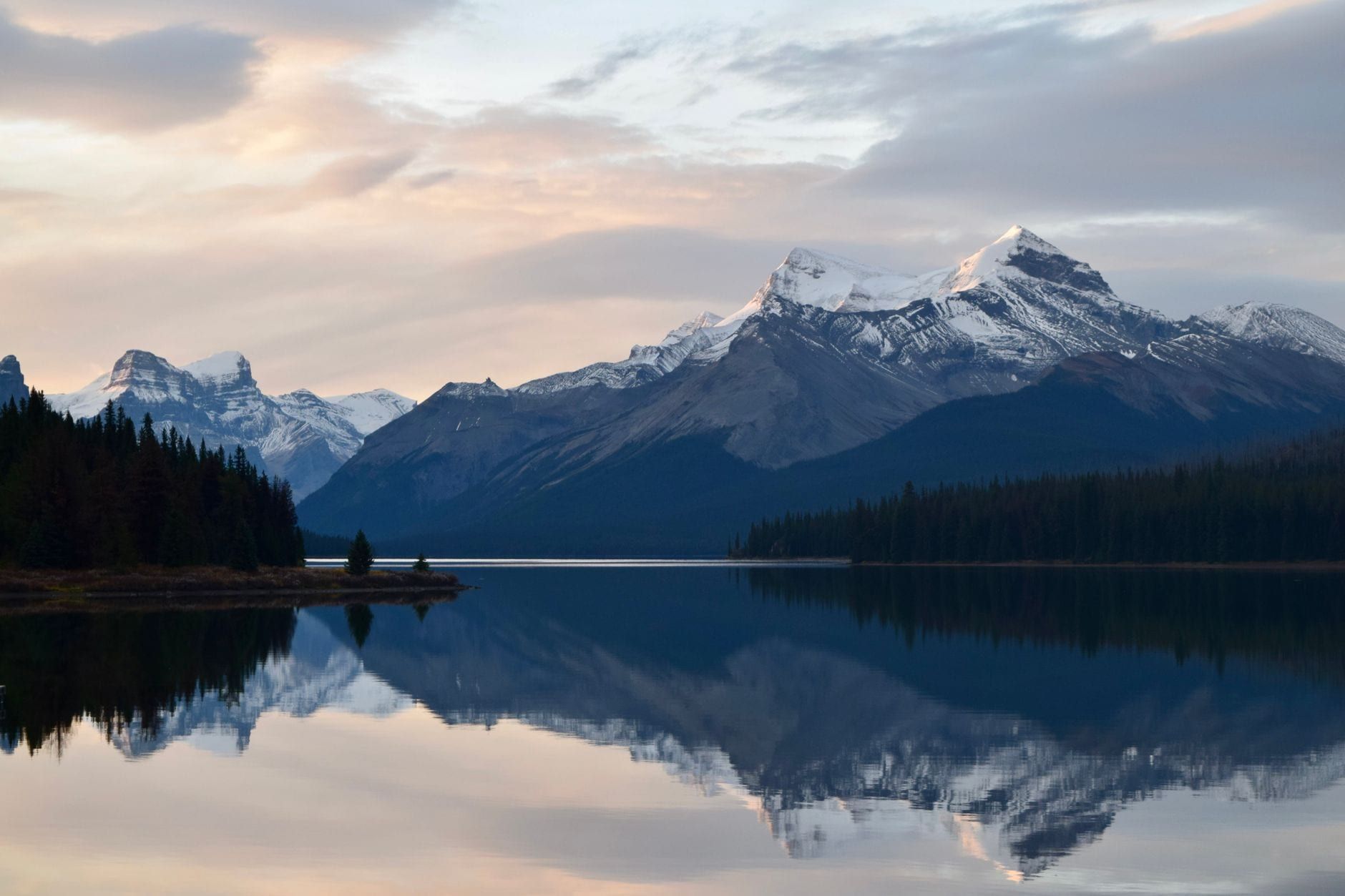
Give Jasper three full days and you'll see the best of it without rushing: the SkyTram and the lakes around town, the whole Maligne Valley, and the waterfalls and glaciers south on the Icefields Parkway. That's the core plan below, built as three geographic days so you never backtrack. Short on time? A two-day compression keeps the essentials; a fourth day adds hot springs and Mount Robson.
One thing to settle before anything else: the July 2024 wildfire, which burned more than 32,000 hectares and damaged 358 of the townsite's 1,113 structures, is still shaping what's open. Most of the park is back. Some of it isn't. Every day plan below carries the current status, but check Parks Canada's Jasper bulletins before you book — that page is the source of truth.
How Many Days Do You Need in Jasper? (And What's Open Right Now)
Three full days is the working minimum; three to four is ideal. Two days covers the essentials if you compress hard, and a fourth or fifth unlocks Miette Hot Springs, Mount Robson, and slower hiking. Most first-timers book two or three nights and leave wishing for one more — Jasper is the largest national park in the Canadian Rockies at over 11,000 square kilometres, and distances eat time.
Recovery from the 2024 wildfire has moved fast. Maligne Road, Medicine Lake and the Maligne Lake day-use areas reopened in stages through late 2024, the Valley of the Five Lakes trail came back on May 23, 2026, and the SkyTram and Athabasca Falls never left. The gaps that remain matter for planning:
If you're splitting a Canadian Rockies road trip, give Jasper at least as many nights as Banff. Jasper draws roughly 2.5 million visitors a year against Banff's four-plus million, and the gap shows: shorter lines at viewpoints, more wildlife per windshield hour, a town that still feels like a rail stop. Our Jasper vs Banff comparison breaks down how to divide the drive.
Each day below groups sights geographically. Day 1 stays within fifteen minutes of town. Day 2 runs the Maligne Valley east. Day 3 heads south on the Icefields Parkway — and doubles as your departure route if you're continuing to Banff or Lake Louise.
Jasper Trip Logistics: Park Pass, Bookings, and Getting There
Admission is $12.25 per adult per day, $10.75 for seniors, free for anyone 17 and under, and $24.50 for a family or group of up to seven in one vehicle. Buy online or at a gate and display the pass in your vehicle. Combining parks or staying a week? The Discovery Pass ($83.50 adult, $167.50 family) pays for itself after about seven park-days — our hours and fees guide has the full breakdown. Note that the SkyTram, the Maligne cruise, and tours are priced separately from admission.
One 2026 quirk: the Canada Strong Pass made admission free through September 7, with regular fees resuming September 8. Either way, sort these before you arrive:
- Hotel: room inventory is capped, and summer basics can pass $400 a night
- Maligne Lake cruise: sells out nearly every day in July and August
- SkyTram: timed tickets bought online skip the booth line
- Rental car: Edmonton and Calgary fleets run thin in peak summer
Fly into Edmonton (about four hours west on the Yellowhead, Highway 16) or Calgary (4.5 to 5 hours through Banff) — Jasper has no airport of its own. Coming from Calgary, the 232-kilometre Icefields Parkway between Lake Louise and Jasper deserves a full day of stops, not a drive-through; our Banff to Jasper driving guide plans it stop by stop. VIA Rail serves the Jasper station from Edmonton and Vancouver, the Rocky Mountaineer runs seasonal daylight trips, and SunDog and Brewster shuttles connect both airports from roughly $28–90 one-way.
A rental car is close to essential — Maligne Lake alone is 44 km from town, and summer transit is thin. Car-free, you can piece the trip together from tours with downtown pickup: the cruise, wildlife tours, rafting. If you drive, downtown parking runs $4.50/hour on-street and $2.50–$3.50 off-street from May 1 to October 31.
Day 1: Jasper SkyTram, Whistlers Summit, and Lakes Around Town
Day 1 stays close to town, which makes it the right arrival day — even a late start works.
Morning: Jasper SkyTram and the Whistlers Summit
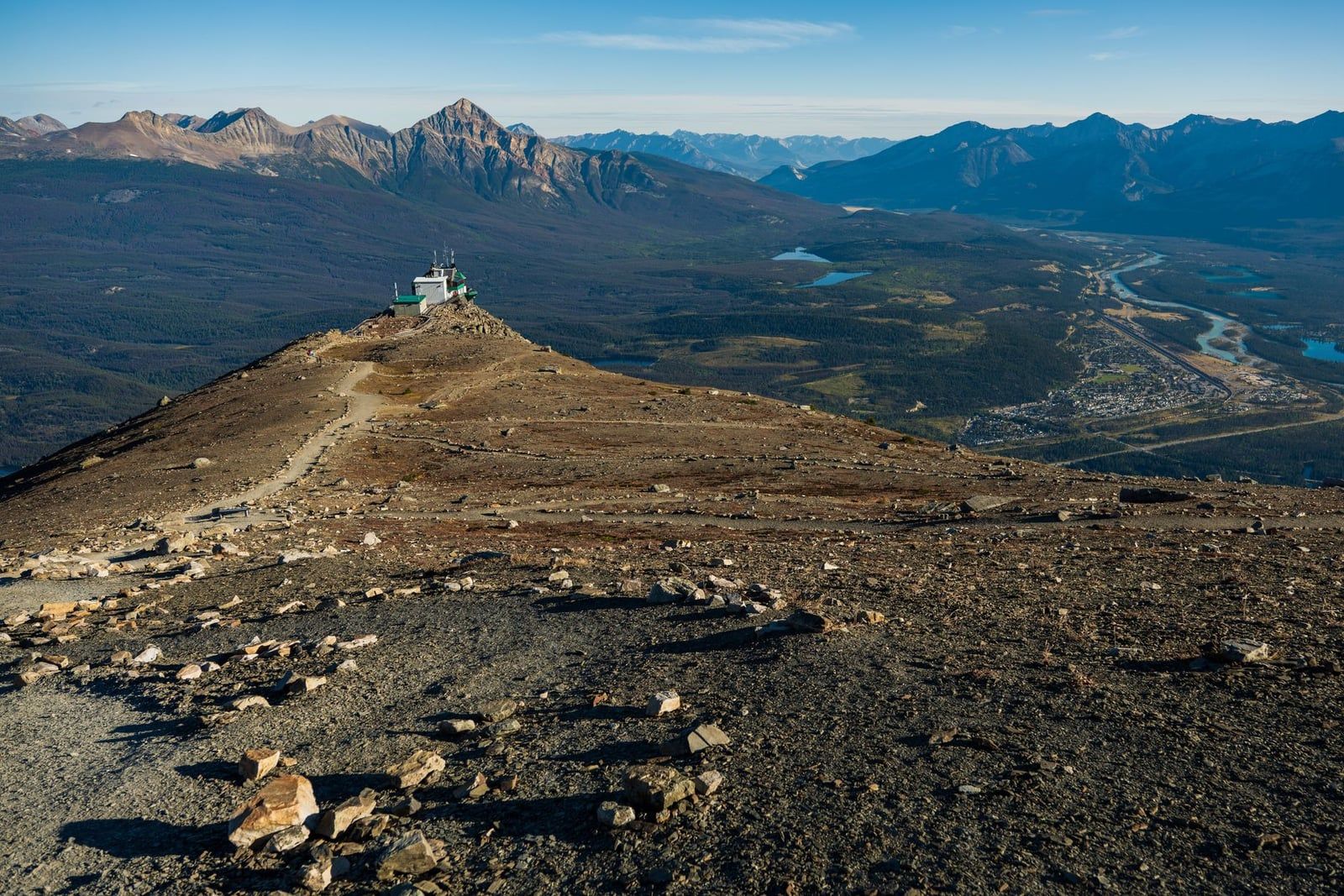
The SkyTram lifts you to 2,263 metres on Whistlers Mountain in seven to ten minutes — Canada's longest and highest guided aerial tramway, with views over six mountain ranges from the upper station. It runs April 15 to October 25, opening at 10 a.m. until mid-May and 8 a.m. through the summer. Kids fly free in the first two hours of each day with a paying adult, so a morning slot saves a family real money.
The summit path runs 1.4 km one way from the upper station, about 200 metres of gain, 20–30 minutes on a rough trail. At 2,463 metres the payoff doubles: on a clear day you can pick out Mount Robson, the highest peak in the Canadian Rockies, on the western horizon. Wear real shoes — the path can hold snow into July.
Afternoon: Town Orientation and the Lakes Around It
Back in town, give yourself an hour to orient: Patricia Street and Connaught Drive hold most of the shops and cafés, the heritage train station anchors the east end, and the Two Brothers Totem Pole stands near the information centre. Coffee and a pastry, then head for the water.
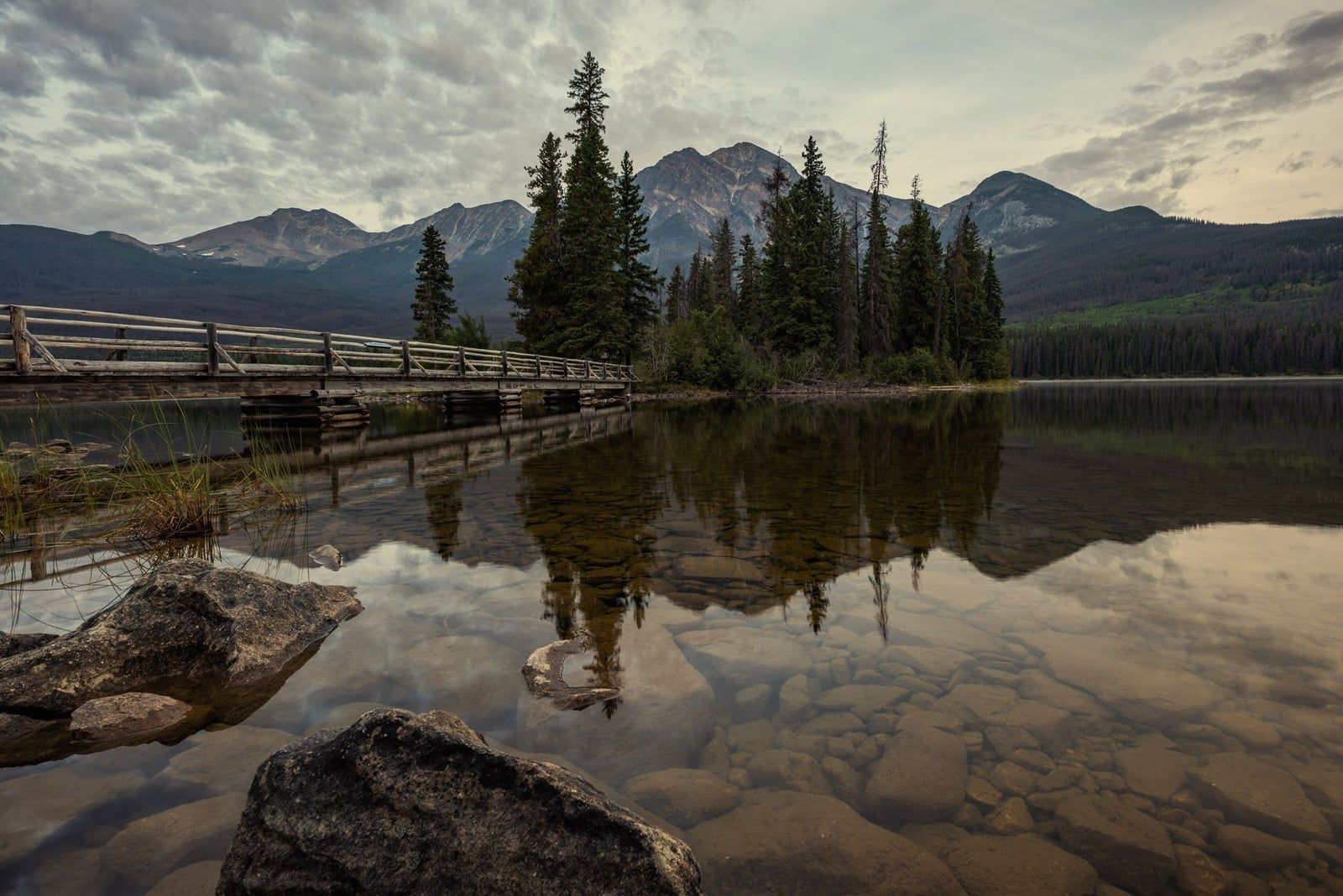
Pyramid Lake and Patricia Lake sit ten minutes north under Pyramid Mountain. The footbridge to Pyramid Island is the shot everyone wants at sunrise or sunset, when the mountain goes pink. Lac Beauvert, beside the Fairmont lodge, is the calmest water in the valley, and Annette and Edith lakes, five minutes east of town, are where canoe and paddleboard rentals happen. Lake Annette also has a fully paved 2.4 km shoreline loop if you want a stroller- or wheelchair-friendly walk.
Evening: Dark Skies Over Jasper
Jasper is one of the world's largest dark-sky preserves — over 11,000 square kilometres of protected night sky. The Jasper Planetarium runs year-round in a 44-seat dome and pairs its shows with one of the largest telescopes in the Canadian Rockies, with a two-year raincheck if clouds move in. Or just drive out to Pyramid Lake and look up. For aurora, our northern lights guide covers the windows — fall and winter, because summer nights are too short.
Day 2: Maligne Lake Road — Maligne Canyon, Medicine Lake, and Spirit Island
Day 2 is the best single-day drive in the park: 44 km of Maligne Road, out and back, with the cruise as the anchor. Budget six hours with stops. Start early — bears, elk and moose are most active in the first and last hours of daylight.
Maligne Canyon: Off the Menu for 2026
The road's first major stop is closed this season. Maligne Canyon — the park's deepest gorge at more than 50 metres, crossed by six footbridges — stays shut all of 2026 while Parks Canada assesses and rehabilitates it after the wildfire. Don't build a plan around it, and don't duck the barricades: burned trees in the area come down without warning. Check the park's bulletins for any change.
Medicine Lake, the Disappearing Lake
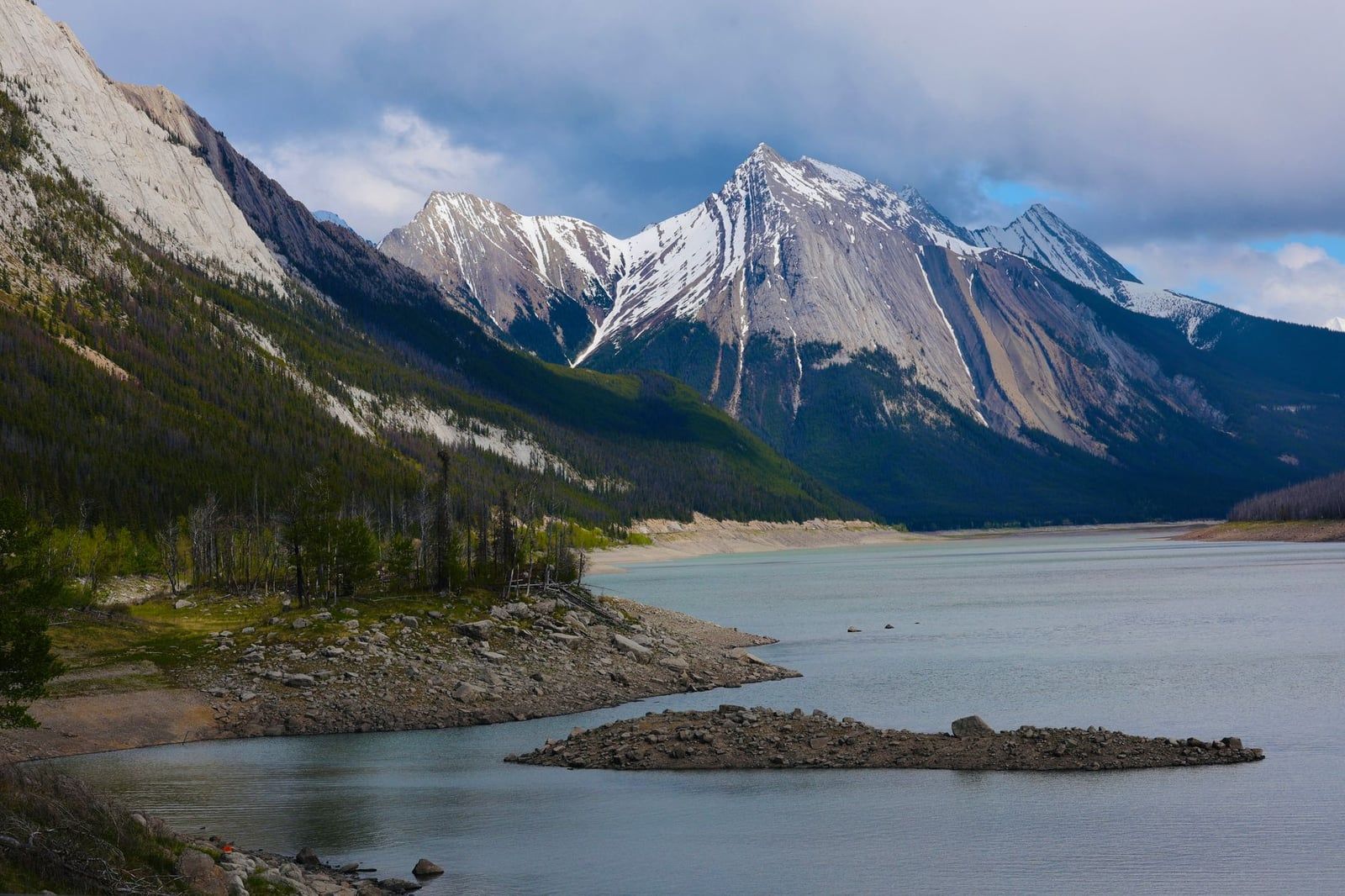
Halfway out, Medicine Lake looks like a lake that forgot to fill. Its water drains through sinkholes in the lakebed into an underground cave system, and the level drops visibly as the season goes on. Pull into the viewpoint, scan the shoreline for moose, and move on.
Maligne Lake and the Spirit Island Cruise
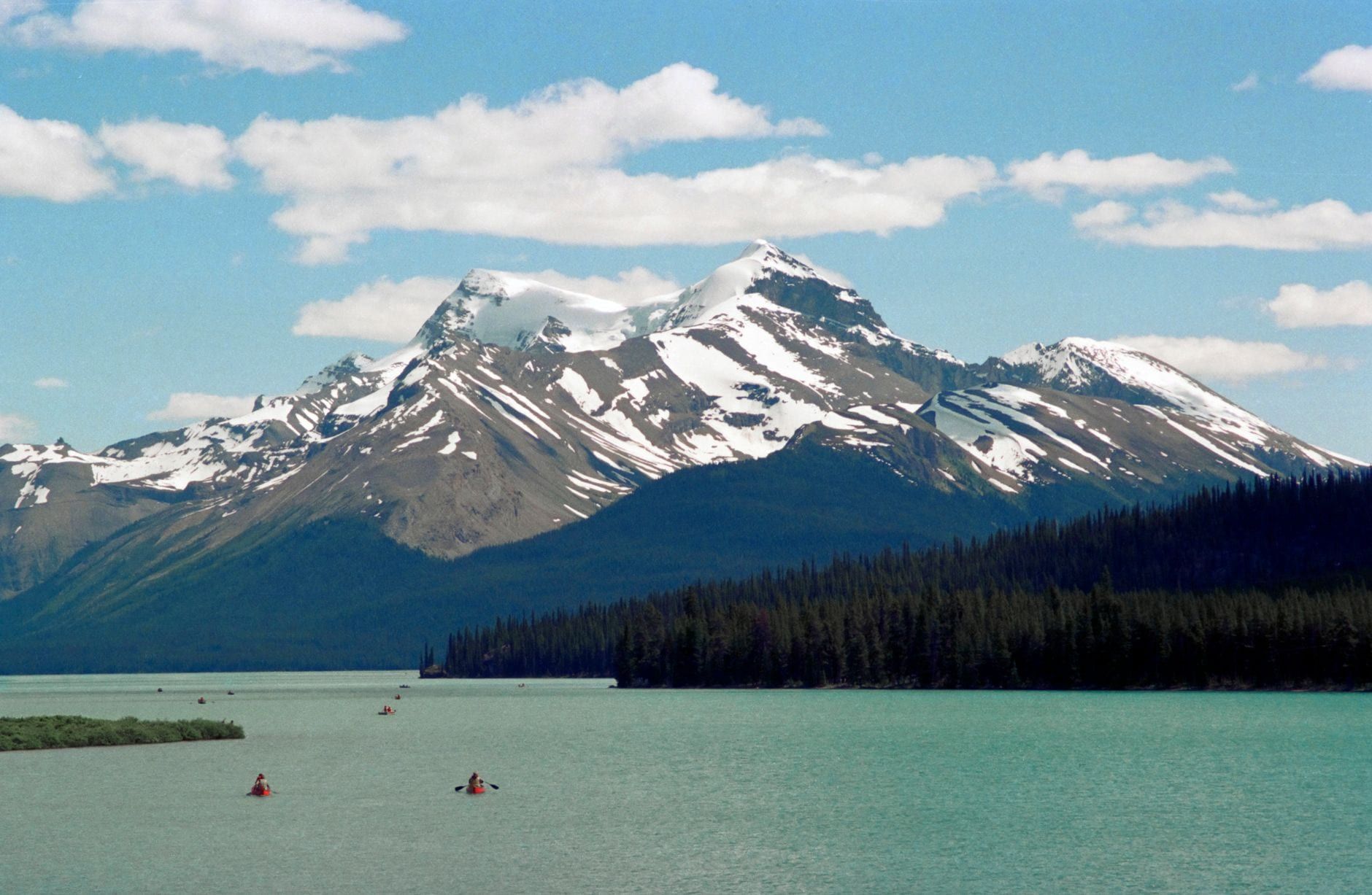
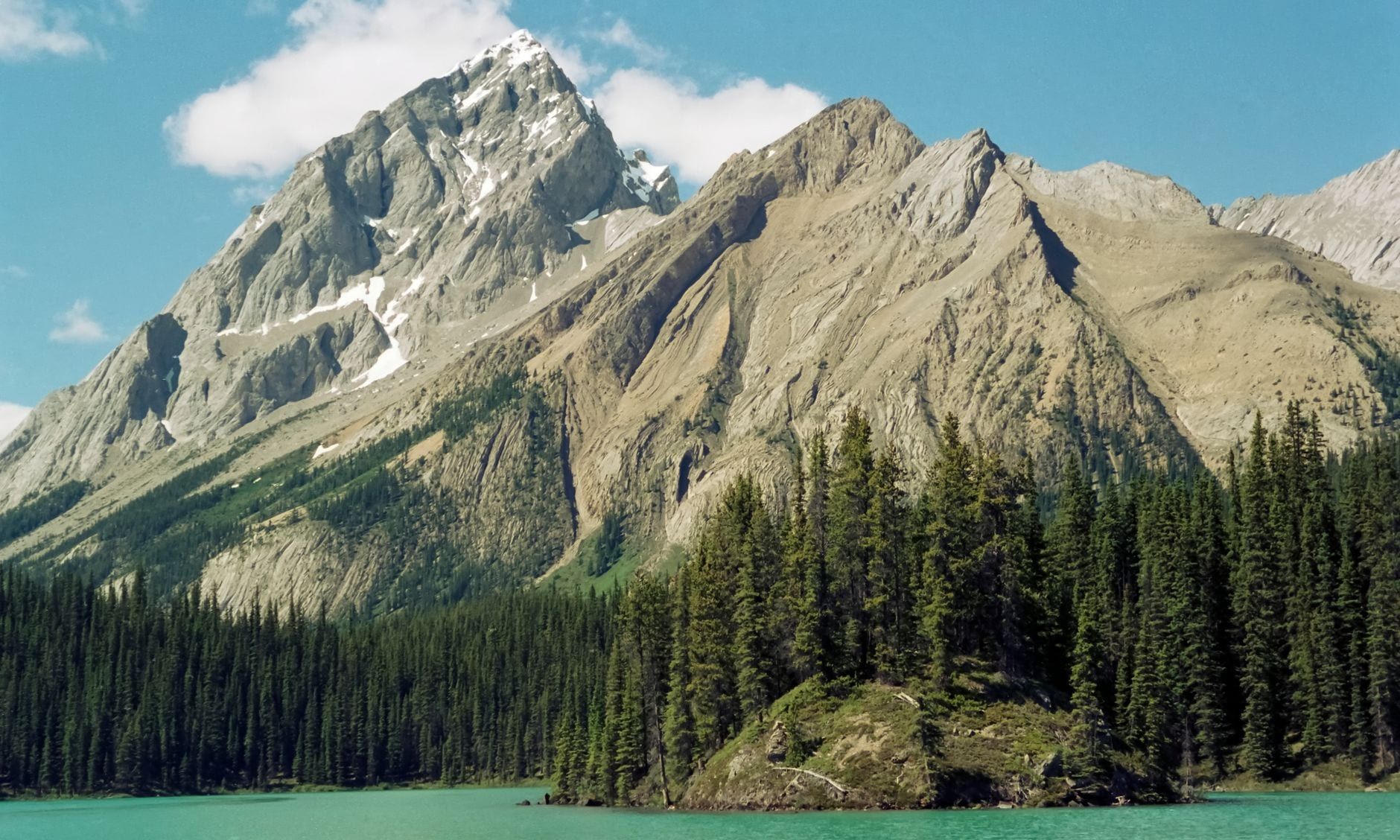
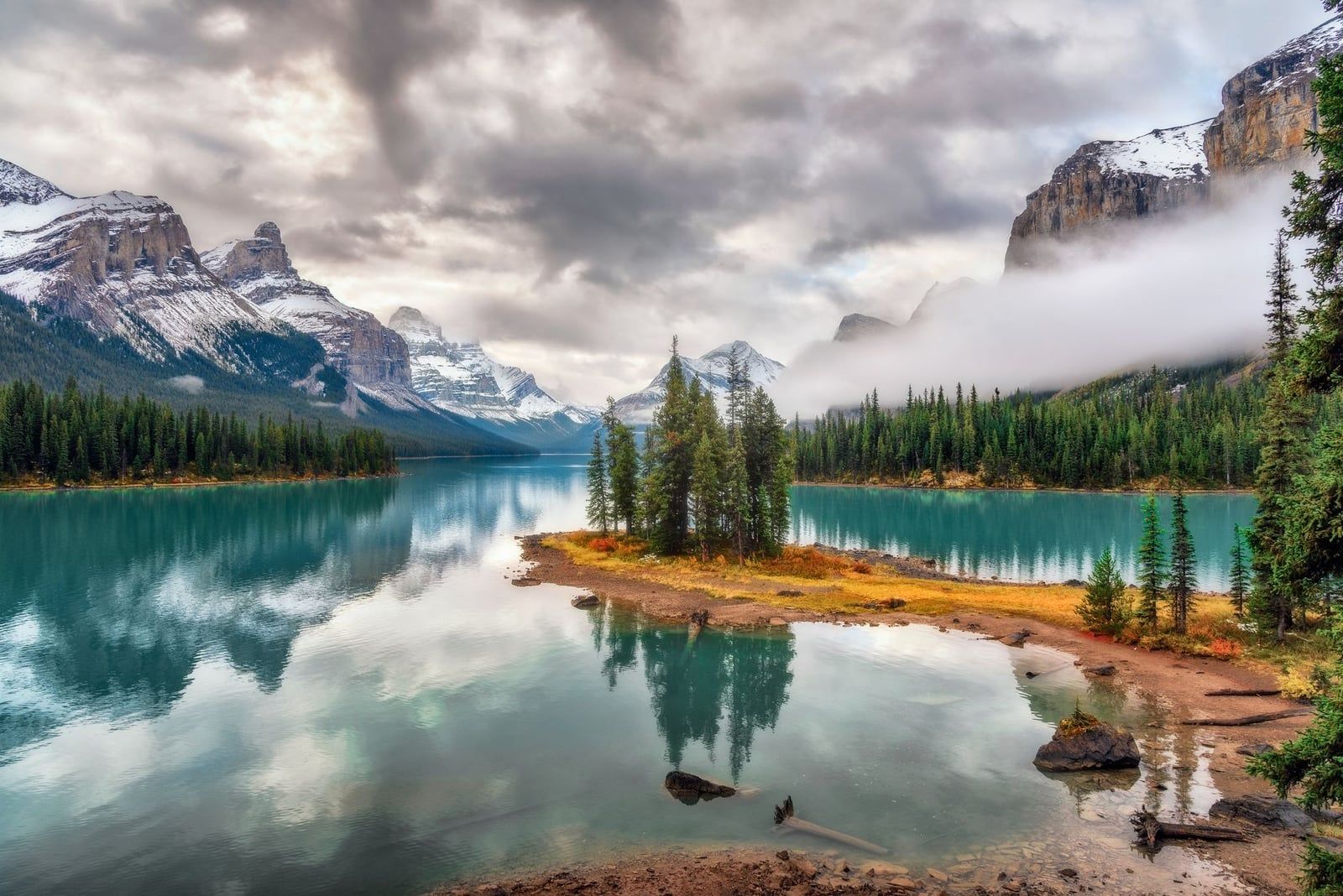
Maligne Lake is the largest glacially-fed lake in the Canadian Rockies, a 50-minute drive from town and ringed by peaks over 3,000 metres. Spirit Island — the spruce-crowned rock in the most published photograph of the Canadian Rockies — is reachable only by boat. Two cruises get you there:
| Classic cruise | Premium cruise | |
|---|---|---|
| Duration | 1.5 hours | About 1.75 hours |
| Time at the Spirit Island viewpoint | About 15 minutes on shore | 15 extra minutes on shore |
| Price | Base fare | Roughly $30 more |
| Landing on Spirit Island | Not permitted (sacred Indigenous site) | Not permitted (sacred Indigenous site) |
| Best for | Most visitors — enough time for the photo | Photographers and slow travellers |
Book well ahead — the cruise sells out nearly every summer day — and arrive 15 minutes before your departure time. Boats run roughly May to October. If it's full or you'd rather stay ashore, the Mary Schäffer loop from the lakeshore is a worthy walk. The lake's food outlets (Lake House Café, Waffle Hut, The View) only open June to October, so pack food outside that window. Our Maligne Lake guide covers canoe rentals and the trails.
Wildlife Rules on the Return Drive
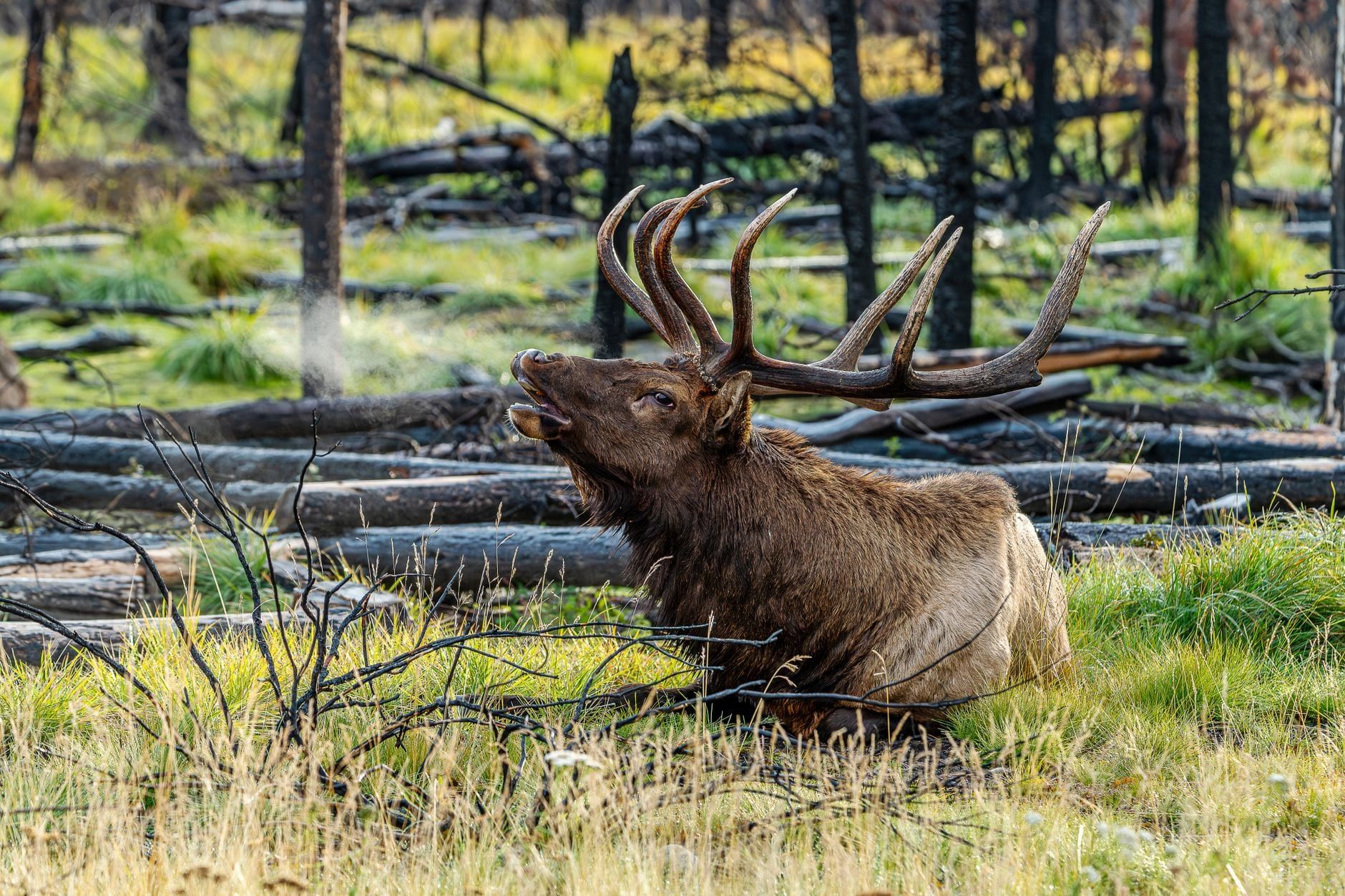
The drive back is prime wildlife hour, and the rules are strict for good reason: stay at least 30 metres from elk, deer and moose, 100 metres from bears, and stay in your vehicle when animals are near the road. Approaching or feeding wildlife can draw a $25,000 fine. Our wildlife guide covers where each species actually shows up and how to read a roadside jam.
Day 3: Athabasca Falls, Columbia Icefield, and Valley of the Five Lakes
Day 3 points south on the Icefields Parkway. If you're continuing to Banff or Lake Louise today, do these stops in order en route — Athabasca Falls first, the icefield beyond, and the Valley of the Five Lakes only if you're doubling back for one more night in Jasper.
Morning: Athabasca Falls and Sunwapta Falls
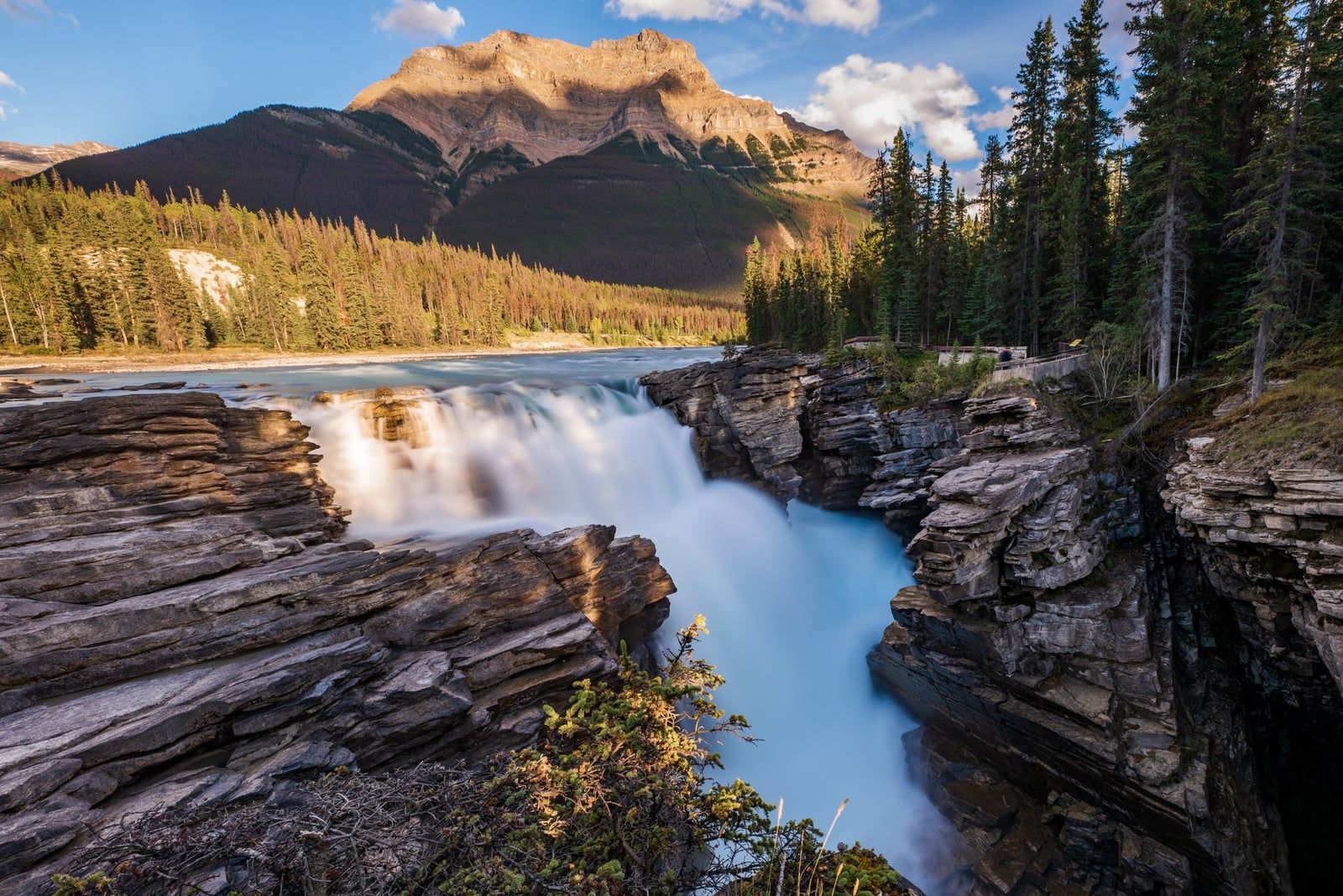
Athabasca Falls is a 45-minute drive south. The paved loop and the stairs down to the river below take most visitors about an hour; the Athabasca River squeezes through a narrow quartzite gorge here, so expect spray on the lower platforms. Sunwapta Falls is another 20 minutes south, a short walk from the parking lot — add it if the morning is going well.
Columbia Icefield and the Athabasca Glacier
The Columbia Icefield, 103 km south of Jasper, straddles the park boundary and feeds glaciers visible right from the highway. Two ways to see it. The free toe-of-the-glacier walk is roughly a mile round trip on a gravel trail to the Athabasca Glacier's snout. The guided option runs about two hours and combines an Ice Explorer bus onto the glacier with the glass-floored Skywalk, suspended 280 metres above the valley. What you can't do is walk on the glacier yourself — crevasses are unmarked and unguarded. Book the guided tour ahead in summer.
Afternoon: Valley of the Five Lakes
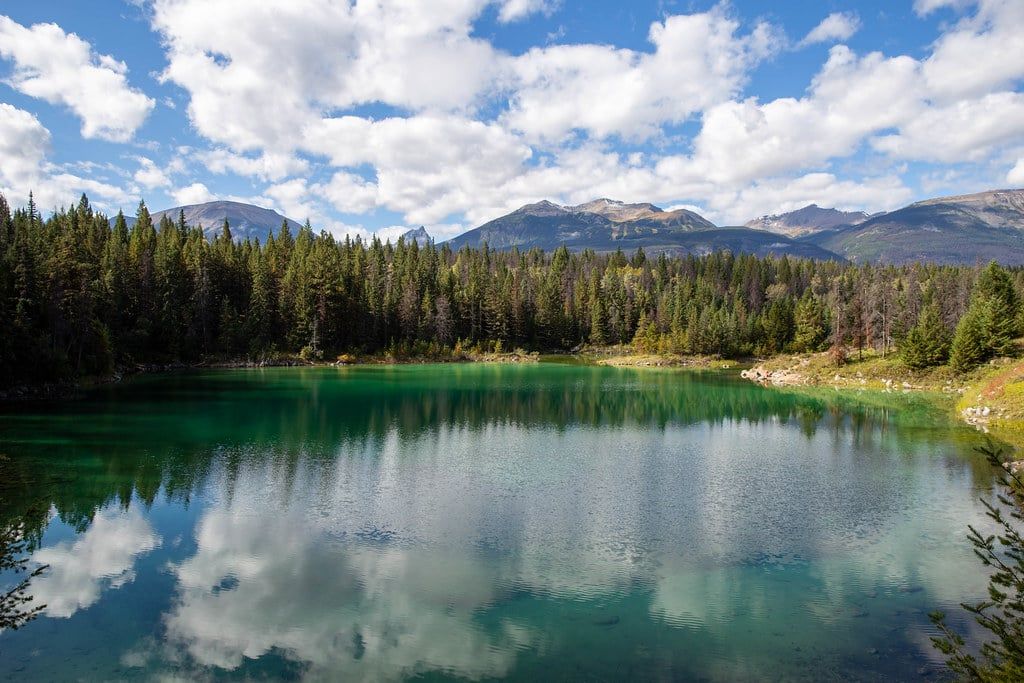
Twenty minutes from town, the Valley of the Five Lakes reopened on May 23, 2026 after nearly two years of post-fire restoration. Loop options run 1.8 to 5.5 miles with only about 100 metres of elevation gain, linking five small lakes in graduated greens and blues. It's the park's most popular easy hike — go before 10 a.m. or after 5 p.m. in July and August to get a parking spot.
Mount Edith Cavell: Save It for Another Year
One Day 3 regular is out for 2026: Cavell Road is closed, cutting off Mount Edith Cavell and its trails. File it for a future trip. The Path of the Glacier Trail (1.2 km return, about an hour, to the Angel Glacier and a turquoise pond) and the Cavell Meadows Trail (7 km return, 3–5 hours through wildflower meadows) are both worth the drive whenever the road reopens.
If You Have an Afternoon Left: Float the Athabasca
Jasper Raft Tours runs a gentle float on the Athabasca River — 60 to 75 minutes on the water, advertised for ages 3 to 99, rain or shine, from May 1. It's the rare activity small kids and grandparents share. For white water instead, our river rafting tours page compares the runs.
Where to Stay and Eat in Jasper
Book your bed before anything else. Jasper's room count is capped by building restrictions, so summer rates for basic rooms can pass $400 a night and short-term rentals are thin. Our where to stay guide maps the options; the short version:
- Splurge: Fairmont Jasper Park Lodge, on Lac Beauvert
- Mid-range: Pyramid Lake Lodge, The Crimson, Forest Park Hotel
- Cabins: Patricia Lake Bungalows, right on the water
- Budget: Jasper Downtown Hostel
Camping lost ground in the fire — about 23% of frontcountry sites remain closed, including all of Wabasso, Whirlpool and the Marmot Meadows group sites, plus part of Wapiti. Fewer sites, same July–August demand, so reserve on the Parks Canada system the moment your window opens. Backcountry overnights need a permit at $15 per person per night, booked at reservation.pc.gc.ca.
For eating: Bear's Paw Bakery is the breakfast stop, and the line moves fast. Evil Dave's is the dinner reservation to make. Jasper Brewing Co. — Canada's first national-park brewery, pouring since 2005 — handles the casual night, and Aalto at Pyramid Lake Lodge is the special-occasion table, so book it. Out at Maligne Lake, the Waffle Hut and Lake House Café only run June to October.
When to Visit Jasper and How to Adjust This Itinerary
June through October is the practical window — everything in this itinerary is running, and daily highs reach 20–22°C. July and August carry about 80% of the year's visitors. September thins the crowds and turns the larches gold, with the Dark Sky Festival in October as the season's send-off. Spring means bear cubs and shoulder-season rates, but snow lingers at elevation — motorcyclists even need snow tires on the Icefields Parkway until April 1. Winter swaps the whole plan for Marmot Basin (open to early May — May 3 in 2026), guided icewalks, skating on Pyramid Lake, and the Jasper in January festival.
| Attraction | Season window | Book ahead? |
|---|---|---|
| Jasper SkyTram | April 15 – October 25 | Yes, timed tickets online |
| Maligne Lake cruise | Roughly May – October | Yes, sells out daily in summer |
| Athabasca River float | From May 1 | Recommended |
| Marmot Basin ski season | Winter to early May (May 3, 2026) | Lift tickets in peak weeks |
| Maligne Lake food outlets | June – October | No |
| Valley of the Five Lakes | Open (reopened May 23, 2026) | No |
Only two days? Keep Day 1 as written — SkyTram, lakes, planetarium — and spend Day 2 on Maligne Road with the cruise booked. Hit Athabasca Falls on your way out of town, and fold the icefield into the drive to Banff instead.
A fourth or fifth day earns its keep. Miette Hot Springs, an hour east in the Fiddle Valley, is the hottest mineral spring water in the Canadian Rockies — it arrives at 54°C and is cooled to 40°C for the soaking pools — and stays open until 11 p.m. in summer. Mount Robson Provincial Park is 85 km west across the BC border, with the Rockies' highest peak at 3,954 metres and the Kinney Lake trail as an easy sampler of the Berg Lake route. Closer to town: the Old Fort Point loop, a guided wildlife tour, or a food tour and live theatre as rainy-day swaps. Whatever the season, pack layers — mountain weather turns fast, and it can snow at elevation in July.
Jasper Itinerary FAQ
How many days do you need in Jasper National Park?
Three full days covers the core — town and the SkyTram, the Maligne Valley, and the Icefields Parkway — and three to four days is ideal. Two days works with the compression above; a fourth adds Miette Hot Springs or Mount Robson without rushing.
Do you need a car in Jasper?
Practically, yes. Maligne Lake is 44 km from town and summer transit is minimal. Without a car, piece the trip together from tours with downtown pickup — the Maligne cruise, wildlife tours, and rafting all offer it.
How much does a Jasper National Park pass cost?
$12.25 per adult per day, $10.75 for seniors, free for youth 17 and under, and $24.50 for a family or group of up to seven in one vehicle. An annual Discovery Pass is $83.50 adult / $167.50 family. Regular fees apply as of September 8, 2026, after the Canada Strong Pass free-admission period ended.
Is Maligne Canyon open after the wildfire?
No — it's closed for the 2026 season while Parks Canada completes rehabilitation. The Valley of the Five Lakes reopened May 23, 2026, and Maligne Road, Medicine Lake and Maligne Lake are all open. Check the park's bulletins before your trip.
Do I need to book the Maligne Lake cruise in advance?
Yes — it sells out nearly every day in summer. The classic cruise runs 1.5 hours with about 15 minutes on shore at the Spirit Island viewpoint; the premium option costs roughly $30 more for 15 extra minutes. Boats run roughly May to October, and you can't set foot on Spirit Island itself — it's a sacred Indigenous site.
Can you see the northern lights in Jasper?
Yes, on dark, clear nights in fall and winter — Jasper sits inside one of the world's largest dark-sky preserves. Summer's short nights make aurora unlikely June through August. The Jasper Planetarium runs year-round if you want a sky regardless of weather.
Is Jasper better than Banff?
Different, not better. Jasper draws roughly 2.5 million visitors a year against Banff's four-plus million, so it feels wilder and less commercial, and Spirit Island is reachable only by boat. Most travellers do both, linked by the Icefields Parkway.
What can you do in Jasper in winter?
Ski or snowboard at Marmot Basin (the season runs to early May), take a guided canyon icewalk, skate on Pyramid or Mildred Lake, try dog sledding, or catch the Jasper Planetarium. Jasper in January fills the festival calendar. Dogs are welcome on leash, and winter camping and backcountry overnights still need permits.
Sources
- parks.canada.ca/pn-np/ab/jasper/visit
- parks.canada.ca/pn-np/ab/jasper/visit/tarifs-fees
- parks.canada.ca/pn-np/ab/jasper/visit/ouvert-fermee-open-closed
- cbc.ca/news/canada/edmonton/jasper-wildfire-anniversary-attractions-open-recover
- ctvnews.ca/edmonton/article/valley-of-the-five-lakes-trail-in-jasper-national-pa
- en.wikipedia.org/wiki/Jasper_National_Park