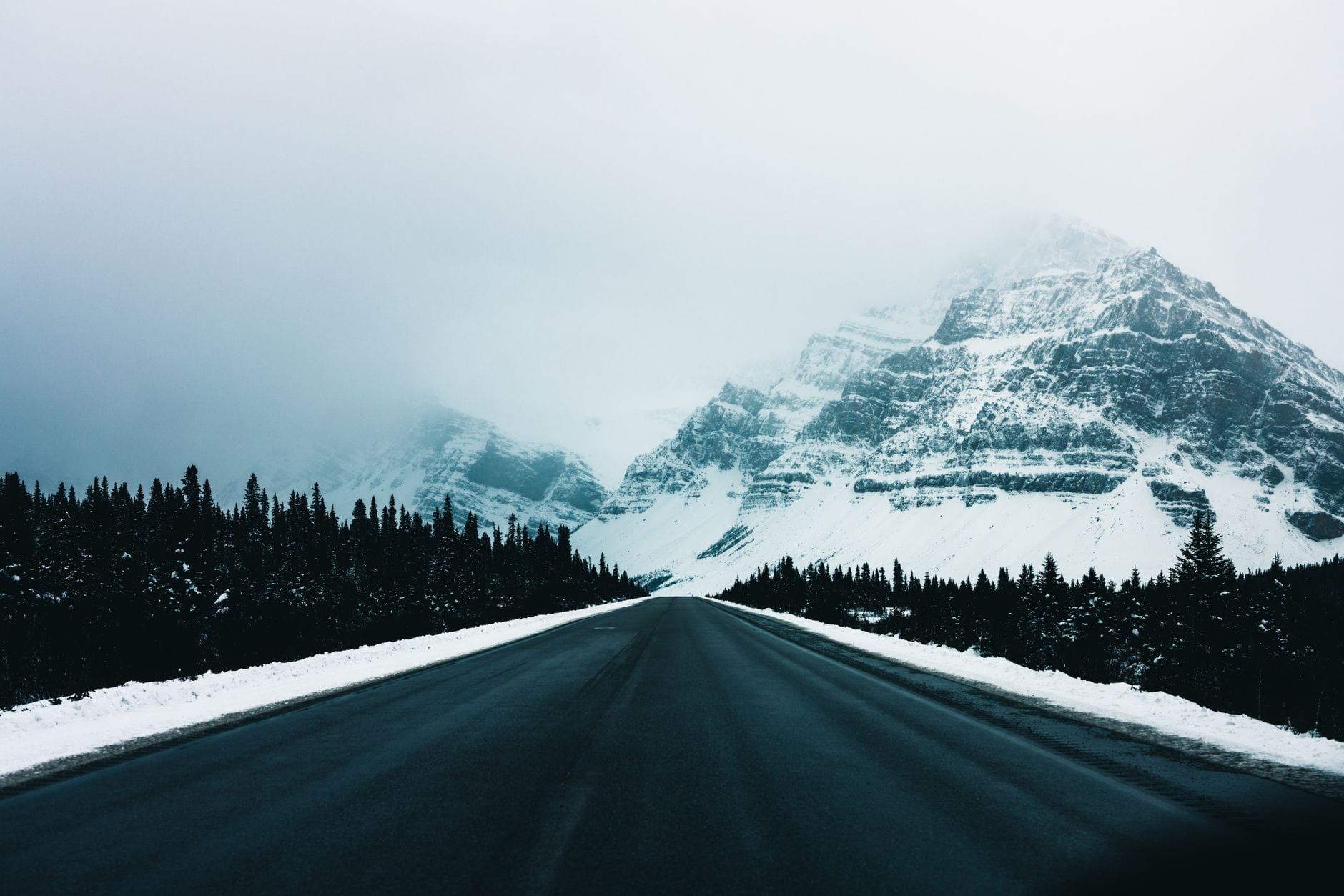
For a first taste of the Rockies, Banff. For wildlife, dark skies and room to breathe, Jasper. That's the one-line answer; what follows backs it with the numbers that decide a trip — drive times, fees, visitor counts, snowfall — and what changed in Jasper after the July 2024 wildfire.
The two parks share the same stretch of Alberta mountains, one UNESCO World Heritage listing and a connecting road, the Icefields Parkway, that travelers regularly rank among the world's finest drives. You can also do both in one loop. But if you're choosing one, choose on purpose.
Jasper vs Banff at a Glance
The raw numbers do most of the deciding, so start here.
| Attribute | Banff | Jasper |
|---|---|---|
| Size & age | 6,641 km²; Canada's first national park, 1885 | ~11,000 km²; park since 1907, national park 1930 |
| Annual visitors (2023) | 4.3 million | About 2.5 million |
| Nearest airport | Calgary, about 1.5 h | Edmonton, about 4 h |
| The town | ~9,000 residents; resort-busy | Under 5,000; quiet, local |
| Signature sights | Lake Louise, Moraine Lake, Johnston Canyon | Maligne Lake, Columbia Icefield, Athabasca Falls |
| Best for | First trips, famous lakes, car-free travel | Wildlife, dark skies, road trips, solitude |
Banff is the Rockies' greatest-hits record: compact, famous, easy to reach, and priced and crowded accordingly. Jasper is the deeper album — bigger, rawer, a longer drive from any airport, and far quieter once you're inside it. Two things are identical. Entry runs $12.25 per adult per day or $24.50 for a family group of up to seven in one vehicle, in either park. And the ceiling is shared: both are halves of the Canadian Rocky Mountain Parks World Heritage Site, inscribed in 1984.
How the Two Parks Differ: Size, Scenery and Setting
People assume Jasper is Banff's smaller sibling. It's the other way around. Jasper covers about 11,000 km², the largest national park in the Canadian Rockies; Banff spans 6,641. Banff is also older — Canada's first national park, created in 1885 — while Jasper began as a forest park in 1907, the country's fifth, and took its current name under the 1930 National Parks Act.
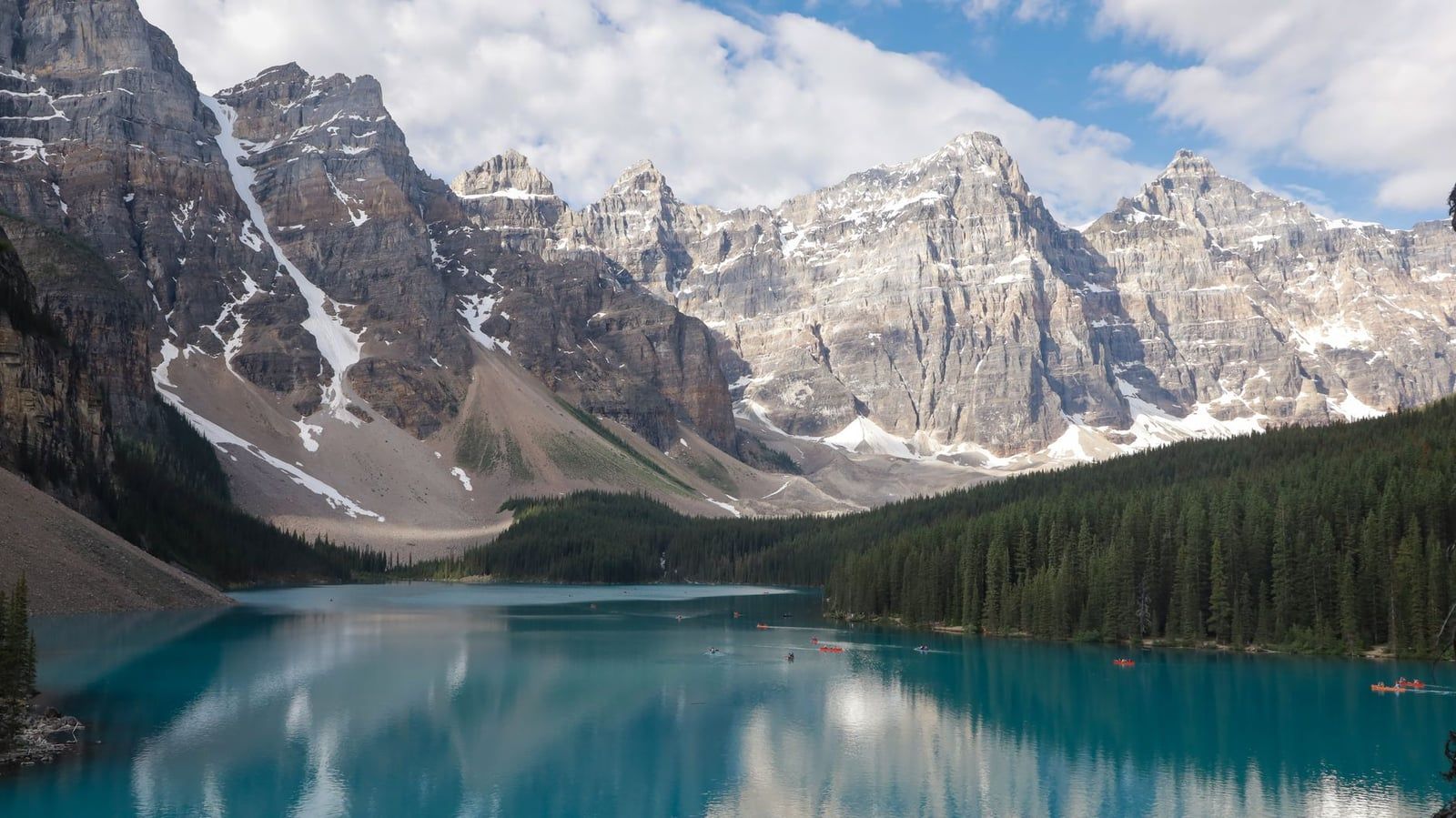
Banff's scenery is concentrated and theatrical. Moraine Lake, Lake Louise and Peyto sit in steep glacial valleys minutes from pavement, which is why they're photographed by the million. Gondolas, catwalks and shuttle systems orbit them; the park is engineered to show you its best angles fast.
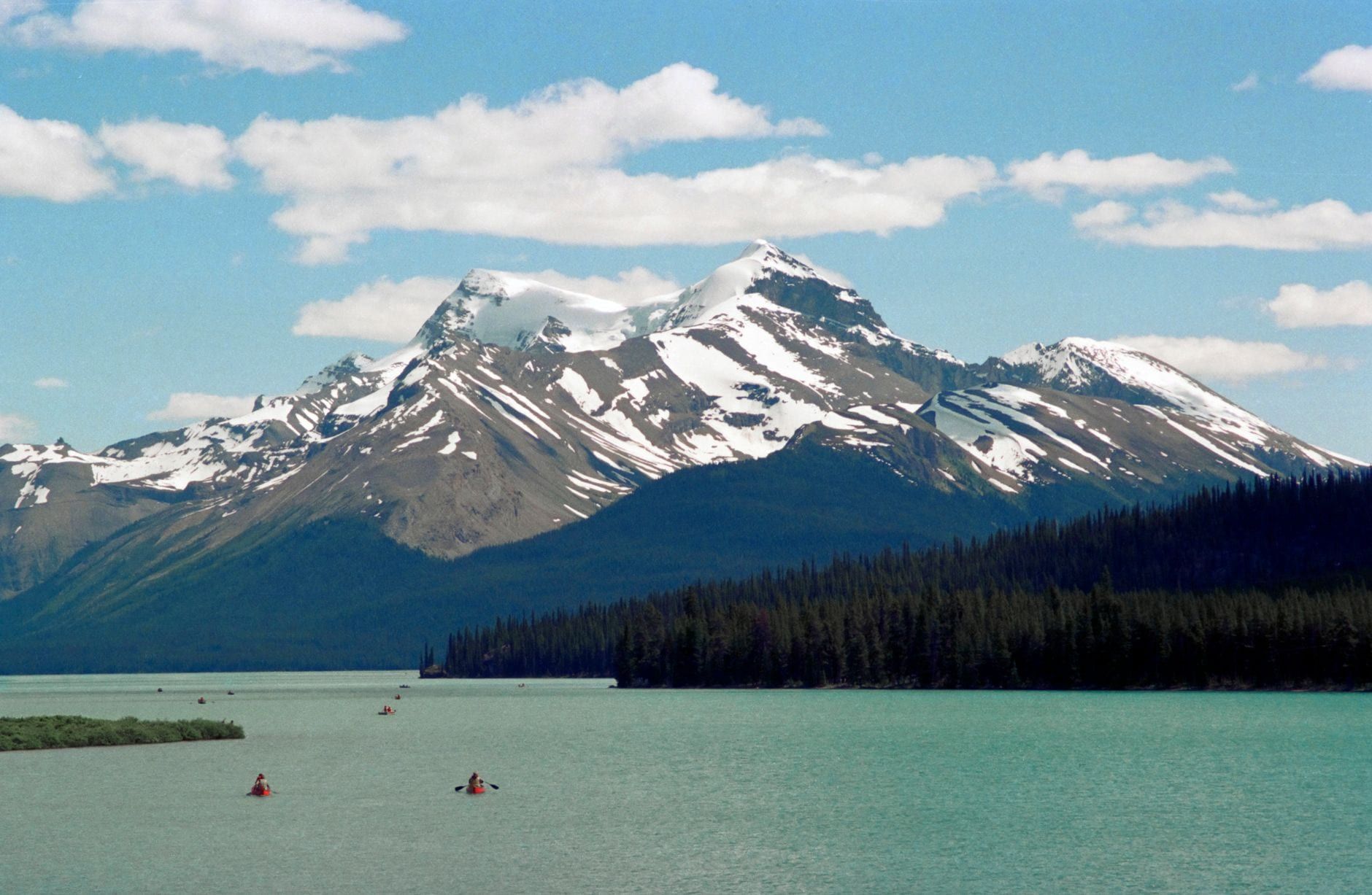
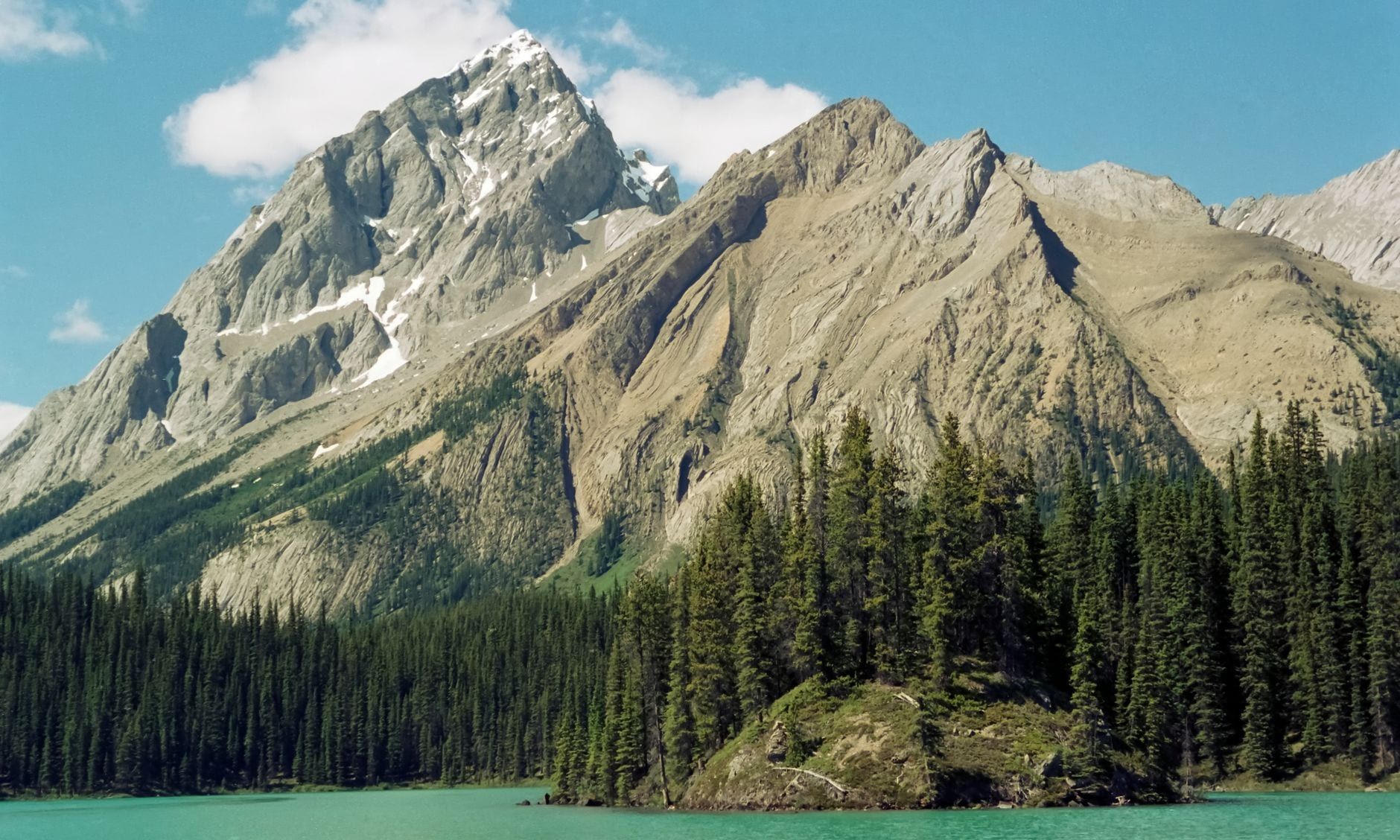
Jasper sprawls. The Maligne Valley runs 44 km from the highway to the largest natural lake in the Canadian Rockies, most of it holding nothing but wildlife. The park's south holds the Columbia Icefield, one of the largest accumulations of ice south of the Arctic Circle, plus Mount Columbia, at 3,782 m the highest point in Alberta.
Is one more beautiful? Banff wins the single frame; no Jasper lake matches Moraine or Louise for instant drama. Jasper wins the long view — scale, ice, silence. A short stroll to mirror-flat turquoise water is a Banff day. A dead-end valley with more bighorn sheep than cars is a Jasper day.
Getting There and Getting Around
Your airport usually picks your park. Calgary International sits about 90 minutes from Banff down the Trans-Canada Highway; Edmonton International is roughly four hours from Jasper on the Yellowhead, Highway 16. Calgary to Jasper takes 4.5-5 hours, straight through Banff and up the Icefields Parkway — our Banff to Jasper drive guide covers that road stop by stop, because it's half the reason to do both parks in one loop.
Banff is the only one of the two you can manage car-free. ROAM Transit covers town, and Parks Canada runs bookable shuttles to Lake Louise and Moraine Lake. Jasper has no public transit and no park shuttles. SunDog runs airport connectors, but beyond the townsite you'll want a rental car or a booked tour.
Two Banff rules catch visitors out. Private vehicles are banned from the Moraine Lake Road, full stop: shuttle, commercial bus, bike or boots. And Lake Louise parking routinely fills before 8 AM in July and August. Jasper's version is milder — the Maligne Road jams midday in summer, so drive it early.
One point to Jasper: VIA Rail's scheduled trains stop in town; Banff has no scheduled rail service at all.
Crowds, Costs and Park Passes
Banff logged 4.3 million visitors in 2023 to Jasper's 2.5 million; the wildfire knocked Jasper down to 1.1 million in 2024, and 2025 recovered to about 2.1 million. On the ground, the gap is parking lots. Banff's congestion pushed Parks Canada into shuttles and reservation systems at Lake Louise and Moraine Lake; somewhere in Jasper's 11,000 km² you can still find an empty pull-out.
Entry fees are identical, so price plays no part in the choice. Daily passes cost $12.25 per adult, $10.75 per senior, nothing for youth 17 and under, and $24.50 for a family group of up to seven in one vehicle. The annual Discovery Pass, $83.50 adult or $167.50 family, breaks even at about day seven and covers every national park in Canada, these two included. Parks Canada has also run free-admission windows recently (the Canada Strong Pass ran through September 7, 2026), so check current fees and hours before you buy anything.
Lodging is where the money gap opens. A comparable three-night stay in a 3-4 star hotel runs about $1,000 in Jasper against $2,000-plus in Banff; Canmore, 25 minutes down the highway, prices closer to Jasper and works fine as a Banff base. Either way, book early. July-August rooms and the popular campgrounds go fast, Banff's fastest.
Jasper vs Banff Towns: Atmosphere, Food and Where to Stay
Banff townsite, population about 9,000, runs at full tilt from June to September: Patagonia and Starbucks on Banff Avenue, hotel bars, nightlife, foot traffic to match. Jasper, under 5,000 people, keeps a frontier-town pace. Its shops are almost entirely locally owned, and elk wander the streets like they pay rent.
Banff wins on sheer variety, with every cuisine and price band in play. Jasper punches above its size for a mountain town of 5,000: Bear's Paw Bakery is the pre-hike breakfast institution, and the food-tour scene is genuine.
Beds mirror the towns. Banff has two Fairmonts, the Banff Springs and the Chateau Lake Louise; Jasper has one, the lakeside Jasper Park Lodge, plus a decent stock of cabins. Jasper's rental market is thin, with decent summer options starting around $300 a night. We cover where to stay in Jasper, including the camping play, in its own guide. In both parks, campgrounds are the budget answer, and Banff's fill first.
Hiking, Wildlife and Stargazing
Three categories here, and each breaks clearly in one direction.
The hiking
Banff maintains more than 1,600 km of trail, much of it short, smooth and close to town. Johnston Canyon's catwalks and the Tunnel Mountain switchbacks work for kids and grandparents, and the Lake Louise teahouse hikes (Lake Agnes, Plain of Six Glaciers) have no Jasper equivalent. Jasper's network is smaller, around 1,000 km, and tilts long and wild: Sulphur Skyline for a half-day burn, Valley of the Five Lakes for an easy afternoon, Mount Edith Cavell for glacier views (some access is limited post-wildfire), the 45 km Skyline Trail for two or three days of alpine meadow above 2,490 m. Our best hikes in Jasper roundup has the details.
The wildlife
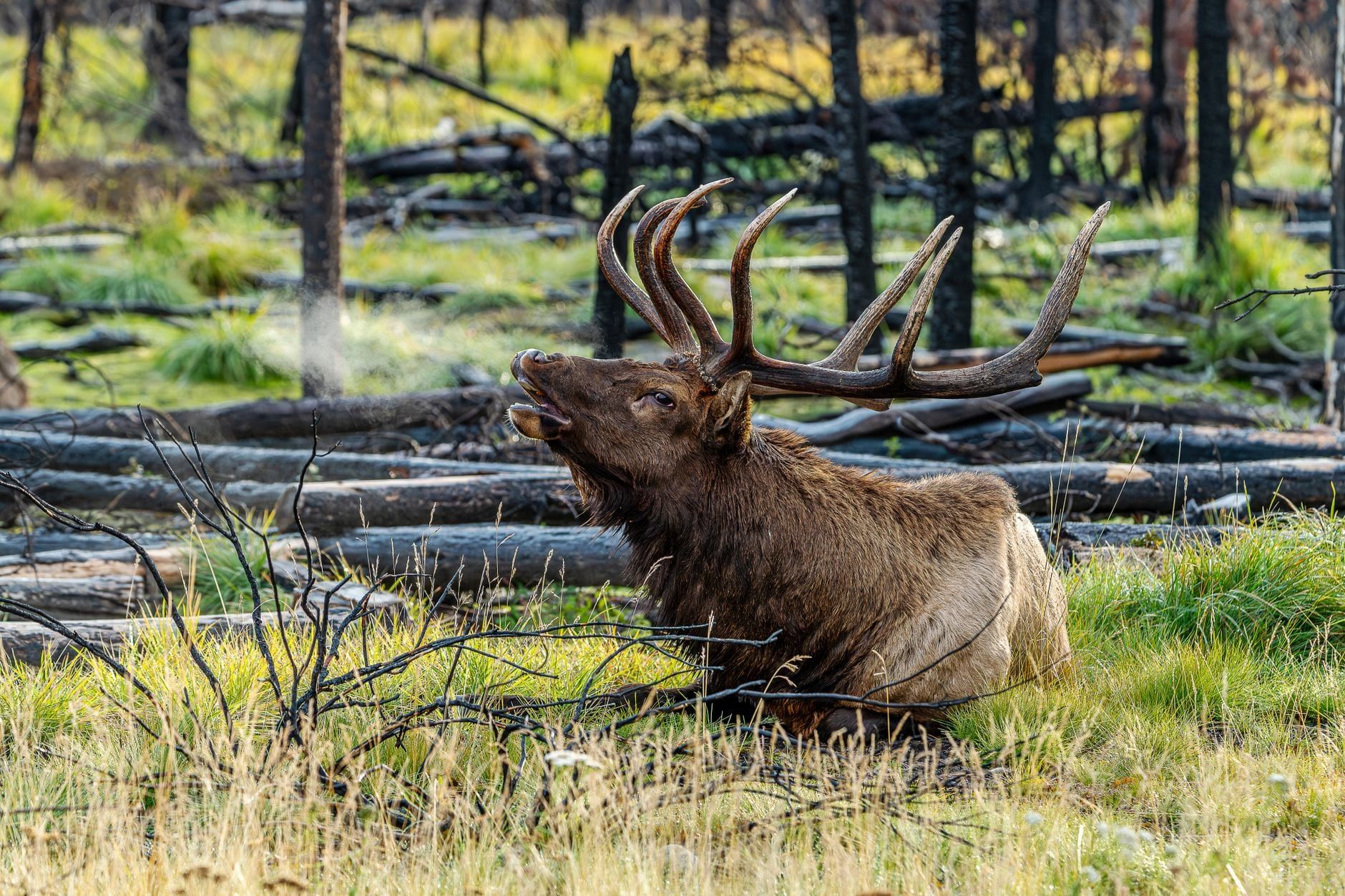
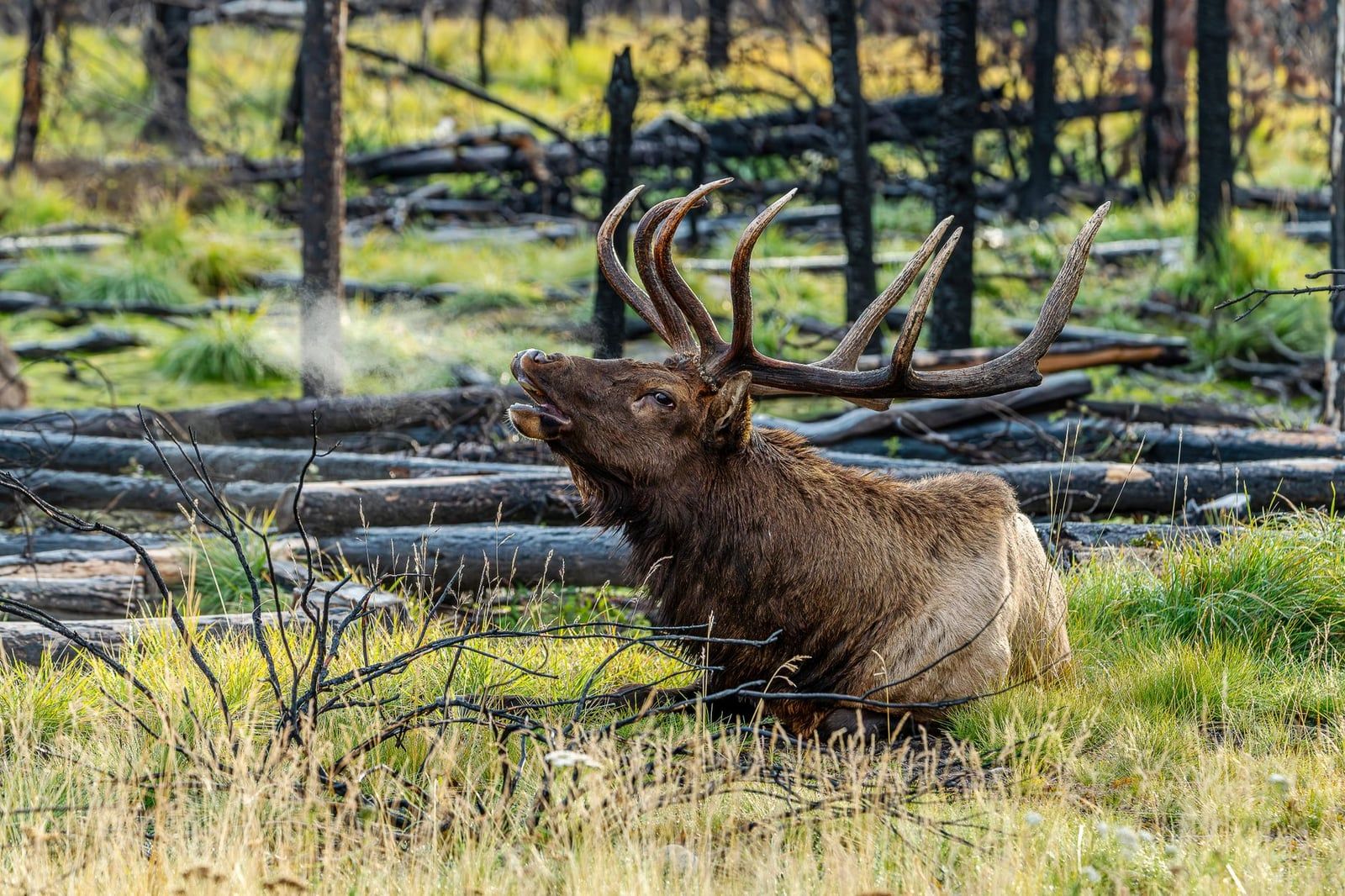
Same cast in both parks: grizzly and black bears, elk, moose, bighorn sheep, mountain goats. Jasper gives you better odds, with roughly 109 grizzlies to Banff's 65 — similar density once you allow for the bigger area. Our wildlife watching in Jasper guide maps the reliable spots; the short version is dawn or dusk on the Maligne Road or Banff's Bow Valley Parkway. Everywhere: stay 30 m from elk and moose, 100 m from bears, and carry bear spray.
The night sky
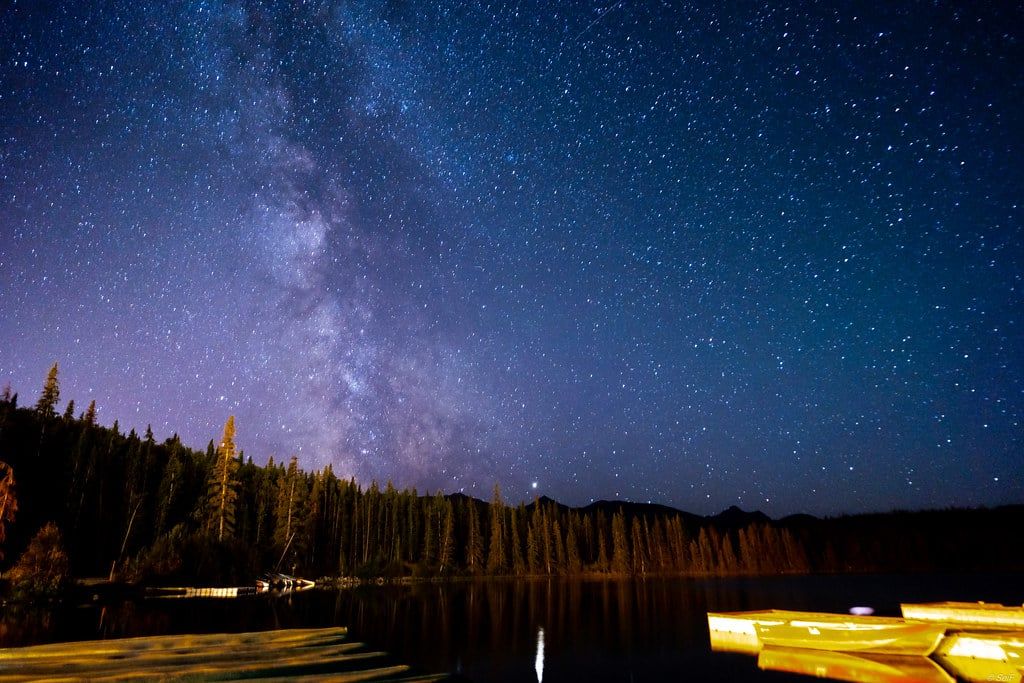
This one's a blowout. Jasper is the world's second-largest dark sky preserve, all 11,000-odd km² of it, and the Milky Way clears the horizon over Pyramid Lake or Lake Annette on any moonless night. Aurora shows up here too — our northern lights in Jasper primer covers timing — and October's Dark Sky Festival adds talks and telescope parties. Banff has dark corners but no matching designation.
Signature Attractions in Each Park
What a day in each park actually looks like, marquee stops first.
Jasper's headline acts
The Jasper SkyTram, Canada's longest and highest guided aerial tramway, lifts you to 2,263 m on Whistlers Mountain in about seven minutes, with views across six mountain ranges. Down the Maligne Road, Maligne Lake runs boat cruises to Spirit Island, the most-photographed spot in the park. Athabasca Falls shoves the entire Athabasca River through a slot barely wider than a bus, dropping 24 m.
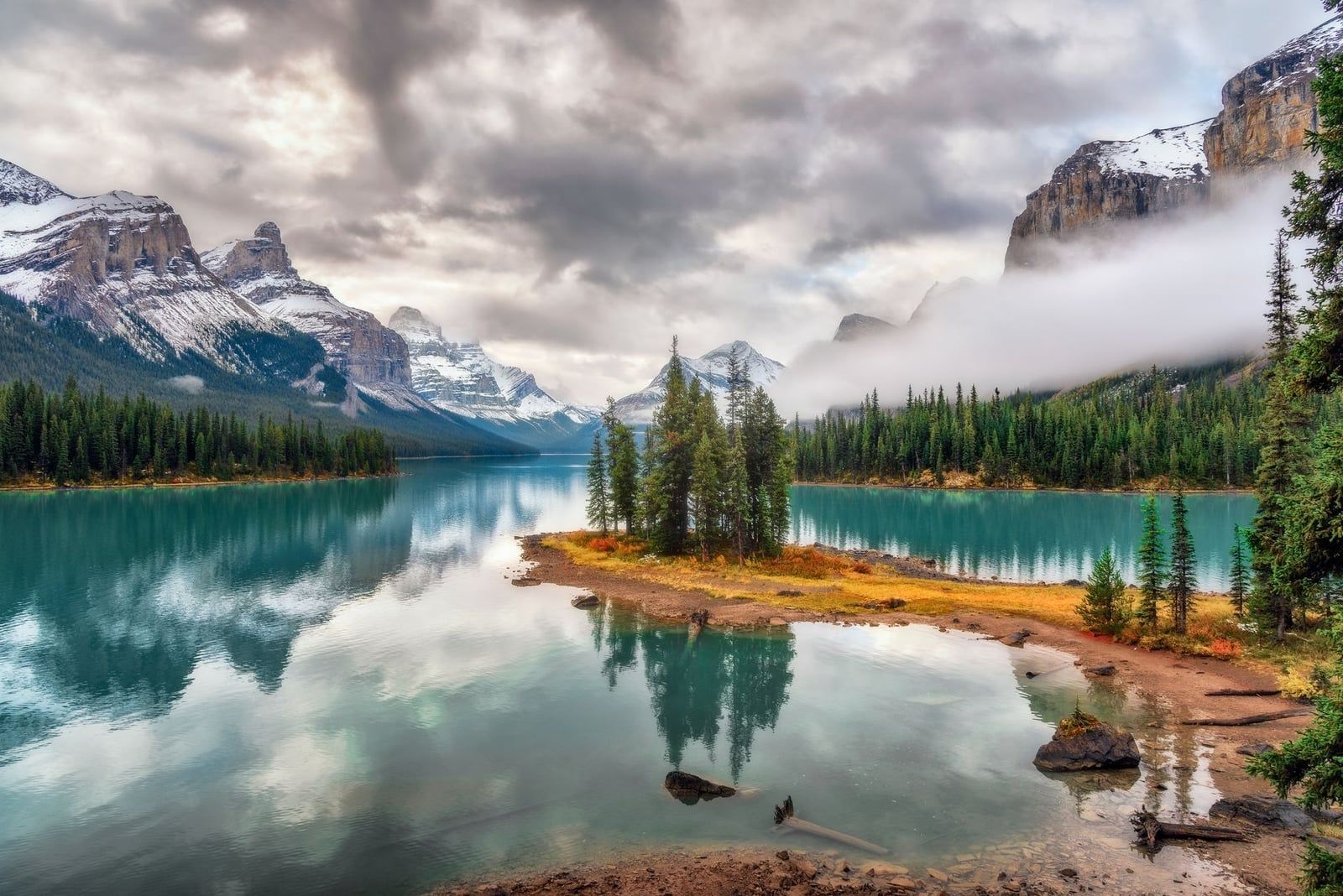
Maligne Canyon is a limestone gorge up to 50 m deep, crossed by footbridges; it's closed after the wildfire, so don't plan around it yet. Miette Hot Springs, an hour east in the Fiddle Valley, are the hottest springs in the Rockies, 54°C at source and cooled to a soakable 40°C. For slow days, canoe Pyramid Lake or walk the Valley of the Five Lakes.
Banff's headline acts
The Banff Gondola rides Sulphur Mountain straight above town. Lake Louise and Moraine Lake are the twin icons, shuttle mandatory for Moraine. Johnston Canyon strings catwalks past two waterfalls, the Lake Minnewanka cruise is Banff's answer to Maligne, Vermilion Lakes supply the classic dawn reflection of Mount Rundle, and Banff Upper Hot Springs ($19.75 adult) sits at the edge of town.
What sits between them
The Columbia Icefield straddles the parks' shared boundary on the Icefields Parkway, 103 km south of Jasper. Ice Explorer buses drive onto the Athabasca Glacier, and the glass-floored Glacier Skywalk hangs 280 m above the valley. Tours run from both towns, so it slots into either itinerary — or marks the midpoint of the loop.
Banff's orbit beyond the park is stronger: Yoho National Park, home to Emerald Lake and Takakkaw Falls, is 40-60 minutes from Lake Louise, and Kananaskis Country sits just east. Jasper's counterweight is Mount Robson, at 3,954 m the highest peak in the Canadian Rockies, about 85 km west across the BC border.
Summer vs Winter: When to Visit Which
July and August are peak everywhere. About 80% of Jasper's annual visitors arrive in summer, and Banff's crush is why shuttles and 8 AM parking deadlines exist. The escape hatches: late May, quiet with trails open at lower elevations, and mid-September, settled weather with a fraction of the people. Summer highs run 20-22°C in either park.
Winter flips the ranking. Banff has three ski areas — Sunshine Village, Lake Louise and Mt Norquay — against Jasper's one, Marmot Basin, 20 minutes from town. Snowfall tells the same story, with Sunshine collecting roughly double Marmot's 300 cm a year.
| Banff | Jasper | |
|---|---|---|
| Ski areas | Sunshine Village, Lake Louise, Mt Norquay | Marmot Basin only |
| Annual snowfall | About 600 cm at Sunshine | About 300 cm at Marmot Basin |
| Average January temp | -4 to -14°C | -5 to -15°C |
| Off the slopes | Lake Louise skating, gondola, Upper Hot Springs | Snowshoeing, dark skies, Maligne ice walk (check status) |
| Peak winter crush | Christmas holidays | Barely any |
So: a skiing trip means Banff, no debate. Non-skiers can argue for Jasper — Marmot's lift lines stay short, and long winter nights are prime aurora season. One note for either park: the Moraine Lake Road closes for winter because of avalanche risk, so that lake drops off the itinerary entirely.
Jasper After the 2024 Wildfire: What Travelers Need to Know
The July 2024 wildfire complex burned about 32,700 hectares and damaged 358 of the townsite's 1,113 structures, forcing 25,000 people out. The town reopened to visitors that September. Recovery since has been fast and physical: more than 600,000 hazardous trees removed.
Open now: nearly all businesses and hotels, Miette Hot Springs (back since August 18, 2024), Maligne Lake and its cruises, the Skyline Trail, Pyramid Bench, Old Fort Point, Lake Edith and Athabasca Falls. Highway 16 and the Icefields Parkway reopened in August 2024, so the link to Banff never stayed broken.
Still closed or limited: Maligne Canyon, while Parks Canada assesses the damage and plans recovery; about 23% of frontcountry campsites; and some access around Mount Edith Cavell.
For the Jasper-vs-Banff call, the fire matters in two places. Campers face nearly a quarter fewer sites, so reserve early. Lodging inventory is tighter than before the fire, so book earlier than feels necessary. The park itself (lakes, falls, icefield, 11,000 km² of mountain) is intact, and the town wants visitors back.
The Verdict: Which Park Should You Visit?
Cut the decision into criteria and it mostly answers itself.
Choose Banff if...
Most first-time visitors land here, and it holds up if:
- It's your first Rockies trip and you want the famous lakes
- You're relying on transit rather than a rental car
- You have 3-4 days and want maximum sights per hour
- Nightlife, shopping and a big restaurant scene matter to you
- You're skiing — three resorts beat one
Choose Jasper if...
The trade-offs run the other way when:
- You've already done Banff
- Wildlife and stargazing outrank turquoise lakes
- You're road-tripping from Edmonton or arriving by train
- You prefer a small, quiet town to a resort scene
- You want longer, wilder, emptier trails
Or do both: the Calgary loop
The honest answer, given 8-10 days, is both. Fly into and out of Calgary. Spend 3-4 nights in Banff, Canmore or Lake Louise, then drive the Icefields Parkway north — give it a full day, not an afternoon — and finish with 2-3 nights in Jasper. Solo-park trips need less: Jasper's highlights fit into 2-4 days, Banff rewards 3-5 and absorbs a week once you add Yoho. A day-by-day Jasper itinerary drops straight into the second half of that loop.
You can't really lose. Banff is the icon and the easier trip; Jasper is the quieter, wilder park that people who've seen both keep returning to. If flights and calendar allow, drive between them and let the Icefields Parkway settle the argument.
Jasper vs Banff: Quick Answers (FAQ)
The questions that come up most while choosing:
Frequently asked questions
Which is better, Jasper or Banff?
Neither, universally. Banff has the famous lakes, easier access from Calgary, transit and nightlife; Jasper is quieter, bigger, and better for wildlife and stargazing. First-timers default to Banff; repeat visitors drift north.
Is Jasper cheaper than Banff?
Slightly. Park entry costs the same in both. Lodging is the gap: a comparable three-night, 3-4 star stay runs about $1,000 in Jasper versus $2,000-plus in Banff. Staying in Canmore, 25 minutes from Banff, narrows it.
Is Jasper worth visiting after the 2024 wildfire?
Yes. The town reopened to visitors in September 2024, and most attractions — Maligne Lake, Miette Hot Springs, the Skyline Trail, Athabasca Falls — are open. Maligne Canyon and about 23% of frontcountry campsites remain closed, so check Parks Canada's current-conditions page before booking.
Which park has more bears and wildlife, Jasper or Banff?
Jasper, by the numbers: roughly 109 grizzlies to Banff's 65, with similar density across Jasper's larger area. Elk, moose, sheep and goats live in both. Dawn and dusk drives give the best odds.
Can you visit both parks in one trip?
Easily. The Icefields Parkway connects them, so fly into and out of Calgary, spend 3-4 nights around Banff and 2-3 in Jasper, and budget 8-10 days total.
Do you need a park pass for both Banff and Jasper?
One pass covers both parks and every other national park in Canada. Daily: $12.25 adult, $24.50 for a family group of up to seven in one vehicle; the annual Discovery Pass ($83.50 adult, $167.50 family) breaks even at about day seven.
How many days do you need in Jasper vs Banff?
Jasper's highlights fit in 2-4 days; a week adds the Maligne Valley, the Columbia Icefield and backcountry routes. Banff needs 3-5 days and absorbs a week with Yoho and Kananaskis day trips.
Which is better in winter, Banff or Jasper?
Banff, for most winter trips: three ski resorts to Jasper's one, plus more infrastructure and events. Jasper suits non-skiers — quieter slopes at Marmot Basin, snowshoeing, dark skies — but check the Maligne Canyon ice walk's status before planning around it.
Sources
- parks.canada.ca/pn-np/ab/jasper/visit/tarifs-fees
- parks.canada.ca/pn-np/ab/banff/visit/tarifs-fees
- parks.canada.ca/pn-np/ab/jasper/visit/ouvert-fermee-open-closed
- parks.canada.ca/pn-np/ab/jasper/gestion-management/plan/2025
- parks.canada.ca/pn-np/ab/jasper/gestion-management/designation/cieletoile-darksk
- jasper.travel/wild-fire
- en.wikipedia.org/wiki/Jasper_National_Park
- en.wikipedia.org/wiki/2024_Jasper_wildfire