Elk graze on lawns in the Jasper townsite, black bears work the roadside ditches along the Icefields Parkway, and hoary marmots whistle from every high meadow. Most visitors come for the mountains and leave talking about the animals. Jasper National Park holds 53 species of mammals and roughly 300 bird species across 10,878 km² of the Canadian Rockies, and enough of them live at low elevation that your car works as a viewing blind.
Here's what you're likely to see, which roads give the best odds, when to time the trip, and the Parks Canada rules that keep a sighting from turning into an incident. If you're still building the rest of your days, start with our things to do in Jasper guide.
Why Jasper Is One of North America's Best Wildlife Destinations
Scale is the short answer. At 10,878 km², Jasper is the largest national park in the Canadian Rockies and part of the Canadian Rocky Mountain Parks UNESCO World Heritage Site, alongside Banff, Yoho and Kootenay. Room like that is why the park still holds 53 species of mammals, from valley-bottom elk herds to wolves and caribou, plus around 300 recorded bird species.
Geography does the rest. The Jasper townsite sits in the largest inhabitable valley in the Canadian Rockies, and the Highway 16 corridor, the Maligne Valley and the Icefields Parkway all run through the low-elevation habitat where animals spend the year. Roadside sightings are routine here: animals that other parks keep in the backcountry graze beside Jasper's pavement. Elk push it furthest, gathering in the townsite itself, sometimes on main street.
The Big Mammals of Jasper (and Where Each One Lives)
Population numbers set expectations: elk are a given, bighorn sheep are easy, moose are a fair bet on the right shoreline, and caribou are an event.
Elk (Wapiti)
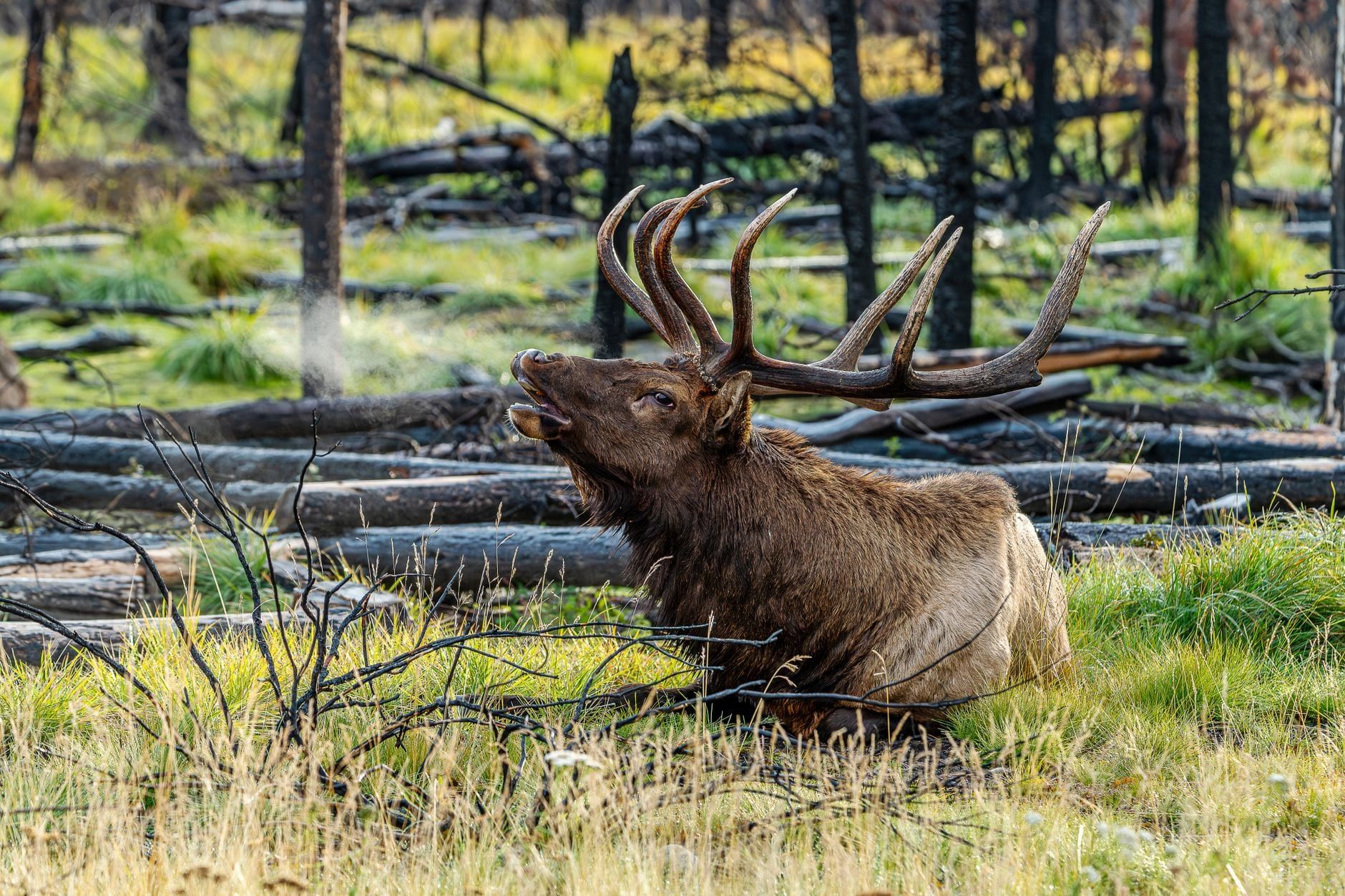
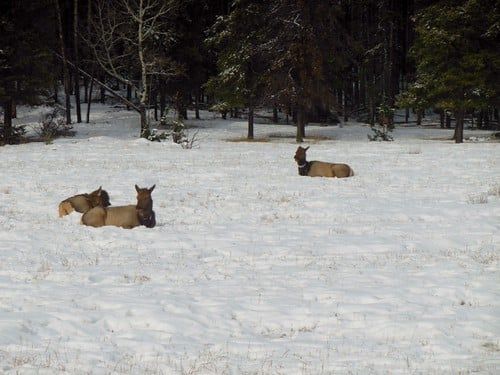
Roughly 1,300 elk live in Jasper, more than any other large mammal in the park, and they graze the fields along Highway 16 and the streets of the townsite year-round. Two seasons demand extra distance. Through May and June, cows hide newborn calves and will charge whatever wanders near; from late August into September, rutting bulls bugle, herd cows and pick fights with anything. Rut-season elk in town are best watched from inside a vehicle.
Moose
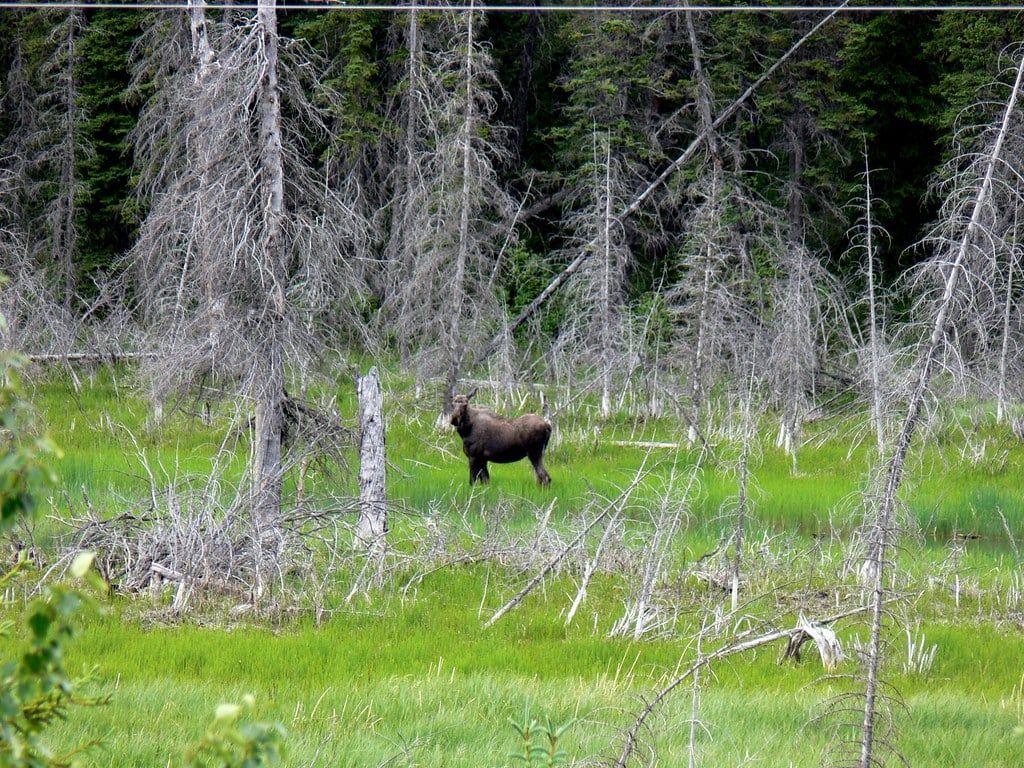
Only about 150 moose live in the whole park, so treat every sighting as a win. Your best odds come on summer mornings along the shores of Maligne Lake, Medicine Lake and Lake Annette, where they wade in to feed on aquatic plants. They look docile. They charge when crowded, so give a moose far more room than the 30-metre minimum.
Mule Deer and White-tailed Deer
The deer standing beside Jasper's roads are almost always mule deer: oversized ears, and a black-tipped tail held high as they bounce away. White-tailed deer are shyer and keep to forest cover. Dusk on Maligne Lake Road is dependable for mulies, and so are the grassy edges near town.
Bighorn Sheep
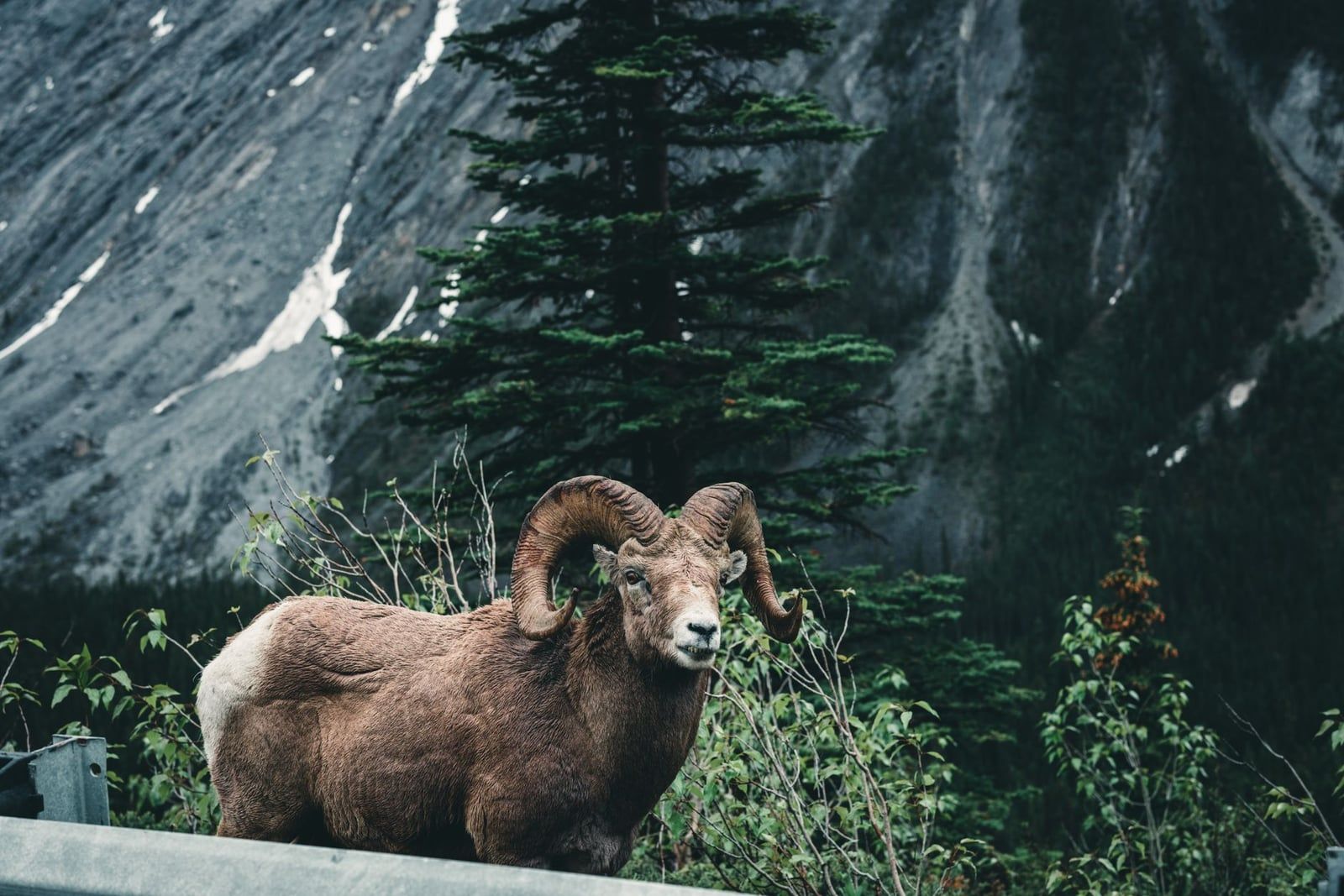
An estimated 2,500 bighorn sheep live in the park. In the east, the rams at Disaster Point are so used to traffic they'll stand beside your car, and the Miette Hot Springs parking lot and Old Fort Point run close behind; Wilcox Pass, up the Icefields Parkway, is the hikeable option. Come winter, herds drop to the grassy slopes along Highway 16, where the snow stays thin.
Mountain Goats
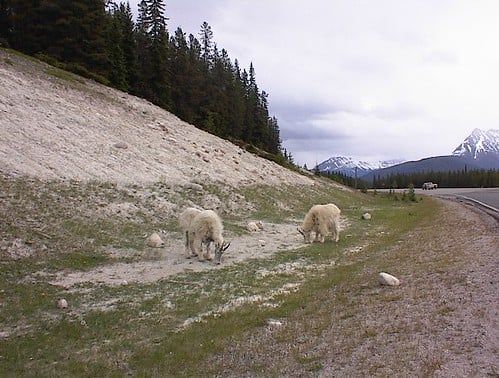
Mountain goats are the shaggy white ones with short black horns, built for ground you couldn't stand on. The Goats and Glaciers Viewpoint on the Icefields Parkway is one of the best places in the Canadian Rockies to watch them, and goats gather at the mineral licks along the same stretch. They break the winter rule: elk and sheep come down, goats stay on wind-scoured crags all year. Bring binoculars.
Wolves, Coyotes and Foxes
All three live here, and all three are difficult. Wolves hold huge territories and avoid roads, coyotes work the meadows around dawn, and foxes keep a low profile everywhere. A wolf crossing the highway is usually over in seconds. Count that as a very good day.
Woodland Caribou
Caribou are the rarest of the big mammals. A small herd of endangered woodland caribou survives in the park, and late spring gives the best odds, either in the Opal Hills or along the signposted caribou stretch of the Icefields Parkway. Take that stretch slow; the herd has no room for disturbance.
Bears in Jasper: Grizzly vs. Black Bear
Both species live here — an estimated 100 to 120 grizzlies and roughly 100 black bears — and telling them apart is worth practicing before you're squinting through a windshield. Coat colour misleads in both species. Shape doesn't.
| Grizzly bear | Black bear | |
|---|---|---|
| Shoulder | Muscular hump above the front shoulders | No hump; the back runs level |
| Face | Dished profile, dipping between eyes and nose | Straight profile with a tan muzzle |
| Size | Up to 250 kg (550 lb) | Smaller and lighter-built |
| Coat colour | Blonde to dark brown, varies widely | Black to cinnamon, varies widely |
| Jasper population | About 100–120 | About 100 |
| Peak viewing | Late May to early June, valley bottoms | April to October, roadsides and berry patches |
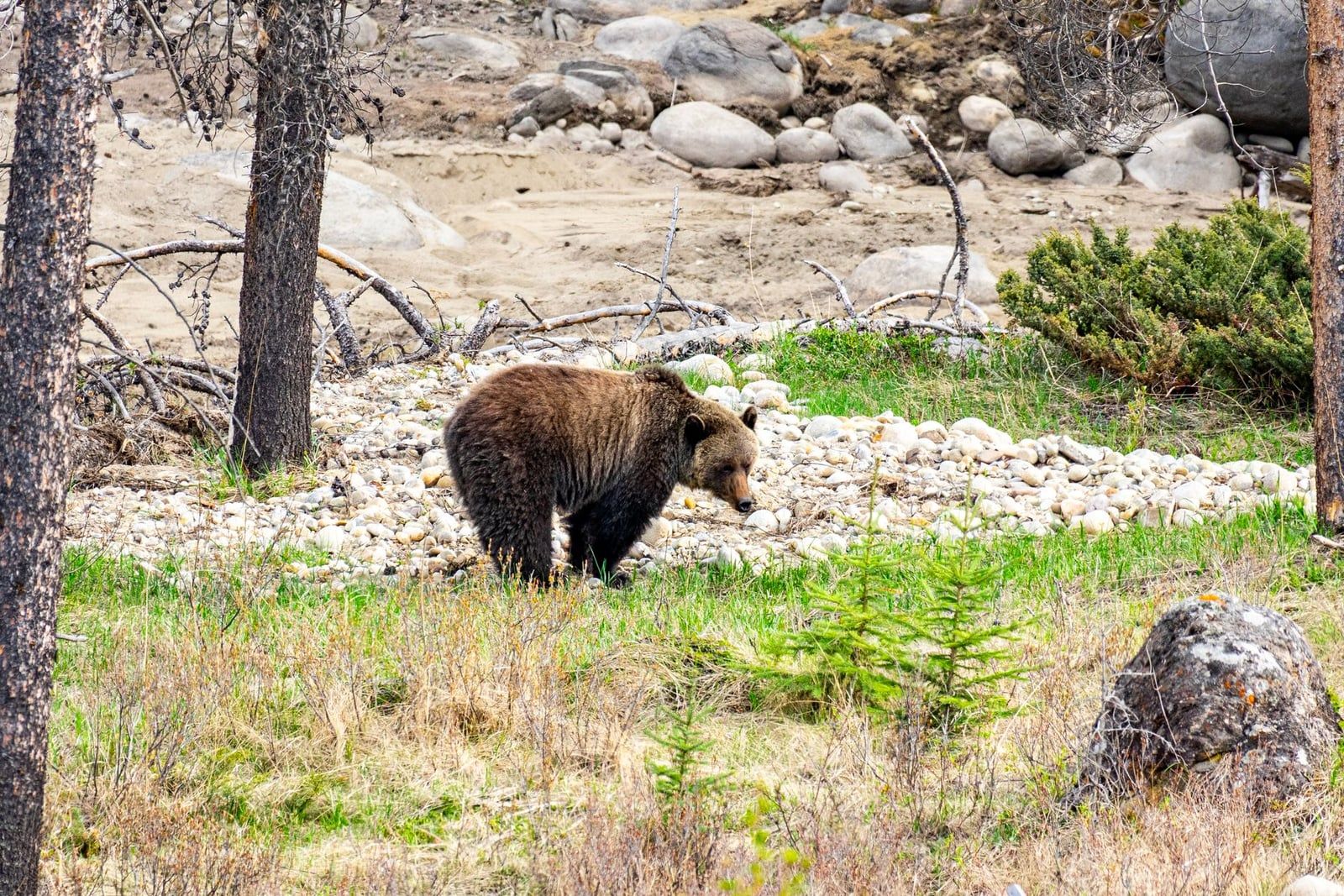
Grizzlies follow the food downhill. They leave the alpine for the valley bottoms in spring and again in fall, and sightings peak from late May into early June, when they graze the green-up just off the road. In late summer a single grizzly can eat 200,000 buffalo berries in a day, which turns berry patches into bear magnets until the shrubs are stripped.
Black bears are the ones you'll more likely photograph. Widespread across the park's lower country, they work road edges, berry patches, forest clearings and the occasional campground from April to October. Spring is peak time, especially along the Icefields Parkway and Maligne Lake Road, where they feed on fresh growth after leaving the den.
Then both species disappear. From roughly November to April, no bear in Jasper is above ground, which is one reason the cold months belong to elk, sheep and tracks in the snow.
Small Mammals and Birds Worth Looking For
The small animals are the ones you'll actually share a campsite with, and the birds are the ones you'll hear all day. Both reward a little attention.
Hoary Marmots and Pikas
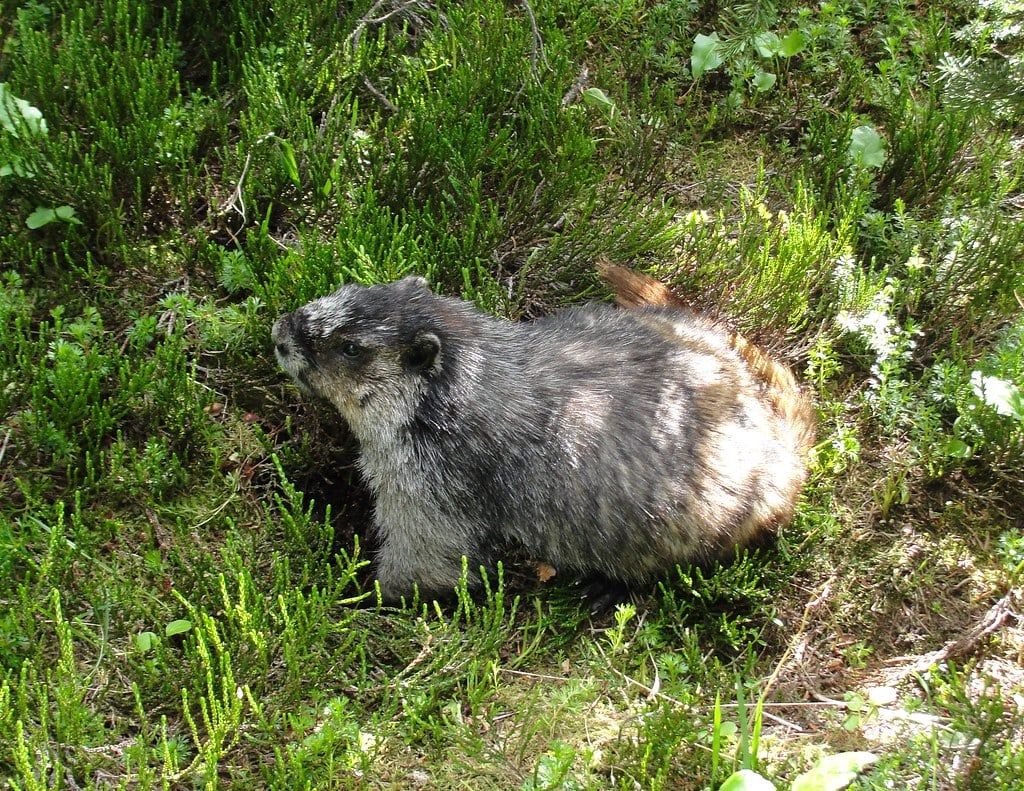
Follow the whistle. Hoary marmots, up to 12 kg and among the park's largest rodents, perch on boulders and pipe an alarm that carries across a whole slope; Whistlers Mountain and Cavell Meadows are the dependable spots. They sleep seven to eight months a year, so summer is the only window. Pikas share the same high rockslides: round-eared, hay-carrying, in constant motion. Sit still near a talus pile for ten minutes and one will show.
The Campground Crew
Columbian ground squirrels, golden-mantled ground squirrels and least chipmunks will find you before you find them, and every one is hoping you're careless with food. Feeding wildlife is illegal in the park, and it kills on a delay: fed animals become aggressive food-seekers and lose the habits that keep them alive. Latch the cooler. Leave the chips in the car.
Beavers, Mink and Muskrats
Beavers work the wetlands between the townsite and the east gate at dawn and dusk. Wabasso Lake, a 2.6 km walk in from the Icefields Parkway, exists because a beaver dam blocks Wabasso Creek end to end; the pond is the point. Mink and muskrat share the same water, so pick a quiet stretch of bank and give it twenty minutes.
Birds of Jasper
Around 300 bird species have been recorded in the park. The gray jays will find you first — the 'camp robbers' land within reach of a sandwich. Clark's nutcrackers work the picnic tables, great horned owls call at dusk, harlequin ducks ride the fast water, about a dozen osprey pairs fish the Athabasca River, and golden and bald eagles pass overhead. Two birds take real effort: the white-tailed ptarmigan, camouflaged on the alpine tundra, and the endangered black swift, which nests in Maligne Canyon in one of only two known colonies in Alberta.
When to See Wildlife in Jasper: A Season-by-Season Calendar
The daily rule first: animals move in the first hours after sunrise and the last before sunset, with a second burst in cool, overcast weather. A long lens or binoculars gets you closer than your feet ever should. Stack the seasons on top of that — our best time to visit Jasper guide weighs wildlife against weather and crowds in detail.
Spring (April–June)
Spring is the strongest all-round season. Bears leave hibernation hungry and work the valley bottoms, with grizzly sightings peaking late May into early June. Elk calve through May and June, so give every cow a wide berth. By June the low-country snow is gone and everything is feeding on the valley floor, before the summer crowds land.
Summer (July–August)
Summer pushes animals uphill and stretches the day to about 17 hours of daylight at the solstice. Sheep and goats move to the alpine, marmots and pikas hit their stride in the rockslides, and the quiet viewing hours shift to the extreme edges of the day. Sleep in and you'll mostly meet other visitors.
Fall (September–October)
Fall belongs to the elk. The rut runs late August through September, and bugling bulls work the fields in and around town; you'll hear one before you see it. Bears come back down to the berry thickets to fatten before denning, crowds thin, and the low light makes it the photographer's season.
Winter (November–March)
No bears; they're denning. Everything else concentrates low. The elk herd moves into downtown Jasper for the season, bighorn sheep drop to the Highway 16 slopes, and mountain goats stay visible on their wind-scoured crags. February and March are the tracking months, when one fresh snowfall turns every trailside into a field guide. Our Jasper in winter guide takes it from there.
The Most Reliable Spots to See Wildlife
Animals go where they want, but these routes give the best odds in the park. Every one of them needs a park pass: adult daily admission is $12.25, a family vehicle day pass is $24.50, and through September 7, 2026, the Canada Strong Pass makes daily entry free — our hours and fees page has the current numbers.
Maligne Lake Road
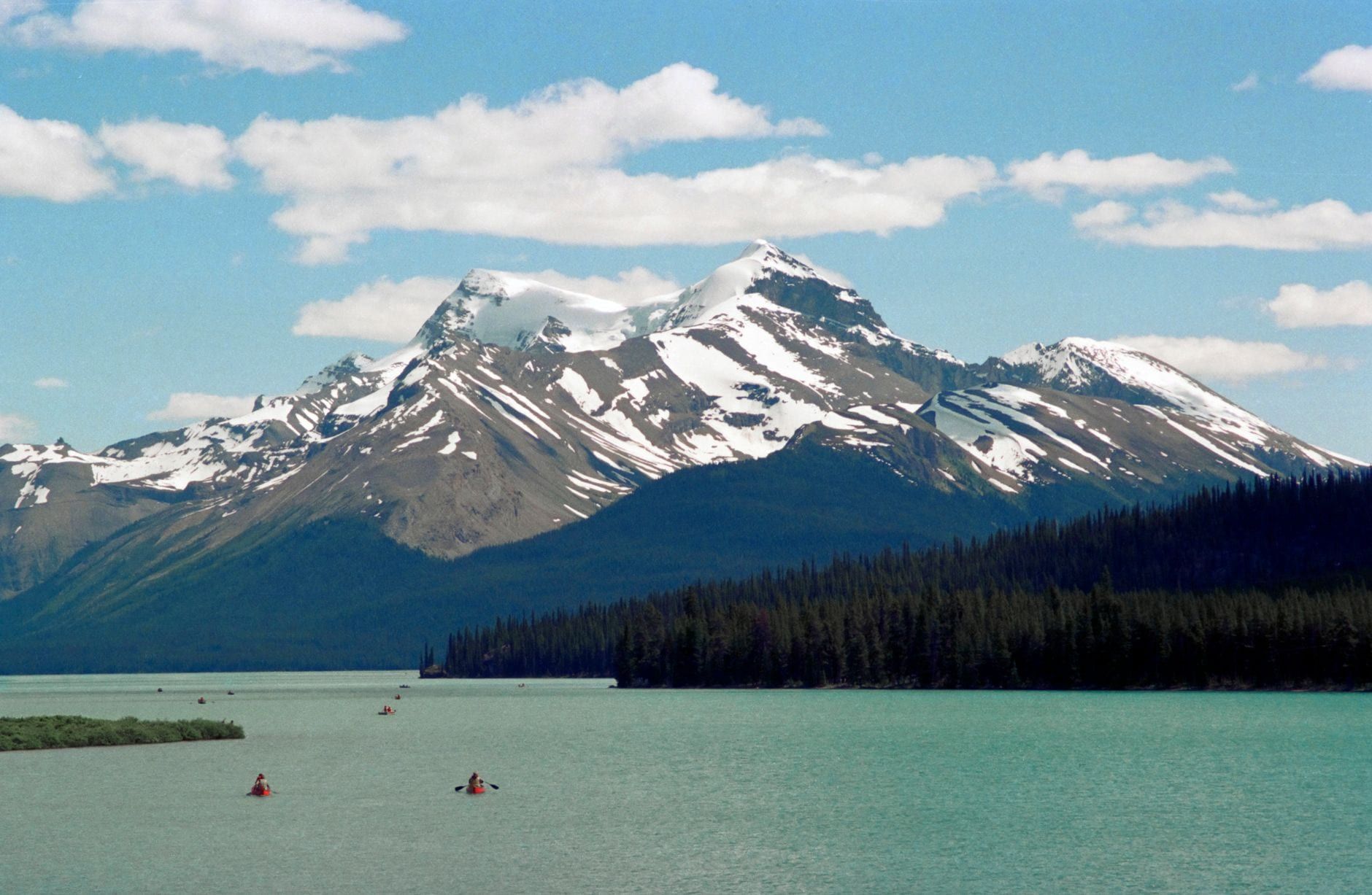
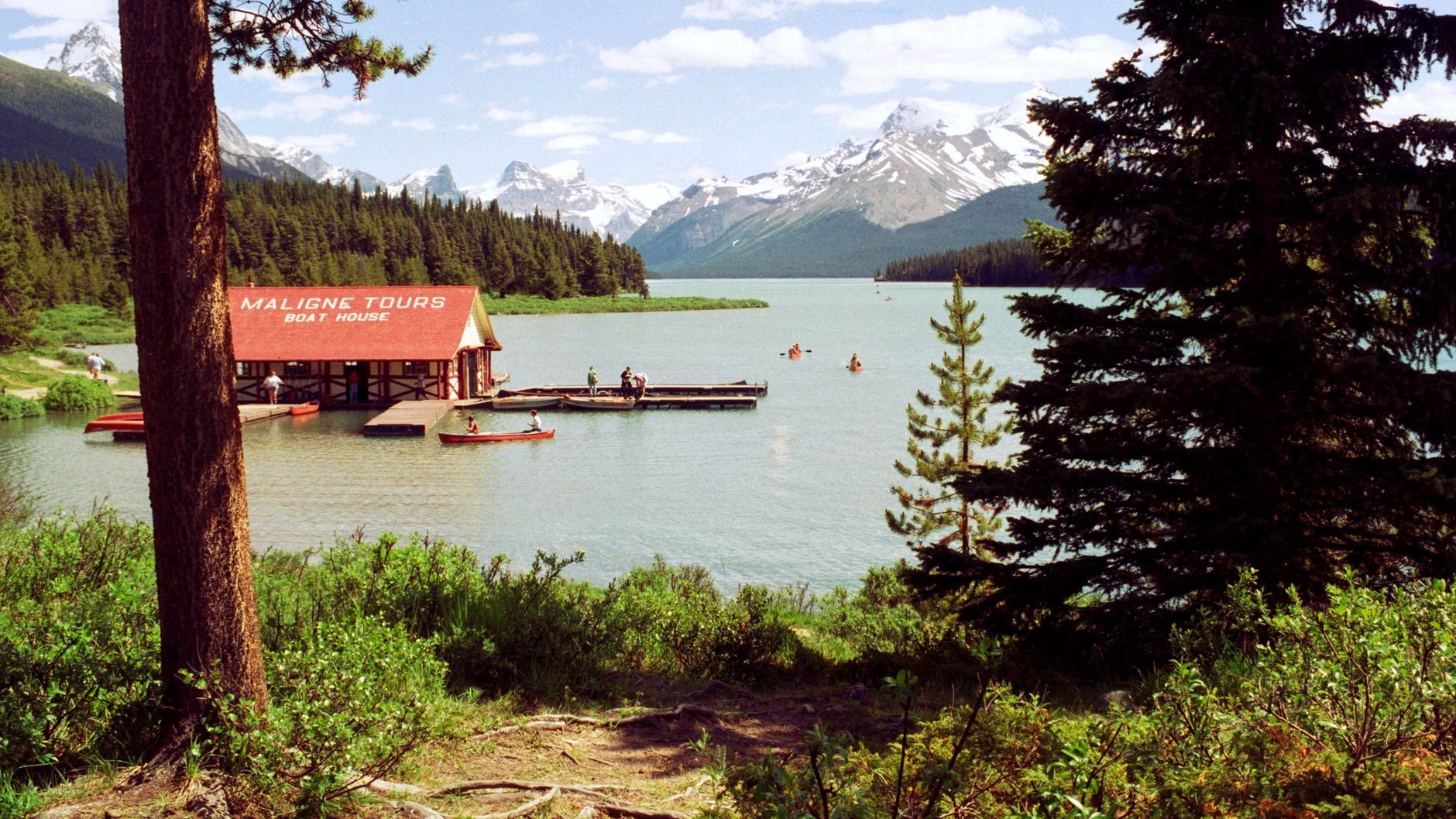
The 44 km drive up the Maligne Valley is the most reliable wildlife route in Jasper. Black bears graze its ditches in spring, mule deer appear most evenings, moose work the Medicine Lake shoreline, and bighorn sheep use the cut banks. Drive it slowly at dawn, or drive it twice. Our Maligne Lake guide covers the stops along the way.
Highway 16 (the Yellowhead)
Elk are near-certain in the fields along Highway 16 east and west of town, and the winter herd often feeds right at the townsite's edge. In the cold months, scan the grassy slopes for bighorn sheep feeding low. The highway is unfenced, so hold the speed limit and expect animals on the pavement in low light.
The Icefields Parkway
The Icefields Parkway, running south toward Lake Louise, doubles as a wildlife corridor. Mountain goats work the cliffs at the Goats and Glaciers Viewpoint, bighorn rams hold Disaster Point, black bears use the road edges in spring, and a signposted stretch near the Columbia Icefield is caribou country. It's a full day of driving with stops; our Banff to Jasper guide breaks the route down.
In and Around Town
Don't skip the townsite. Elk graze its streets, most dependably in winter, and the grounds of Jasper Park Lodge hold a resident herd that treats the lawns as a buffet. Old Fort Point, just east of town, adds bighorn sheep and a short climb with a view.
If you only have one afternoon, these stops rarely come up empty:
- Medicine, Maligne or Lake Annette shores — moose at dawn
- Miette Hot Springs parking lot — bighorn sheep
- Whistlers Mountain or Cavell Meadows — hoary marmots
- Disaster Point — rams beside the road
- Jasper Park Lodge grounds — elk on the lawns
Guided Wildlife Tours
A guided trip earns its price in two cases: you have no car, or it's your first time in bear country. Guides trade the morning's sightings across companies, so they know which pull-out held a grizzly at breakfast. Maligne Adventures runs sunrise and sunset departures from May 2 to October 4, SunDog Tours and Jasper Hikes & Tours run similar daily outings, and Wildland Photo Tours runs four-hour private photo tours capped at three guests in September and October. Compare the options on our Jasper wildlife tours page.
Watching Wildlife Safely and Responsibly
Feeding, approaching or disturbing wildlife is illegal in every Canadian national park; what follows is the practical version of that law. These are the distances, the roadside conduct and the trail habits that keep you and the animals alive.
Distance Rules
Thirty metres (three bus lengths) from elk, deer and moose. A hundred metres (ten bus lengths) from bears, wolves, coyotes and other carnivores. Both are legal minimums, and both are closer than a nervous animal would prefer. If you can count the steps between you and it, you're too close.
At a Roadside Sighting
Stay in your vehicle. Slow down, put the hazards on, and pull fully off the road — never in a driving lane — then shoot from the window, watch for a few minutes and move on. If cars start stacking up behind you, leave immediately. Jasper also operates under a standing Parks Canada notice restricting some roadside viewing practices, so check the current wildlife bulletins before your trip.
Food and Garbage
Human food kills wildlife on a delay. A fed animal becomes an aggressive food-seeker and loses the wild habits that keep it alive, and it usually starts with one chipmunk and one dropped cracker. Never leave food unattended at a campsite or picnic table, and in the backcountry, food and garbage go in a bear-proof container or come out with you.
On the Trails
Travel in groups and keep talking; your voice carries farther than a bell. Take the earbuds out, because most close encounters begin with someone walking silently around a blind corner. Carry bear spray on every hike and know how to use it before you need it. Our best hikes in Jasper guide covers the routes worth the effort.
If You Meet a Bear
Stay calm, speak in a low voice, ready the spray, and back away the way you came. Never run; running triggers a chase. Report any aggressive encounter to Parks Canada Dispatch at 780-852-6155 as soon as you have signal.
Drive for Wildlife
Vehicle strikes are the leading cause of premature death for Jasper's large mammals, and the unfenced stretches of Highway 16 and the Icefields Parkway are where they happen. Hold the speed limit, watch the ditches in low light, and brake early for movement. The elk you came to photograph crosses that road every evening.
Jasper Wildlife FAQs
When is the best time to see wildlife in Jasper National Park?
Spring through early June is the strongest stretch, with bears feeding in the valley bottoms and elk calving in May and June. The rut brings a second peak from late August into September. Day to day, the first hours after sunrise and the last before sunset beat every other window.
How likely am I to see a bear in Jasper?
Reasonably likely between April and October. The park holds an estimated 100 to 120 grizzlies and about 100 black bears, and most sightings happen in spring along the Icefields Parkway and Maligne Lake Road.
How close am I allowed to get to wildlife in Jasper?
Parks Canada requires 30 metres, about three bus lengths, from elk, deer and moose, and 100 metres, about ten bus lengths, from bears and other carnivores. Getting closer is an offence under park regulations.
What should I do if I encounter a bear on the trail?
Stay calm, speak in a low voice, ready your bear spray, and back away the way you came. Never run. Report aggressive encounters to Parks Canada Dispatch at 780-852-6155, and make noise on the trail so you never need this advice.
Is winter a good time to see wildlife in Jasper?
Yes. Bears are denning, but the elk herd moves into the Jasper townsite, bighorn sheep and deer gather at low elevations, and mountain goats stay visible on the crags. February and March are the best months for reading tracks in the snow.
Are guided wildlife tours in Jasper worth it?
They pay off for first-timers and anyone without a car, since guides share sightings across operators each day. Maligne Adventures runs trips from May 2 to October 4, alongside SunDog Tours and Jasper Hikes & Tours; private photo tours run in September and October.
Where is the best place to see moose in Jasper?
At the lakeshores. Only about 150 moose live in the park, and in summer they feed on aquatic plants along Maligne Lake, Medicine Lake and Lake Annette, most often early or late in the day.
Do I need bear spray in Jasper National Park?
Yes, on any trail outside the townsite. Parks Canada advises carrying bear spray and knowing how to use it before you need it, so keep it on your hip rather than buried in your pack.