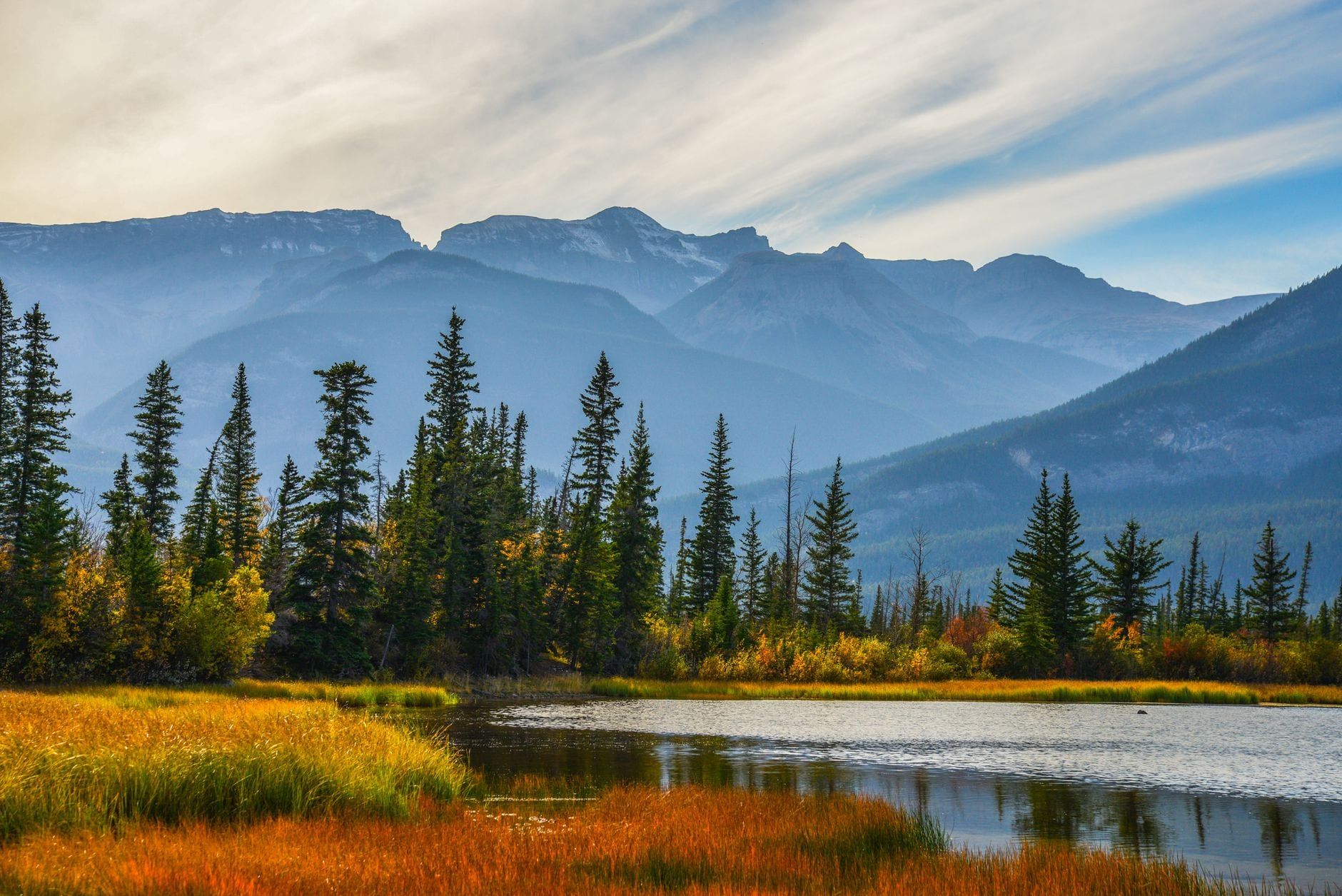
Yes, you can see the northern lights from Jasper National Park — often enough that locals treat a green sky as a scheduling problem rather than a small miracle. The park sits at 53°N inside the world's second-largest dark sky preserve, and on a clear, active night the glow shows up over Pyramid Lake, the Athabasca valley, and half the viewpoints in between.
This guide covers the whole night: which months and hours give you the best odds, which forecast tools locals actually check, exactly where to stand, what to wear, and how to photograph what you see — plus what to do in Jasper when the clouds refuse to cooperate.
Can You See the Northern Lights in Jasper?
You can, and more often than most people expect. Jasper Planetarium's former manager Peter McMahon has put the number at roughly one display a week — with the caveat that "visible" and "visible tonight" are different things. Jasper sits at 58.8° geomagnetic latitude, and from there the aurora needs a Kp index of at least 4 (NOAA's "Active" level) to show itself. Average cloud cover during aurora season runs about 45%, and a bright moon doesn't help either. Stack the odds across three or four nights and your chances get genuinely good.
Why Jasper works so well: 53°N is far enough north for regular displays while still a day's drive from most of western Canada, and the entire park — all 11,000 km² of it — is a dark sky preserve, the world's second-largest after Wood Buffalo, per Parks Canada. Sky quality measures Bortle Class 2, a true dark sky where almost no artificial light competes with what's overhead.
The mechanism, briefly: the sun throws off charged particles, the solar wind carries them Earthward, and our magnetic field funnels them toward the poles. When they strike gases in the upper atmosphere, those gases glow — oxygen green, nitrogen red and violet. A "geomagnetic storm" just means the solar wind arrived hard enough to push that glow unusually far south. On rare occasions it reaches 35°N; Jasper's regular displays come from far smaller events.
Calibrate expectations before you go. A modest display looks like a pale grey or white band, flickering slowly — plenty of first-timers mistake it for cloud until it moves. Strong storms are a different animal, with color and motion obvious to the naked eye. And on the nights the aurora never shows, you're standing under one of the darkest skies in the Rockies. The stars are the consolation prize, and they're a good one.
When to See the Northern Lights in Jasper
Plan for September through April, and if you can choose your month, pick October or March. Both combine long nights, statistically clearer skies, and milder temperatures than deep winter — and both sit near an equinox, when geomagnetic activity runs stronger (the Russell-McPherron effect, identified in 1973). January, November, and December have the longest nights and model out to the highest cloud-adjusted viewing probability, around 66%, but you'll trade comfort for those hours of darkness. For the full seasonal picture, see our guide to the best time to visit Jasper.
Summer is the one stretch to write off. Around the winter solstice Jasper gets just 7.5 hours of daylight; around the June solstice the reverse holds, and June and July have effectively zero hours of true darkness — no dark canvas for even a strong storm to paint on. Usable night returns by late August, and September delivers the first proper aurora windows with above-freezing evenings.
On any given night, the lights typically appear once full darkness settles, roughly 11 PM to 3 AM. The statistical peak is "magnetic midnight," 11 PM to 1 AM local time. Treat that as a soft rule — locals report good displays well before 11 and well after 2, so the honest advice is to go out when the sky is dark and clear, and stay out.
Check the moon before you book. A moonlit night isn't hopeless — a bright aurora cuts through it — but near the new moon a faint display has no competition, and the stars alone are worth the trip.
One more tailwind: auroras run on the sun's roughly 11-year activity cycle, and activity statistically peaks about a year after each solar maximum. The most recent maximum was expected in winter 2024–25, which makes the years around it unusually productive. If you've been waiting for a good era to try Jasper, this is it.
How long does a display last? Anywhere from minutes to hours. Substorms — the bright, fast, dancing phase everyone photographs — come in bursts of a few minutes with lulls between. Jasper's aurora chasers have a name for giving up early: the "10-minute curse," where the sky clears or lights up shortly after the group packs up. Bring a thermos and outlast everyone else.
Reading the Aurora Forecast Before You Go
Aurora forecasting has two halves, and checking only the first is the classic mistake. A Kp 7 storm behind a solid cloud deck gets you nothing; a modest Kp 4 over a clear Jasper sky gets you a show. Check geomagnetic activity, then check the clouds.
For activity, start with AuroraWatch, run by the University of Alberta, which monitors geomagnetic activity in the Edmonton area and sends free email alerts — yellow means better than 50% probability of visible aurora, red means better than 70%. Add NOAA's three-day Kp forecast for planning ahead, and a real-time dashboard for tonight's numbers: Kp index, Bz orientation (southward is good), and solar wind speed and density. Higher values generally mean a stronger aurora visible farther from the poles.
For clouds, use the Jasper Planetarium's local stargazing forecast — an hour-by-hour clear-sky outlook for the park itself, updated several times a day. A generic weather app tells you about precipitation; this tells you when the sky over Pyramid Lake actually opens. Pair it with a cloud tool like Clear Outside for a second opinion.
Then add community intel. The Alberta Aurora Chasers Facebook group posts live sighting reports, and on active nights it works as a real-time alert network across the region. When the reports start rolling in from Edmonton or Hinton, Jasper usually isn't far behind.
The go/no-go rule is simple: decent activity (Kp 4 or better), a clear-sky window in the 11 PM to 1 AM range, and a moon that isn't full. Two out of three is still worth going out. All three means cancel your morning plans.
The Best Places to See the Aurora in Jasper National Park
Two rules govern every spot on this list. Face north — the aurora almost always appears in the northern sky first. And demand open horizon: a big chunk of sky unblocked by trees or mountains, ideally with water in the foreground to double the show. Scout in daylight so you know the parking, the walking surface, and where the north horizon actually sits, and keep two or three picks within reach so you can move when clouds build.
Pyramid Lake and Pyramid Island
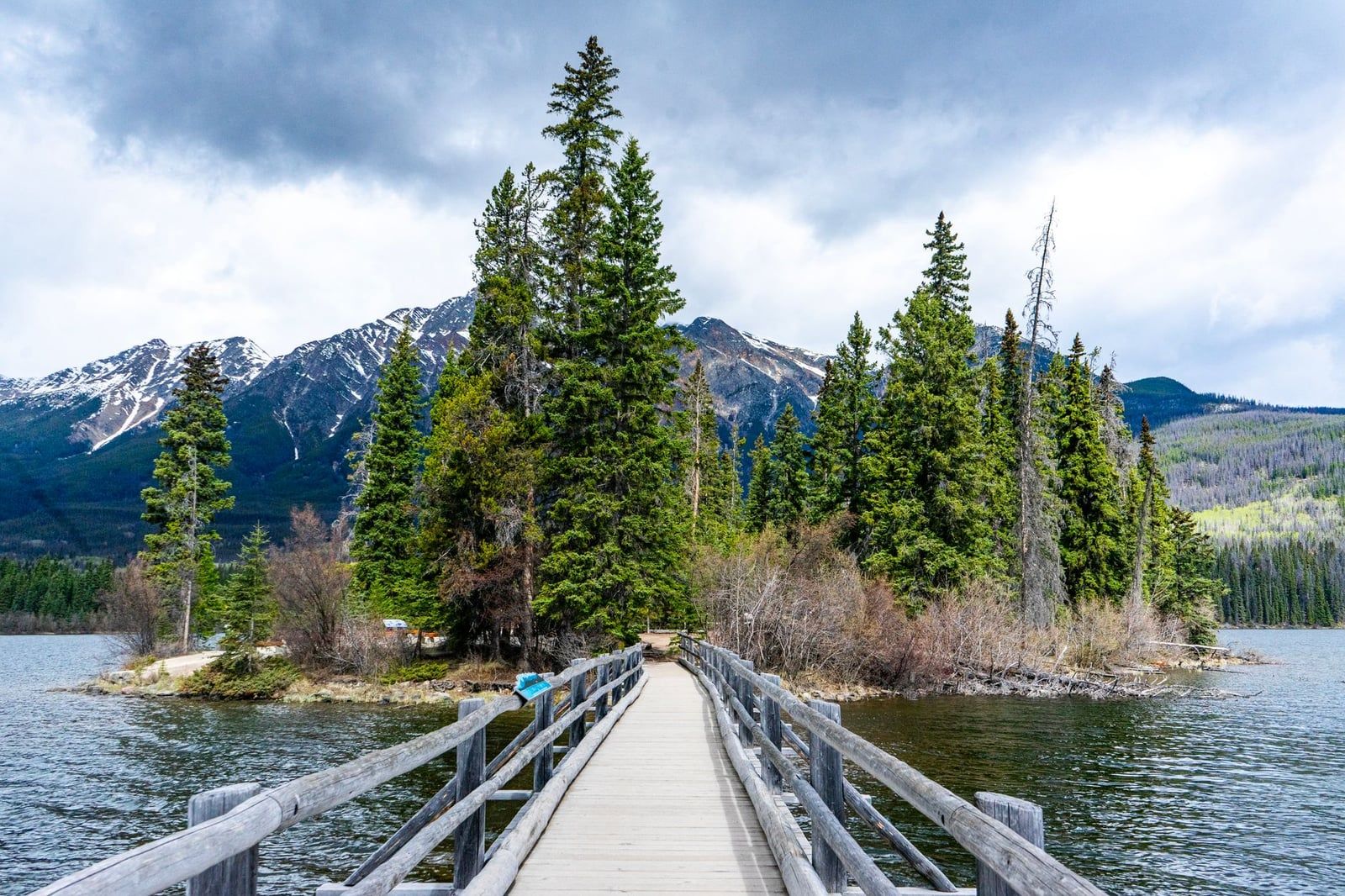
The local default, and for good reason. Pyramid Lake sits a short drive north of the townsite, its north-facing beaches work like a natural amphitheatre for the lights, and Pyramid Island's wooden bridge over the water gives you the signature Jasper aurora shot — a lit foreground with the glow reflected underneath. Light interference is minimal. On active nights expect company, so arrive early enough to claim a stretch of shoreline.
Old Fort Point and Lake Annette
Old Fort Point is a short hike from the townsite up a rocky knoll, and the elevation buys a wide horizon over the Athabasca River valley — useful on strong nights when the aurora climbs overhead and forested lakeshores box you in. Lake Annette, minutes from town, is the easy option: dark water for reflections, a paved shoreline loop, and room to set up a chair. Families and anyone avoiding night trails should take Annette; photographers wanting a horizon should take the Point.
The Maligne Valley: Medicine Lake and Maligne Lake
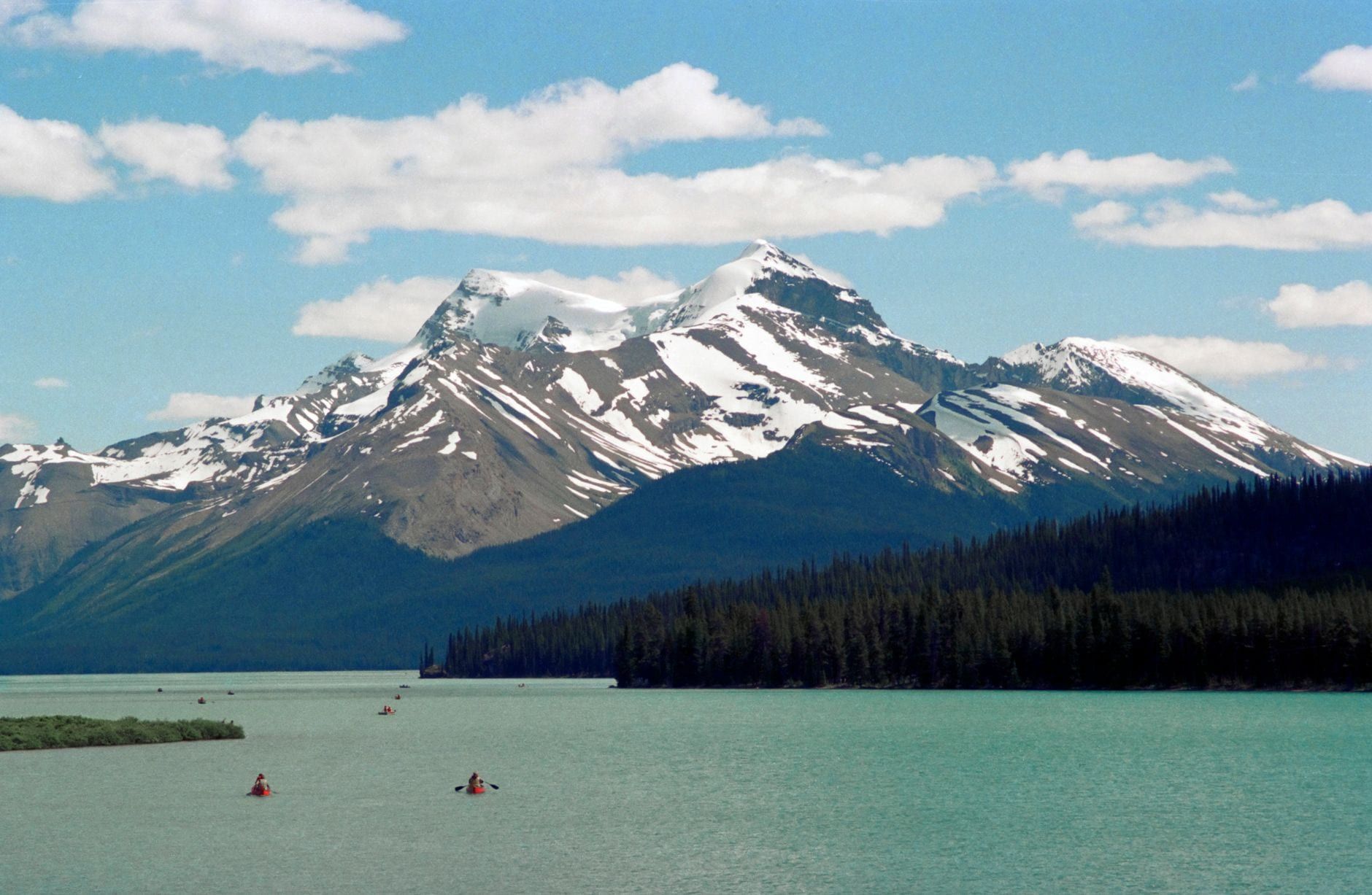
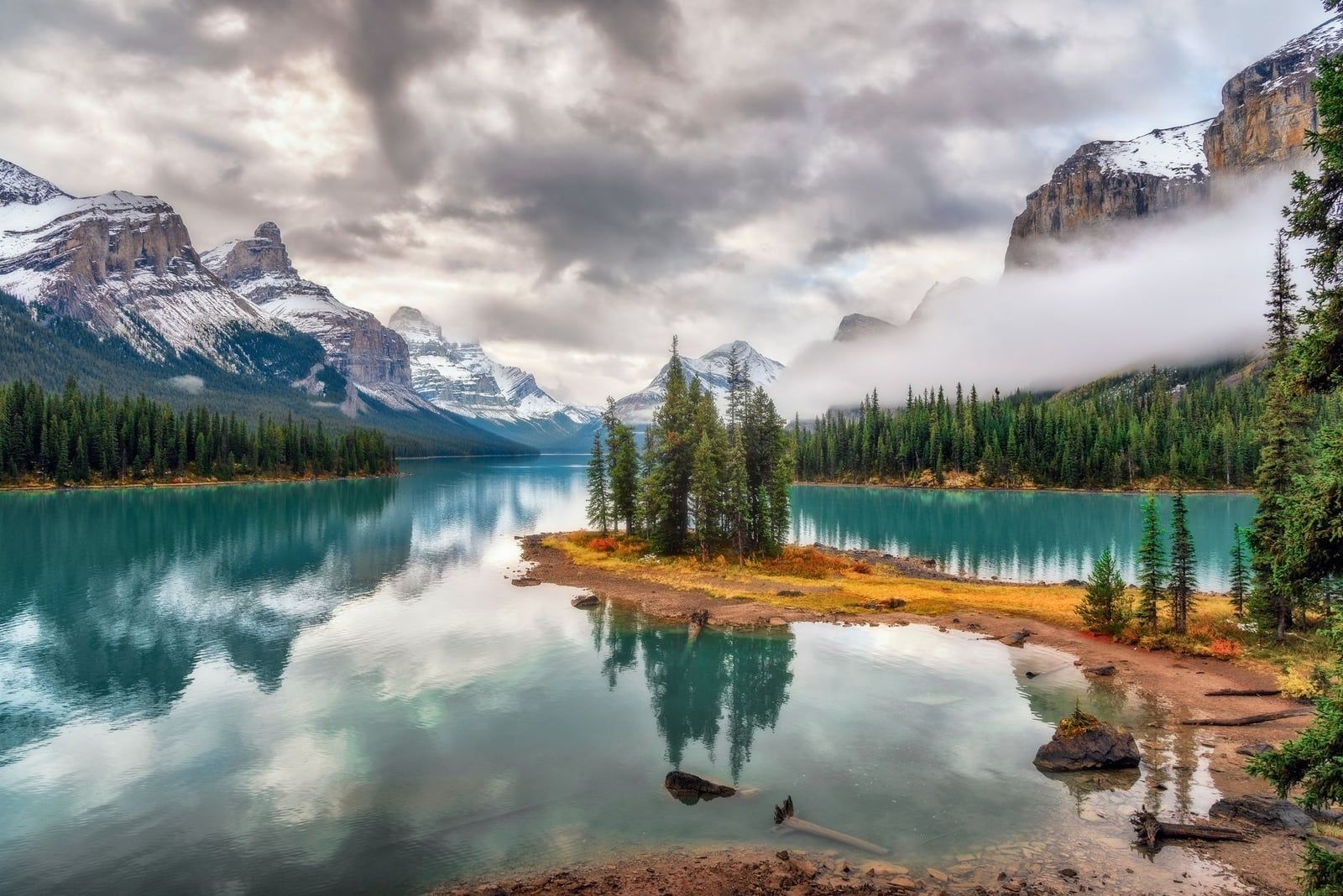
Medicine Lake, partway down Maligne Road, has zero artificial light and an open basin — the lake drains through sinkholes each autumn, leaving a low-water shoreline you can frame against the sky. Maligne Lake, 44 km down the same road, is the largest natural lake in the Canadian Rockies, with open northern water in front and mountain walls behind. It's a longer commitment on a dark, sometimes icy road, so treat it as a night you plan rather than one you improvise. Spirit Island, the famous composition, needs boat or winter ski access — save it for daylight.
Three more options, all within easy reach of town and all chosen for unobstructed night-sky views:
- Jasper Lake — shallow Athabasca shoreline on Highway 16, minutes from town
- Jasper Airport — a few minutes east of town, wide open and easy to park at
- Athabasca Overlook — elevated viewpoint with river-valley horizons
| Lakeside (Pyramid, Annette, Maligne) | Elevated (Old Fort Point, Athabasca Overlook) | |
|---|---|---|
| The view | Reflections and foregrounds; low northern horizon over water | Wide horizon; catches overhead displays on strong nights |
| Effort | Park and walk a few metres | Short uphill hike in the dark |
| Comfort | Cold air pools over water; bring the heavy layers | Some wind exposure on exposed knolls |
| Best for | Photographers, families, first-timers | Strong-storm nights, confident night hikers |
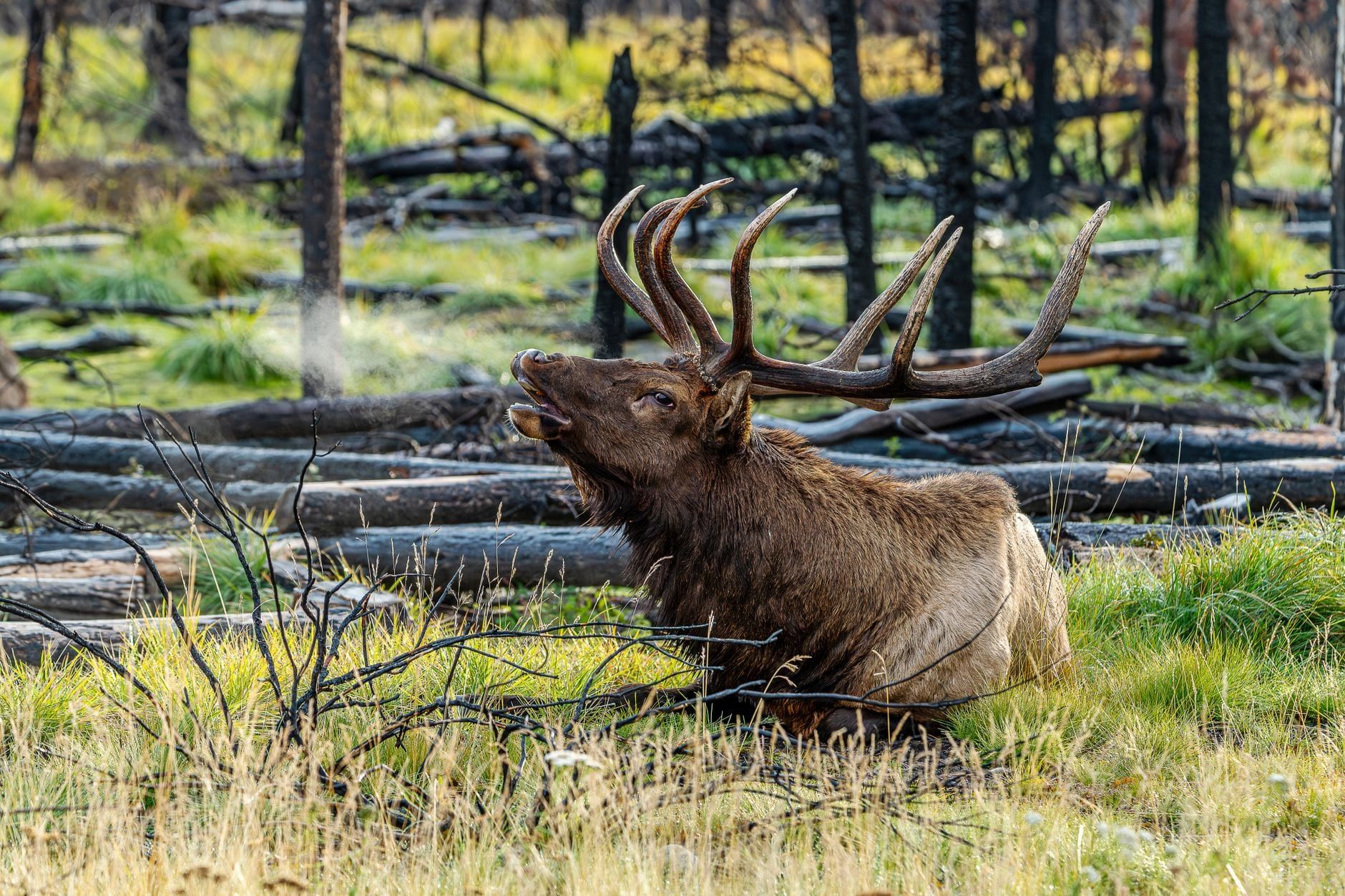
Night safety in Jasper is wildlife safety. This is a wilderness park with grizzlies, black bears, elk, and moose, and Parks Canada requires staying 30 metres from elk and deer and 100 metres from bears and other carnivores — distances that are hard to judge headlamp-to-eyes at 1 AM. Stay with your group, keep bear spray accessible rather than buried in the trunk, stick to places you scouted in daylight, and drive mountain roads slower than feels necessary. Wildlife and black ice don't care about your aurora alert.
How to See the Northern Lights: A Night-of Checklist
Run the two-forecast check at dinnertime: aurora activity from your dashboard or an AuroraWatch alert, cloud timing from the Jasper Planetarium's hour-by-hour outlook. Pick a primary spot and a backup in a different direction, tell someone where you're going, and head out before full darkness so you're set up — not still parking — when the sky decides to cooperate.
Dress for standing still for two or three hours, which is a different wardrobe from hiking. The list, earned by a lot of frozen Jasper photographers:
- Merino or synthetic base layer, top and bottom
- Insulated jacket plus insulated pants
- Warm hat and neck gaiter
- Touchscreen-compatible gloves
- Double wool socks and waterproof boots
- Thermos, snacks, charged phone, power bank
Use a red-light headlamp and put your white lights away. White light resets your eyes' dark adaptation, and it takes 20 to 30 minutes to get it back. You'll be judging a faint grey band against a dark sky, so that adaptation is the difference between seeing the aurora and going home convinced there was nothing. Red light protects it for you and for everyone else at the viewpoint.
Look north first, then scan the whole sky — on strong storm nights the aurora can sit directly overhead or even to the south. And before declaring the night dead, take a ten-second phone exposure. Cameras pull color and structure out of what your eyes read as a featureless glow, and plenty of "no aurora tonight" nights turn out to be aurora all along.
Stay out, and stay safe. Displays come in waves, and the ten-minute curse is real enough that locals joke about it. Don't chase alone: unfamiliar terrain, wildlife, and icy roads all punish solo improvisation at 2 AM. If any of that sounds like more than you signed up for, a guided tour — covered at the end of this guide — solves it.
Photographing the Northern Lights in Jasper
Start here: tripod, wide lens (14–24mm), manual everything. The table below is your starting point; bright displays let you drop ISO for cleaner files, and faint ones push you the other way.
| Setting | Where to start | Why |
|---|---|---|
| Aperture | f/2.8 or wider | Gather as much light as the lens allows |
| ISO | 1600–3200 (800 on bright displays) | Raise for faint aurora; accept the noise |
| Shutter speed | 8–15 seconds | Over ~30 s and stars begin to trail |
| Focus | Manual, set to infinity on a bright star | Autofocus hunts endlessly in the dark |
| White balance | 3500–4500K | Keeps the night sky neutral |
| Format | RAW | Room to recover dark frames later |
Three errors ruin more Jasper aurora shots than bad settings. Exposures past 30 seconds turn stars into trails. Autofocus, left on, never locks. And a finger pressing the shutter shakes a 15-second exposure — use a remote release or the 2-second self-timer.
Cold eats camera gear. Batteries drain fast, so keep spares in an inside pocket; RAW files fill cards quickly, so pack an extra; and a lens cloth handles the condensation that fogs your glass every time you move between warm car and cold air.
No tripod, no manual camera? Your phone can still get the shot. Use Night or astrophotography mode, set a roughly 10-second exposure in Pro mode if you have it, brace the phone on a rock or car roof, tap the brightest part of the sky to lock focus, and switch the flash off. Modern phones punch far above their weight on aurora — a surprising share of the green-curtain shots on Jasper social feeds are phone shots.
Composition is where Jasper separates your photos from every other aurora image on the internet. The Pyramid Island bridge, lake reflections at Annette or Maligne, a treeline silhouette, Pyramid Mountain looming over its namesake lake — pick a foreground in daylight and you'll compose in seconds when the sky lights up.
Two etiquette rules at shared viewpoints. Red headlamp only. And check behind you before you wander — nothing sours a lineup of 15-second exposures like a stranger strolling through the frame with a white light.
Make a Trip of It: Jasper's Dark Sky Experiences
Time a first trip to October and the Jasper Dark Sky Festival turns the month into a dark-sky event: talks, star parties, telescope sessions, and photography workshops across the park, with past keynote speakers including Chris Hadfield, Bill Nye, and Kari Byron. The festival is also a hedge — October's viewing odds are good, and if the sky clouds over, the programming doesn't.
Symphony Under the Stars, part of the festival, stages the Edmonton Symphony Orchestra on the shores of Lac Beauvert — an orchestra under a Bortle 2 sky is a very Jasper combination. The Jasper Planetarium runs dome shows daily, year-round, with the most powerful telescopes in the Canadian Rockies on site. It's your insurance policy: book a show for a cloudy night and you still leave having seen Saturn's rings, and its forecast page doubles as your planning tool.
Where you sleep shapes your aurora odds. The Fairmont Jasper Park Lodge has aurora-viewing spots across its grounds on Lac Beauvert, and Bear Hill Lodge rents self-catering log cabins a short drive from town. In-town hotels put you ten minutes from Old Fort Point and Pyramid Lake either way — see our guide to where to stay in Jasper for the full rundown.
Aurora nights are short on sleep, so plan gentle days. Maligne Canyon's frozen waterfalls, a soak at Miette Hot Springs — the Rockies' hottest mineral springs, about 61 km east of town — and wildlife watching fill the daylight hours nicely. Our guides to things to do in Jasper and Jasper in winter have the details.
Planning Your Northern Lights Trip to Jasper
Fly into Edmonton International Airport (YEG), rent a car, and drive west on Highway 16 — about 365 km and roughly four hours to the Jasper townsite. That accessibility is Jasper's quiet advantage over far-north aurora destinations like the Yukon: no bush flight required, and if the lights fail, a full mountain park waits behind them. Our guide to getting to Jasper covers shuttles and train options too. In winter, check road conditions before any dark mountain drive.
Entry requires a valid Parks Canada pass — $12.25 per adult per day, or $24.50 for a family or group of up to seven in one vehicle — bought at the gate or online, with seasonal fee promotions sometimes in effect. Current rates are on our Jasper park hours and fees page. Check park advisories before heading out at night, since post-wildfire recovery work and seasonal closures can change access to some areas.
Guided or DIY? Do it yourself if you have a car and a plan — the spots above are all easy to reach. Book a guided aurora tour if you'd rather not drive dark mountain roads alone, you're traveling without a vehicle, or you want someone to hand you camera settings that work. Browse guided Jasper tours to compare options.
Budget at least three nights, preferably four. Aurora potential reaches Jasper around once a week, clouds gate roughly half of those nights, and every extra night meaningfully improves your real-world odds. One night in Jasper is a lottery ticket; four is a plan.
Northern Lights in Jasper: FAQs
The questions people ask most, answered short.
Frequently asked questions
Can you see the northern lights in Jasper?
Yes — on nights when geomagnetic activity, clear skies, and darkness line up. Jasper's 58.8° geomagnetic latitude means a Kp index of 4 or higher puts the aurora in play, and the dark sky preserve keeps the sky dark enough to see it. Check a live forecast before heading out.
What time do the northern lights come out in Jasper?
Typically between 11 PM and 3 AM, with the statistical sweet spot around magnetic midnight, 11 PM to 1 AM local time. Displays regularly fall outside that window, so being outside and staying out matters more than the clock.
When is the best time of year to see the northern lights in Jasper?
September through April, with October and March the best single months: long nights, clearer skies, milder temperatures, and a geomagnetic boost near the equinoxes. Deep winter has the most darkness but the coldest nights.
Can you see the northern lights in Jasper in summer?
Effectively no. June and July leave almost no true darkness at 53°N, so there's no dark sky for the aurora to appear in. Usable night returns by late August, so plan around the September-to-April season.
How often are the northern lights visible in Jasper?
Aurora potential reaches Jasper around once a week on average, but cloud cover (about 45% during the season) and moonlight cut that down considerably. Plan three or more nights and check forecasts each evening.
Do the northern lights look green to the naked eye, or only in photos?
Dim displays often look grey, white, or like slow-moving cloud to the naked eye; strong ones show obvious green and even red. Camera long exposures always reveal more color than your eyes — a quick phone test shot can confirm a faint aurora before you commit to a spot.
Do I need a huge solar storm to see the aurora from Jasper?
No. Kp 4, NOAA's "Active" level, is enough for the aurora to become visible from Jasper. Higher Kp means brighter, more colorful displays that fill more of the sky — treat Kp 4 as the floor, not the goal.
Sources
- parks.canada.ca/pn-np/ab/jasper/gestion-management/designation/cieletoile-darksk
- parks.canada.ca/pn-np/ab/jasper/visit/tarifs-fees
- jasper.travel/blog/how-to-see-the-aurora-borealis-in-jaspers-dark-sky-preserve
- jasperplanetarium.com/jasper-astronomy-forecast
- aurorawatch.ca/
- gi.alaska.edu/monitors/aurora-forecast